
India-China disputes explained: From border tensions in Aksai Chin and Arunachal Pradesh to the 1962 war, Galwan clash, and Tibet issue. Explore the latest August 2025 foreign ministers’ meeting in New Delhi where both nations pledged de-escalation and partnership.
India-China Disputes At a Glance (2025)
- Border Disputes: Aksai Chin, a region administered by China but claimed by India as part of Ladakh, and Arunachal Pradesh, an Indian state administered by India but claimed by China as ‘South Tibet.’
- History: 1962 war left scars; 2020 Galwan clash reignited tensions.
- Key Issues: Tibet, Dalai Lama in India, China–Pakistan corridor, trade deficit, String of Pearls strategy.
- Global Politics: China blocks India’s UNSC seat and NSG entry, backs Pakistan on terrorism.
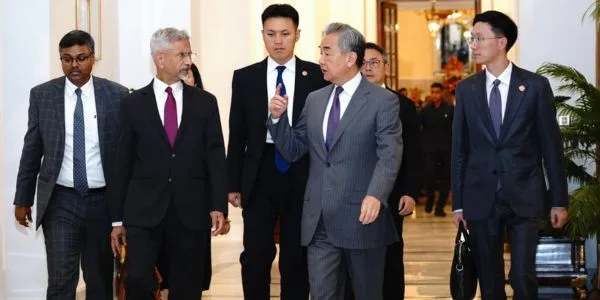
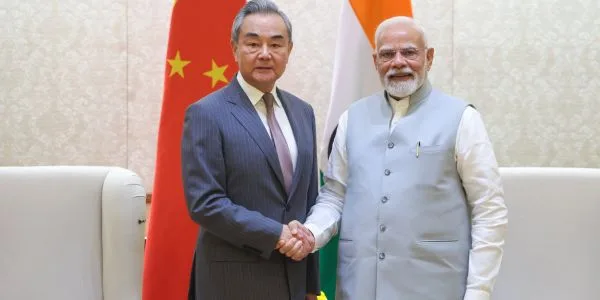
- Latest Update (Aug 2025): Wang Yi met PM Modi and EAM Jaishankar in New Delhi; both sides agreed on border de-escalation, resumed connectivity, and viewing each other as partners, not rivals.
India and China are Asia’s two largest nations—giants in terms of population, geography, economy, and military strength. Yet, despite centuries of cultural contact and trade, their modern political relationship is marked more by disputes and mistrust than cooperation.
From the 1962 war to the 2020 Galwan clash, the India-China Disputes have repeatedly shaped Asian geopolitics. And in August 2025, during a high-profile visit to New Delhi, Chinese Foreign Minister Wang Yi and Indian External Affairs Minister S. Jaishankar signaled a cautious willingness to reduce tensions. Prime Minister Narendra Modi also met Wang Yi, underlining the importance of building stability.
This explainer traces the key disputes between India and China and examines how the latest diplomatic outreach could influence future ties.
Must Read: China Lifts Export Curbs on Fertilizers, Rare Earths & Tunnel Boring Machines to India in 2025
1. The Border Disputes
India and China share a 3,488 km-long boundary that is not clearly demarcated. The border problem remains the single biggest obstacle in their relationship.
- Aksai Chin (Western Sector):
- India claims it as part of Ladakh, but China controls it and links Xinjiang with Tibet through it.
- Since the 1962 war, China has held Aksai Chin.
- Arunachal Pradesh (Eastern Sector):
- India governs this as a state, but China calls it “South Tibet”.
- The Tawang region is especially sensitive due to its religious significance for Tibetan Buddhism.
- Doklam and Sikkim (Central Sector):
- While China has accepted Sikkim as part of India, the Doklam plateau near the India–Bhutan–China trijunction is still disputed.
- A tense standoff took place in 2017 when Indian troops stopped Chinese road construction in Bhutanese territory.
2. Historical Shadow: The 1962 War
The 1962 India–China war remains a turning point in bilateral ties. China launched attacks across Aksai Chin and Arunachal Pradesh, and India—poorly prepared—suffered a heavy defeat. Though the fighting stopped after a Chinese ceasefire, mistrust has never disappeared.
3. Recent Flashpoints
- Galwan Valley (2020):
- Indian and Chinese troops clashed violently in Ladakh, resulting in 20 Indian soldiers being killed. China admitted only 4 casualties, but independent sources suggest higher numbers.
- This was the deadliest border clash since 1975.
- Ongoing Tensions:
- Confrontations continue in Pangong Tso, Depsang Plains, and Tawang, despite repeated rounds of military talks.
4. Tibet and the Dalai Lama
China’s annexation of Tibet in 1950 and the Dalai Lama’s exile to India in 1959 remain a core irritant. India shelters the Tibetan spiritual leader, while China accuses India of interfering in its internal affairs.
5. China–Pakistan Nexus
China’s deep strategic partnership with Pakistan directly impacts India. The China–Pakistan Economic Corridor (CPEC) runs through Pakistan-occupied Kashmir, violating India’s sovereignty. Beijing also supplies advanced weapons and nuclear technology to Islamabad, reinforcing India’s security concerns.
6. Smaller Neighbors: Bhutan and Nepal
China has increased pressure on Bhutan in disputed border areas and expanded influence in Nepal through infrastructure projects and investments. Both moves are seen in India as attempts to reduce New Delhi’s regional influence.
7. Economic and Trade Issues
- China is one of India’s largest trade partners, but the trade relationship is imbalanced.
- India imports electronics, solar panels, and pharmaceuticals from China, creating a large trade deficit.
- After the Galwan clash, India banned dozens of Chinese apps and restricted Chinese firms in sensitive sectors like 5G.
8. Strategic Rivalry
- Indian Ocean: China has built ports and naval access points in Sri Lanka, Pakistan, and Myanmar, described as the “String of Pearls” strategy.
- Indo-Pacific Competition: India counters this by joining the Quad alliance (India, US, Japan, Australia).
- Global Influence: Both countries compete for leadership in Asia and beyond.
9. United Nations and Global Politics
China uses its UN Security Council veto to shield Pakistan-based terrorists and blocks India’s entry into the Nuclear Suppliers Group (NSG). It also does not support India’s claim for a permanent UNSC seat.
10. The Latest Diplomatic Thaw: August 2025 Meetings in New Delhi
Against this backdrop of mistrust, the August 2025 visit of Chinese Foreign Minister Wang Yi to India has drawn global attention. The meetings highlighted:
- Commitment to De-escalation:
Both sides agreed that peace along the border is essential for overall relations. Dr. Jaishankar stressed that differences must not turn into disputes. - New Mechanisms for Border Management:
The 24th round of Special Representatives’ talks (Wang Yi with NSA Ajit Doval) created working groups and expert-level dialogues to prevent flare-ups. - China’s Pledge on Economic Needs:
Beijing offered to help India secure supplies of rare earths, fertilizers, and tunnel boring machines—sectors where China has leverage. - Resumption of Connectivity and Exchanges:
Both countries discussed resuming direct flights, re-opening border trade points, and improving people-to-people contacts. - Partnership over Rivalry:
Wang Yi publicly stated that China and India should see each other as “partners, not rivals”—a significant softening of tone. - Strategic Coordination in Global Forums:
Cooperation under SCO and BRICS was reaffirmed, with both sides agreeing to avoid confrontation before the upcoming summits.
Prime Minister Modi’s meeting with Wang Yi added political weight, signaling that India is open to stability if China shows sincerity.
11. Looking Ahead
The India-China disputes are deeply rooted and cannot be solved overnight. But the August 2025 meetings in New Delhi mark a notable shift in tone—from confrontation to cautious dialogue.
For India, the core priority remains restoration of peace along the border. For China, the goal is to maintain stable ties while securing its economic and strategic interests. Whether this thaw will last or fade depends on what happens next along the Line of Actual Control (LAC).
Must Read: India’s Environmental Challenges 2025: Solutions for a Sustainable Future
Conclusion
India and China remain locked in a complex mix of cooperation and rivalry. Historical disputes, border clashes, and competing visions for Asia ensure that mistrust lingers. Yet, the latest diplomatic outreach shows that both sides recognize the heavy costs of confrontation.
As Dr. Jaishankar remarked, “Differences must not become disputes.” The coming months will test whether the two Asian giants can truly turn dialogue into durable peace.
Mahendra Singh is a seasoned journalist and editor at TheInterviewTimes.com with over 28 years of experience. An alumnus of IIMC, he writes on international affairs, politics, education, environment, and key social issues.