
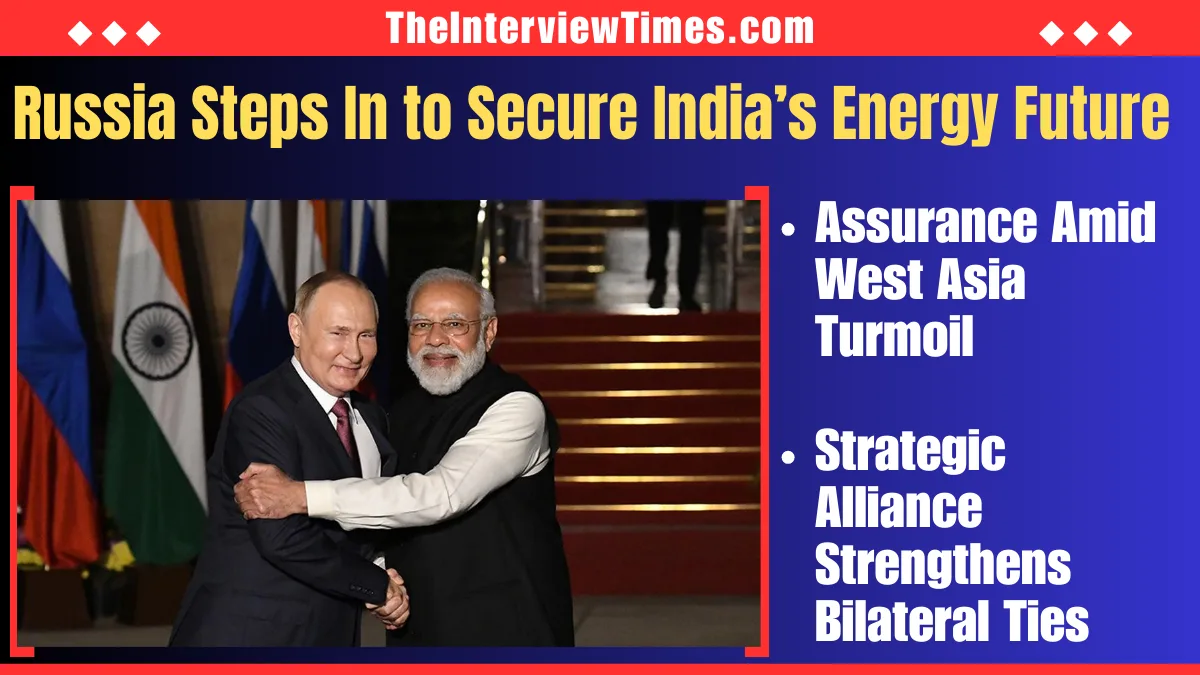
TheInterviewTimes.com | March 04, 2026 | 12:52 PM IST | New Delhi
India energy security gets a boost as Russia vows uninterrupted oil and gas supply amid the West Asia crisis. Full analysis on prices and trade impact.
As geopolitical flames lick higher in West Asia, Russia has emerged as a steadfast partner for India, pledging to cover the nation’s entire energy requirements in the face of potential supply shortfalls from the volatile region. This assurance, delivered through official channels, underscores the deepening strategic alliance between the two nations and offers a critical buffer against escalating global energy uncertainties.
Russia’s Unwavering Offer in Times of Turmoil
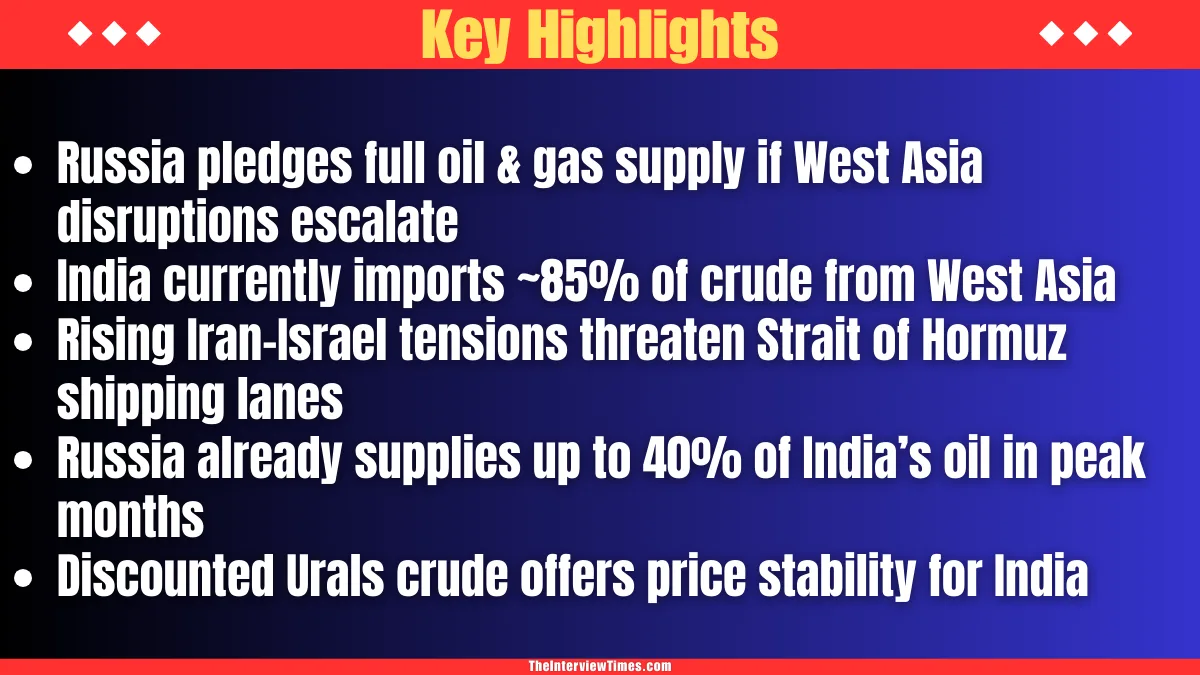
A senior official from the Russian Embassy in New Delhi conveyed Moscow’s firm commitment during an interaction with Press Trust of India (PTI) reporters. “We are ready to fulfill demands of India’s energy needs in case of continued disruption of energy supplies,” the official stated, emphasizing Russia’s capacity to ramp up exports of crude oil, liquefied natural gas (LNG), and related hydrocarbons without hesitation. This pledge arrives at a pivotal moment, with India – the world’s third-largest oil consumer – relying on West Asia for nearly 85 percent of its crude imports and a substantial portion of its LNG needs.
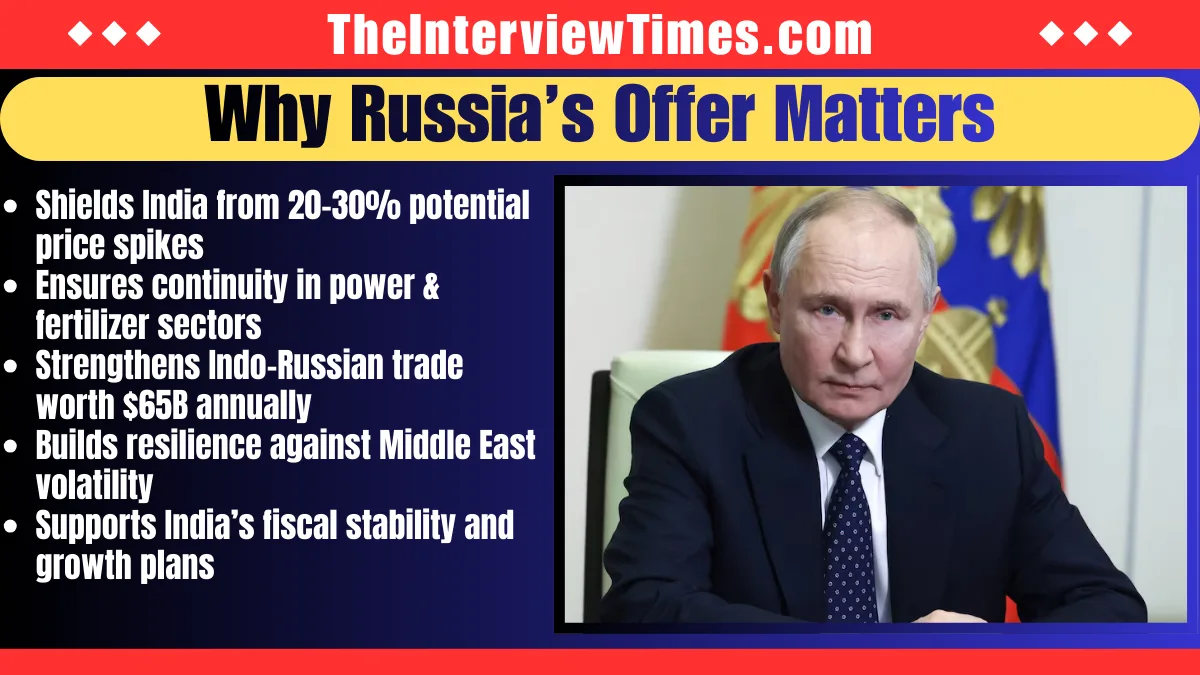
The timing could not be more acute. Over the past week, tit-for-tat military actions between Iran and Israel, compounded by U.S. naval deployments in the Arabian Sea, have heightened fears of blockades or attacks on vital shipping lanes. The Strait of Hormuz, through which one-fifth of the world’s oil transits daily, remains a flashpoint, with Iranian forces issuing warnings of potential closures if provocations persist. Analysts warn that even a brief interruption could spike global benchmark prices by 20-30 percent, hammering economies dependent on affordable energy.
The Shadow of West Asia: A Brewing Storm for Global Energy
West Asia’s crisis has roots in a complex web of longstanding rivalries, exacerbated by recent escalations. Iran’s retaliatory strikes on Israeli targets followed alleged covert operations, while U.S. carrier groups patrol the Gulf to deter further aggression. These developments threaten not just oil tankers but also LNG facilities in Qatar and the UAE, key suppliers to India’s power and fertilizer sectors. For India, the stakes are existential: its strategic petroleum reserves cover about 10-12 days of imports, with commercial stockpiles extending that to roughly 75 days. Yet, prolonged disruptions could trigger fuel rationing, inflation surges, and setbacks in industrial output.
Government sources in New Delhi confirm that contingency drills are underway, including diversification drives and diplomatic outreach to alternative suppliers. Oil Minister Hardeep Singh Puri reiterated in a briefing that “India is well-prepared with robust reserves and flexible sourcing options,” but the Russian overture adds a layer of reassurance. Russia’s vast reserves – bolstered by discounted Urals crude – position it uniquely to fill any voids, having already supplied over 40 percent of India’s oil imports in peak months of 2023-2024.
Strengthening Indo-Russian Energy Ties: From Discounts to Dependability
This is no isolated gesture; it builds on a trajectory of enhanced cooperation forged amid previous global shocks. Since 2022, India has pivoted toward Russian energy to offset Western sanctions on Moscow following the Ukraine conflict, snapping up cheap barrels that helped tame domestic inflation. Recent signals from New Delhi indicate a “renewed interest” in scaling up these volumes, with Russian diplomats noting informal discussions on long-term contracts.
Experts view this as a win-win. For Russia, it secures a reliable buyer and revenue stream, circumventing G7 price caps on its exports. For India, it means price stability – Russian oil trades at a $5-10 per barrel discount compared to Brent crude – and reduced vulnerability to Middle Eastern volatility. Bilateral trade in energy has ballooned to $65 billion annually, with forums like the India-Russia Intergovernmental Commission on Trade and Economic Cooperation slated to convene next month for deeper integration talks.
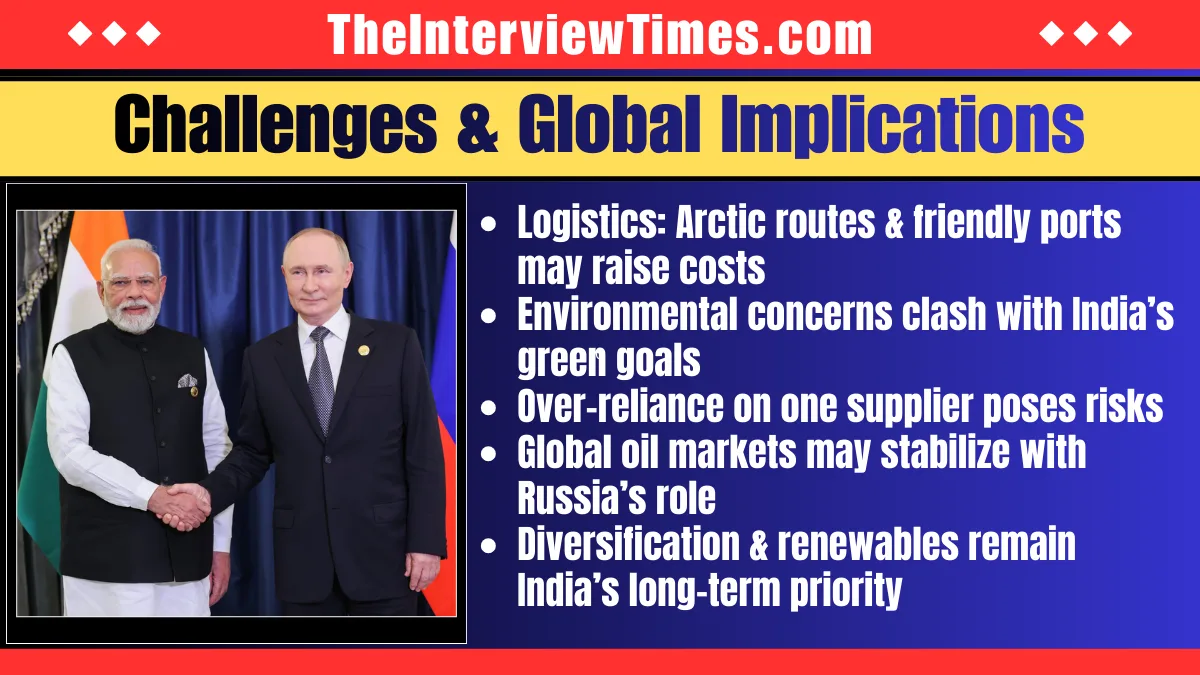
However, challenges linger. Logistical hurdles, such as rerouting shipments via the Arctic or through friendly ports, could inflate transit costs. Environmental concerns over flaring in Russian fields also draw scrutiny from India’s green transition goals. Nonetheless, the partnership signals a broader realignment in global energy geopolitics, where traditional Gulf dominance faces competition from northern powerhouses.
Implications for India and the World: Stability Amid Uncertainty
The ripple effects extend far beyond bilateral borders. A Russian safety net could insulate India from oil price volatility, preserving fiscal headroom for infrastructure and welfare programs. On the global stage, it might ease pressure on Brent futures, which hovered near $85 per barrel today, and avert a broader supply crunch that could drag emerging markets into recession.
Critics, however, caution against over-reliance on any single source, urging New Delhi to accelerate domestic exploration in the Krishna-Godavari basin and renewable investments. As one energy analyst put it, “Diversification is not just strategy; it’s survival in an era of weaponized commodities.”
In the end, Russia’s readiness to stand by India amid the West Asia maelstrom exemplifies pragmatic diplomacy in action. As tensions simmer, this alliance could prove instrumental in navigating the tempests of tomorrow’s energy landscape.
