
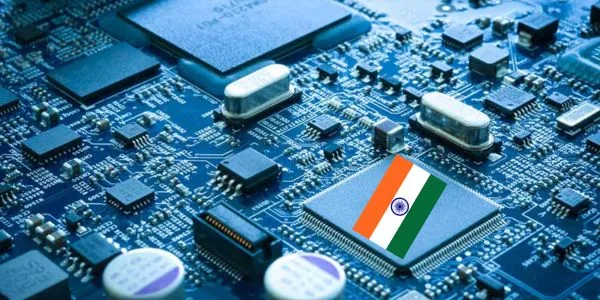
India Semiconductor Mission aims to boost chip manufacturing with ₹76,000 crore investment. Explore key projects, global partners, and India’s roadmap to becoming a semiconductor hub by 2030.
Introduction
Semiconductors—tiny chips that power everything from smartphones and cars to satellites and missiles—are at the heart of the modern digital economy. In the 21st century, control over semiconductor production is as critical as access to oil was in the past century.
India is one of the world’s largest consumers of electronics but produces almost no chips. To change this, the Government of India launched the India Semiconductor Mission (ISM) in 2022, aiming to make the country self-reliant in semiconductor manufacturing.
This article explains what the mission is, its major projects, challenges, global collaborations, and what it means for India’s future.

What Is the India Semiconductor Mission?
Launched under the Ministry of Electronics and Information Technology, the India Semiconductor Mission is a strategic government initiative to develop a complete semiconductor ecosystem in India.
Key Features:
- ₹76,000 crore (about $10 billion) has been allocated to support chip manufacturing and design.
- The scheme supports:
- Fabrication plants (fabs)
- Chip design centers
- Assembly, testing, marking, and packaging (ATMP) units
- The mission aims to reduce India’s import dependence and become a competitive player in global chip supply chains.
Why the India Semiconductor Mission Matters
1. National Security and Strategic Autonomy
Chips are essential for defense, space, telecommunications, and critical infrastructure. Indigenous capability reduces vulnerability to global supply disruptions.
2. Economic Opportunity
India currently imports 100% of its semiconductors. Local manufacturing can reduce the trade deficit, boost exports, and create a high-tech industrial base.
3. Global Supply Chain Shifts
The COVID-19 pandemic and geopolitical tensions exposed the risks of over-reliance on a few countries. Many nations now want to diversify chip supply. India is positioning itself as an alternative destination.
4. Job Creation and Skill Development
Semiconductor fabs and design units can generate thousands of high-skill jobs in electronics, materials science, and engineering.
Must Read: The Road to a $5 Trillion Economy: Challenges and Opportunities
Major Semiconductor Projects in India (as of 2025)
1. Tata Electronics – Dholera (Gujarat) and Assam
- Building India’s first chip fabrication plant in Dholera with Taiwan’s PSMC
- An ATMP unit in Assam is also underway
- Operations are expected to begin by late 2025
2. Micron Technology – Sanand, Gujarat
- US-based firm building a chip assembly and test plant
- Investment: ₹13,000+ crore
- Plant expected to start production by end of 2025
3. HCL & Foxconn – Jewar, Uttar Pradesh
- Focus on display chip manufacturing
- Investment: ₹3,700 crore
- Targeted completion by 2027
4. CG Power, Renesas & Stars Microelectronics – Sanand, Gujarat
- Specializing in analog and microcontroller chips
- Investment: ₹7,600 crore
- Expected to begin operations by 2025–26
India’s First Indigenous Chip Design
In 2025, the Union IT Minister announced that India will roll out its first homegrown semiconductor chip by the end of the year. It will be based on 28 to 90 nanometer technology, suitable for widely-used consumer electronics.
Over 20 chipset designs have already been developed with help from Indian Institutes of Technology (IITs) and domestic startups.
International Collaborations and Support
India’s semiconductor push is getting strong backing from global partners:
- United States: The India-US Initiative on Critical and Emerging Technologies (iCET) is boosting collaboration in semiconductor R&D, workforce training, and supply chain resilience.
- Japan and European Union: Countries are exploring co-investment and technology transfer.
- Applied Materials & Lam Research (US): Investing in training centers and R&D labs in India to build skilled manpower.
India Semiconductor Mission: Key Challenges Ahead
1. Talent Shortage
Chip fabrication is complex and requires highly skilled engineers. India needs to train and retain semiconductor professionals at scale.
2. Infrastructure Bottlenecks
Chip plants require uninterrupted electricity, clean water, and world-class logistics. These facilities are still developing in many parts of India.
3. Capital and Time-Intensive Process
Semiconductor fabs take 3–5 years to build and cost thousands of crores. Returns are long-term and require sustained policy support.
Must Read: Top 10 Scholarships for Indian Students in 2025, Unlock Global Education Without Breaking the Bank
Government and State Support
To overcome these hurdles, the government is:
- Offering up to 50% financial assistance for approved semiconductor projects
- Fast-tracking environmental and land clearances
- Organizing international industry events like SEMICON India 2025
- Launching talent development initiatives in collaboration with IITs and foreign companies
State-Level Efforts:
- Gujarat and Uttar Pradesh: Leading the way with key projects in Sanand, Dholera, and Jewar
- Assam and Punjab: Emerging destinations with new proposals and ATMP plants in planning stages
The Road Ahead
India currently consumes nearly 10% of global semiconductor output but produces none. The India Semiconductor Mission is a historic opportunity to change that.
If successful, India could become a global hub for electronics manufacturing by 2030, reduce its import bill, and gain strategic independence in critical technology.
Conclusion
The India Semiconductor Mission marks a turning point in the country’s journey toward technological sovereignty. It’s not just a government policy—it’s a long-term investment in India’s economic security, digital infrastructure, and global competitiveness.
The road is long and complex. But with sustained public-private effort, international partnerships, and a strong focus on talent and infrastructure, India can carve out its place in the global chip industry—joining the ranks of Taiwan, South Korea, and the United States.