
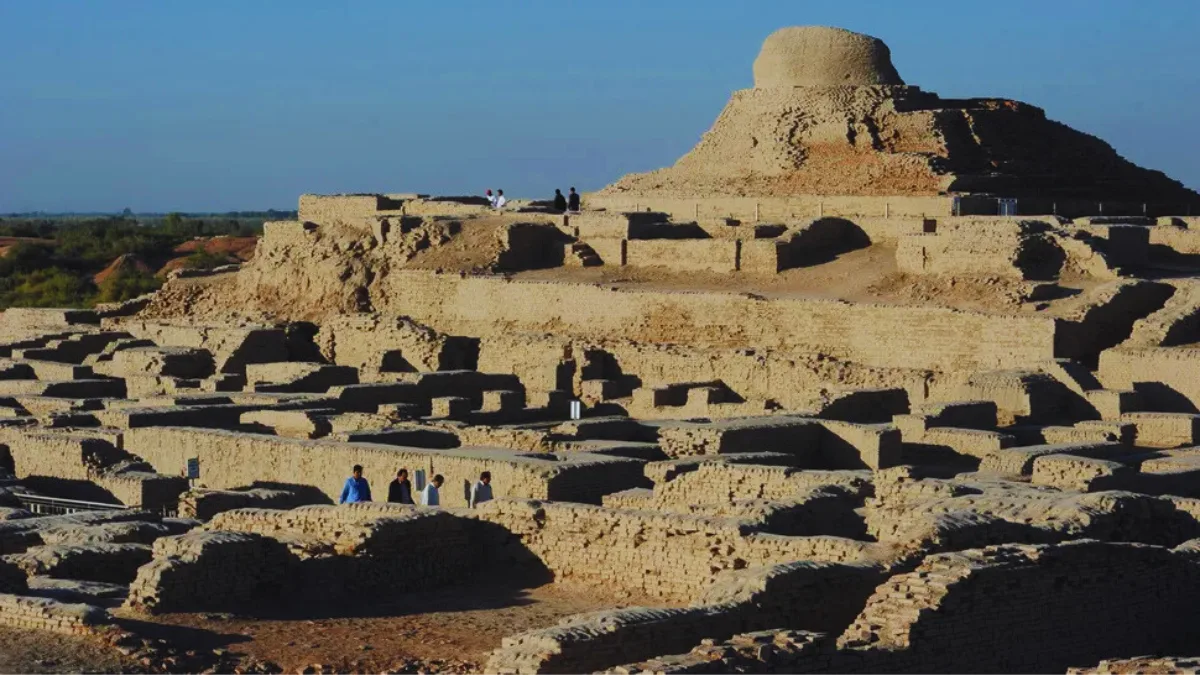
A major IIT Gandhinagar study reveals that the Indus Valley Civilisation collapsed not due to invasion or catastrophe, but because of four mega-droughts lasting up to 150 years each. From 4400 to 3400 years ago, up to 91% of the region faced river drought, slowly draining cities like Harappa, Mohenjo-Daro and Dholavira.
Indus Valley Civilisation Disaster Was Slow and Silent, New Study Confirms
TheInterviewTimes.com | 29 November 2025: A landmark scientific breakthrough has finally answered one of archaeology’s oldest mysteries: what caused the decline of the Indus Valley Civilisation?
According to new research, the civilisation did not fall to invasion, flooding or disease — it dried up slowly, one century at a time.
On 27 November 2025, a team led by Professor Vimal Singh Mishra of IIT Gandhinagar published a milestone study in Communications Earth & Environment. Their work reconstructs, with unprecedented precision, how the Indus Valley Civilisation faced repeated mega-droughts that gradually weakened one of the world’s earliest urban societies.
Must Read: Theia: New Breakthrough Study Reveals Inner Solar System Origin of the Planet That Formed the Moon
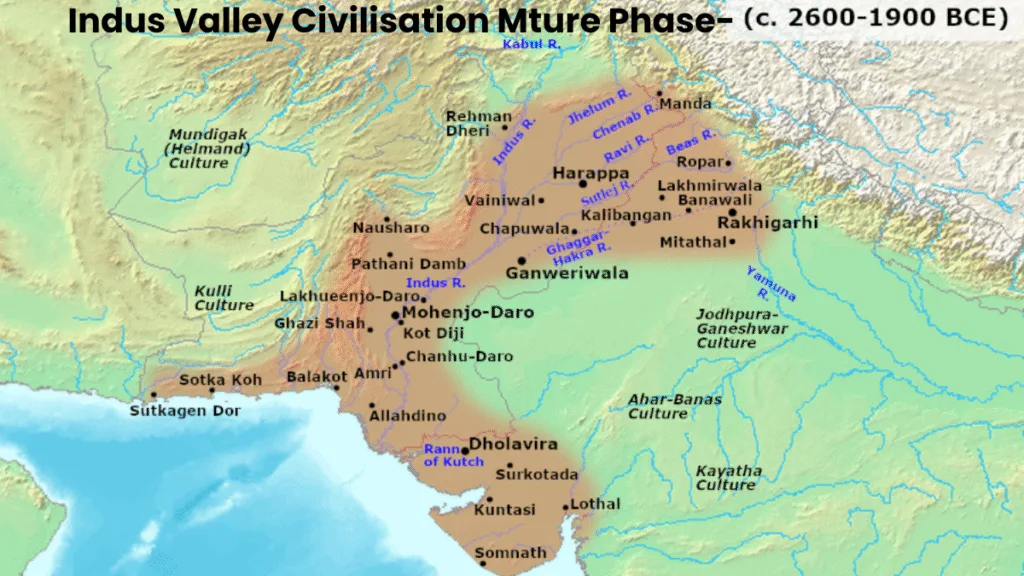
Four Mega-Droughts Lasted Up to 150 Years
Using hydrological modelling, oxygen-isotope records from Himalayan caves and analysis of dried riverbeds, the study identified four mega-droughts between 113 and 150 years.
These long drought cycles occurred between 4,400 and 3,400 years ago, affecting nearly the entire civilisation.
- Up to 91% of IVC territory experienced simultaneous river drought.
- The Ghaggar-Hakra (identified with the Sarasvati) shrank from a major river to a seasonal stream.
- Cities like Harappa, Mohenjo-Daro, Rakhigarhi, Ganweriwala and Dholavira were left in landscapes unable to support a million-strong population.
Professor Mishra noted that the collapse was not sudden but cumulative.
“It was death by a thousand dry years,” he said. “People adapted — deeper wells, new crops, smaller settlements. But after centuries of weak monsoons, even the strongest society runs out of solutions.”
The Final Verdict Ends a Century of Debate
Archaeologists have debated the civilisation’s decline since excavations began in the 1920s. Theories ranged from:
- Aryan invasions
- Catastrophic floods
- Earthquakes and tectonic shifts
- Epidemics and social upheaval
But none aligned perfectly with archaeological evidence.
Earlier climate studies linked the collapse to the global 4.2 kiloyear aridification event, but the timeline was inconsistent. Mishra’s team resolved this gap for the first time by reconstructing river discharge data, providing a year-level timeline of environmental change.
The findings are decisive:
- The monsoon began weakening around 2400 BCE.
- It declined sharply after 2200 BCE.
- Four successive droughts over 800 years ended the urban phase by 1300 BCE.
Importantly, the people did not disappear. Genetic studies show strong Harappan ancestry in present-day South Asians. Communities migrated east toward the Ganges and south toward Gujarat.
Must Read: Violence Against Women: WHO-UN Report Finds 840 Million Survivors and No Progress in 20 Years
Dholavira’s Engineers Could Not Outsmart Climate Change Forever
At Dholavira in the Rann of Kutch, archaeologists have long admired the ancient water-engineering systems — 16 reservoirs and complex stone dams.
“They were climate engineers centuries ahead of their time,” said Dr R.S. Bisht, who excavated the site. “But even Dholavira was abandoned around 1500 BCE. When drought lasts longer than memory, innovation reaches its limits.”
A Warning for the 21st Century
The Indus region today is home to 300 million people, many living above depleted aquifers. Major cities — Delhi, Lahore, Karachi — share the same climate vulnerabilities that once reshaped the Harappan world.
Strikingly, the ancient mega-droughts were linked to a 0.5°C temperature rise. South Asia has already warmed more than double that amount in the modern era.
In the empty streets of Mohenjo-Daro today, the silent ruins offer a message:
Great cities do not always fall to war or disaster. Sometimes they fade as the rains slowly turn away, century after century.
Indus Valley Civilisation Drought: Key Takeaways
- A new IIT Gandhinagar study confirms the Indus Valley Civilisation collapsed due to four mega-droughts.
- 113–150 year drought cycles dried up rivers and undermined urban centres.
- Up to 91% of the civilisation’s territory faced simultaneous drought.
- Harappans adapted for centuries but eventually migrated as conditions worsened.
- The findings offer a major climate warning for modern South Asia.