

New Delhi/Tehran, Iran | January 2, 2026, 6:37 PM IST
Iran faces its largest protests since 2022, driven by economic collapse, inflation above 40%, and widespread unrest across major cities. Government response and international warnings intensify the crisis.
Iran is experiencing its most significant wave of protests since the 2022-2023 unrest following the death of Mahsa Amini, with demonstrations entering their sixth day driven by a sharp economic downturn. What started as strikes by merchants in Tehran’s Grand Bazaar over the collapsing value of the Iranian rial has spread to multiple cities and provinces, evolving into broader expressions of discontent with living conditions and government policies.
Marvdasht—Jan 2, 2026
— People's Mojahedin Organization of Iran (PMOI/MEK) (@Mojahedineng) January 2, 2026
Breaking: Protesters in Marvdasht reportedly attacked Police Station No. 11, signaling a major escalation in their confrontation with regime forces. The move highlights growing defiance and anger on the streets. #FreeIran2026 #IranProtests #IranRevolution pic.twitter.com/UWzhJeY4tl
Economic Roots of the Unrest
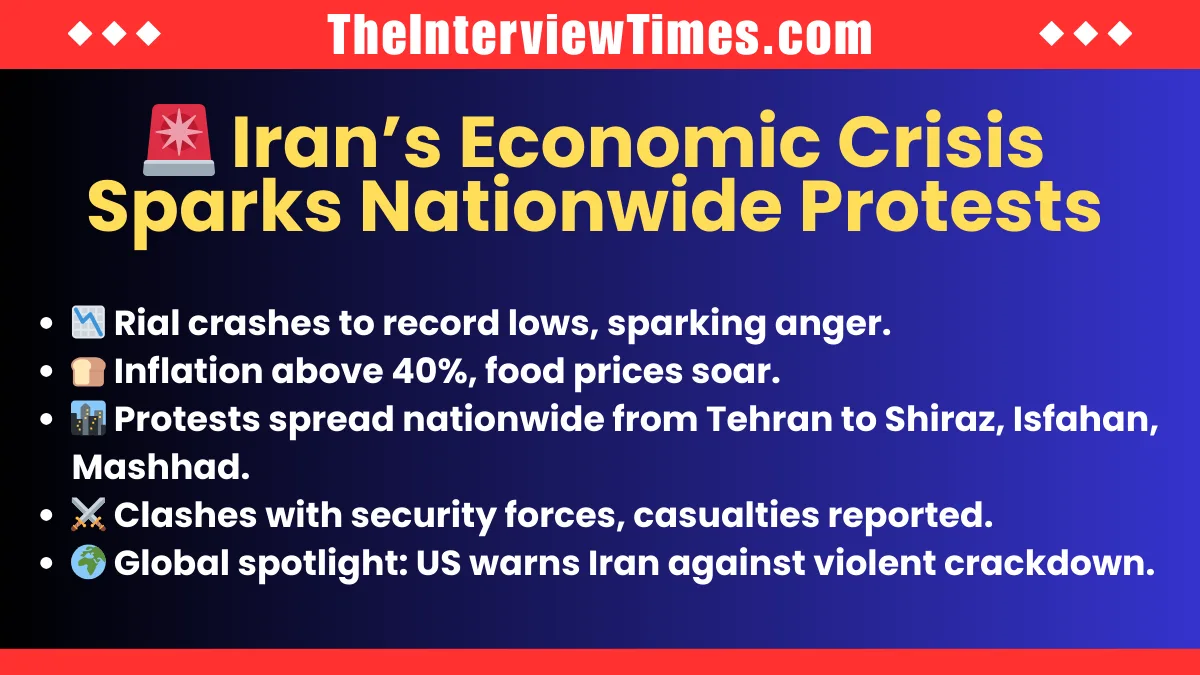
The protests erupted in late December 2025 when the rial hit record lows, trading at around 1.45 million to the US dollar on the open market before slight recovery. Inflation has exceeded 40% for much of 2025, with food prices rising sharply and eroding purchasing power for many Iranians.
Longstanding international sanctions, compounded by domestic challenges, have intensified hardships, leading merchants to shutter shops in protest against rising costs and currency devaluation.
Demonstrators have voiced frustration over soaring prices, power outages, and economic mismanagement. In some instances, chants have targeted the leadership, including calls of “Death to the dictator” referring to Supreme Leader Ali Khamenei.
Spread and Escalation
The unrest has extended beyond Tehran to cities such as Isfahan, Shiraz, Mashhad, and western provinces like Lorestan and Chaharmahal and Bakhtiari. Clashes have occurred in areas including Azna, Lordegan, and Kouhdasht, with reports of security forces using tear gas and, in some cases, live ammunition.
Casualty figures vary. State-affiliated media and rights groups have reported several deaths, including protesters and at least one member of the Basij paramilitary force. Semi-official outlets like Fars news agency cited deaths in clashes, with numbers ranging from confirmed individual cases to several in specific incidents. Human rights organizations have documented injuries and arrests, though exact totals remain unverified amid restricted information flow.
Government Response
President Masoud Pezeshkian has acknowledged the protesters’ “legitimate grievances” related to economic pressures and called for dialogue, tasking officials with engaging representatives. Authorities have closed schools, universities, and offices in many provinces, attributing it to weather or energy issues, while internet access has faced disruptions.
Security forces have been deployed to contain gatherings, with warnings against escalation. The government has blamed external influences for attempting to exploit the situation.
International Attention
US President Donald Trump issued a strong warning, stating that the United States is “locked and loaded” and would intervene if Iranian forces violently suppress peaceful protesters. Iranian officials have rejected foreign interference, with some advisers cautioning against adventurism.
The situation remains tense and fluid, with economic woes at the forefront of public anger. While the protests represent significant domestic pressure, their long-term trajectory depends on government concessions and the response of security apparatus.
