
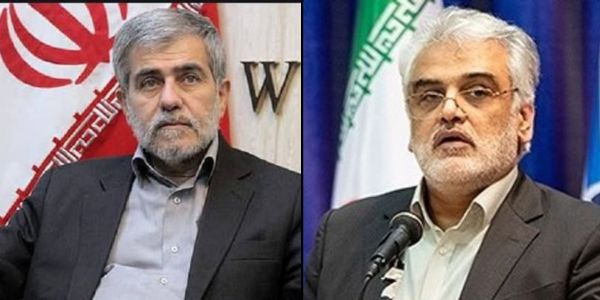
Explore the profiles of six Iranian nuclear scientists killed in an Israeli airstrike on June 13, 2025, and the implications for Iran’s nuclear program.
Overview of the Israeli Airstrike
On June 13, 2025, Israel launched a series of precision airstrikes, dubbed “Operation Rising Lion,” targeting Iranian nuclear facilities and military installations. The attacks, which included over 200 fighter jets, resulted in the deaths of six prominent Iranian nuclear scientists, alongside senior military commanders. Iranian state media and the Tasnim News Agency confirmed the scientists’ identities, stating the strikes were a “declaration of war” aimed at crippling Iran’s nuclear ambitions. This article provides detailed profiles of the scientists and assesses the potential setback to Iran’s nuclear program.
Profiles of the Fallen Scientists
Mohammad Mehdi Tehranchi
Role: President of Islamic Azad University, Theoretical Physicist
Background: Mohammad Mehdi Tehranchi was a leading figure in Iran’s academic and scientific community. As president of the Islamic Azad University in Tehran, he oversaw one of the country’s largest educational institutions. A theoretical physicist, Tehranchi was deeply involved in Iran’s AMAD plan, a program launched in the early 2000s to advance nuclear capabilities. His expertise in nuclear physics made him a key contributor to Iran’s scientific elite.
Impact of Loss: Tehranchi’s death is a significant blow to Iran’s nuclear research administration, given his dual role as an educator and scientist. His work on theoretical aspects of nuclear technology was critical to Iran’s long-term nuclear strategy.
Fereydoun Abbasi
Role: Former Head of Atomic Energy Organization of Iran (2011–2013), Nuclear Physicist
Background: Fereydoun Abbasi was a prominent nuclear scientist and former member of the Iranian parliament (2020–2024). Holding a PhD in nuclear physics, he conducted extensive research at Iran’s defense ministry. Abbasi survived a 2010 assassination attempt in Tehran, which killed another scientist, Majid Shahriari. His tenure as head of the Atomic Energy Organization of Iran (AEOI) was marked by efforts to advance Iran’s nuclear program amid international sanctions.
Impact of Loss: Abbasi’s expertise and leadership experience were invaluable to Iran’s nuclear ambitions. His death further weakens the AEOI’s ability to navigate technical and political challenges.
Abdolhamid Minouchehr
Role: Dean of Nuclear Engineering Faculty, Shahid Beheshti University
Background: Abdolhamid Minouchehr held a PhD in nuclear engineering and served as dean of the nuclear engineering faculty at Shahid Beheshti University. His research focused on improving the efficiency and safety of nuclear plants, contributing to Iran’s civilian nuclear energy efforts. Minouchehr was a respected educator, mentoring the next generation of Iranian nuclear engineers.
Impact of Loss: The loss of Minouchehr disrupts Iran’s nuclear engineering education pipeline, potentially delaying the development of future talent in the field.
Ahmad Reza Zolfaghari
Role: Professor of Nuclear Engineering, Shahid Beheshti University
Background: Ahmad Reza Zolfaghari was a professor of nuclear engineering at Shahid Beheshti University, known for his contributions to nuclear reactor design and safety protocols. His academic work supported Iran’s efforts to maintain and expand its nuclear infrastructure.
Impact of Loss: Zolfaghari’s expertise in reactor design was critical to Iran’s nuclear facilities. His death may hinder ongoing maintenance and development projects.
Seyed Amirhossein Feqhi
Role: Deputy Head of Atomic Energy Organization of Iran, Nuclear Engineering Professor
Background: Seyed Amirhossein Feqhi served as deputy head of the AEOI and was a nuclear engineering professor at Shahid Beheshti University. His dual roles in administration and academia positioned him as a key figure in Iran’s nuclear program, bridging research and policy.
Impact of Loss: Feqhi’s death weakens the AEOI’s leadership structure and academic contributions, further straining Iran’s nuclear efforts.
Motalleh Zadeh (Matlabizadeh)
Role: Nuclear Scientist
Background: Motalleh Zadeh, also referred to as Matlabizadeh, was a nuclear scientist involved in Iran’s nuclear research. Limited public information is available about his specific contributions, but his inclusion among the targeted scientists suggests a significant role in sensitive projects.
Impact of Loss: While less is known about Zadeh’s work, his death adds to the cumulative loss of expertise in Iran’s nuclear program.
Must Read: Israel Iran Nuclear Strike Ignites Retaliation Threats
Impact on Iran’s Nuclear Program
The deaths of these six scientists represent a severe setback for Iran’s nuclear program. Experts estimate that the loss of such specialized knowledge could delay Iran’s nuclear ambitions by one to two years. The targeted strikes on facilities like the Natanz plant, combined with the elimination of key personnel, disrupt both the technical and administrative aspects of the program. Iran’s Foreign Minister, Abbas Araghchi, condemned the attacks as a “declaration of war,” calling for an emergency UN Security Council meeting.
The scientists’ roles spanned theoretical research, reactor design, safety protocols, and education, making their collective loss particularly damaging. The AEOI, already under pressure from international sanctions, faces significant challenges in replacing these experts. Additionally, the strikes signal Israel’s intent to curb Iran’s nuclear capabilities, escalating tensions in the region.
Global Reactions and Future Implications
The international community has responded with concern. The UN Secretary-General condemned the attacks on nuclear installations, urging both sides to exercise restraint. U.S. President-elect Donald Trump warned of potential “more brutal attacks,” while Israel justified the strikes as a preemptive measure to prevent Iran from developing nuclear weapons. Iran’s vow to retaliate raises fears of a broader conflict, potentially involving regional and global powers.
For Iran, rebuilding its nuclear program will require significant resources and time. The loss of these scientists not only hampers technical progress but also sends a chilling message to Iran’s scientific community. The Interview Times will continue to monitor developments in this escalating conflict.
Must Read: Iran’s Uranium Surge Sparks Global Alarm: Is a Nuclear Crisis Looming? theinterviewtimes.com