
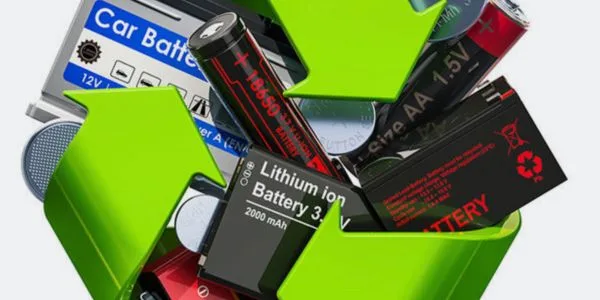
A new lithium battery recycling breakthrough recovers 99.99% of lithium, offering massive environmental benefits and huge profit potential for the clean energy industry.
As the world races towards clean energy, lithium battery recycling is emerging as one of the most important industries of the future. Experts say that better recycling technology will not only help the planet but also create huge economic opportunities.
Recent research from Edith Cowan University (ECU) reveals that reusing materials from worn-out batteries could cut carbon emissions by up to 61%, use 83% less energy, and save 79% more water compared to traditional mining methods. This makes lithium battery recycling both a green and profitable solution.
Must Read: Google Chrome Payments Integration: Transforming How the World Pays Online
Australia’s Urgent Push for Recycling
In Australia, scientists are warning that by 2035, the country could generate 137,000 tonnes of lithium battery waste every year. What’s shocking is that most of these batteries are thrown away after losing just 20% of their capacity — meaning they still have plenty of life left. This waste is not only harmful to the environment but also a loss of valuable materials that can be recovered through lithium battery recycling.
China’s Near-Perfect Recovery Method
In China, researchers from Central South University and other institutions have developed a method that recovers 99.99% of lithium along with other critical metals in just 15 minutes. Their process uses glycine, an amino acid, in a neutral solution — avoiding toxic chemicals. Even better, the leftover glycine can be used as fertilizer, making this lithium battery recycling method almost waste-free.
US Develops Water-Only, Hydrogen-Producing Process
The U.S. Department of Energy’s Ames National Laboratory has created a water-only approach to lithium battery recycling. Known as the BRAWS technology, it uses just water and carbon dioxide to recover lithium while also producing green hydrogen as a byproduct. This CO₂-consuming process not only recovers metals but also helps fight climate change.
Cooking Oil and Room-Temperature Recycling
From the University of Leicester in the UK comes another surprising idea — using nanoemulsions made from ordinary cooking oil to purify battery waste. This room-temperature method works in minutes and keeps the crystal structure of metals intact, making them ready for direct use in new batteries. Such innovations show how far lithium battery recycling has come.
Must Read: NVIDIA CEO Jensen Huang: AI as India’s Empowerment Tool, Not a Threat
Economic Goldmine for Green Industry
The business case for lithium battery recycling is strong. Edith Cowan University’s study found certain methods can yield up to $27.70 profit per kilogram of lithium recovered. With electric vehicle sales booming, demand for these metals is set to soar — and recycling could reduce dependence on expensive, environmentally damaging mining.
Challenges Ahead
Despite these impressive advances, experts warn that technology is outpacing regulation. Sadia Afrin, a PhD researcher at ECU, points out that the fast-changing design of batteries makes recycling more complex. Clear policies, investment in recycling plants, and global cooperation will be key to maximizing the benefits of lithium battery recycling.
Final Take
From Australia’s urgent waste problem to China’s near-perfect recovery process, the US’s eco-friendly hydrogen-producing method, and the UK’s cooking oil innovation, lithium battery recycling is on the brink of transforming the clean energy industry. If governments and businesses act now, they can secure critical resources, protect the environment, and unlock billions in economic value — all while powering the future.
Frequently Asked Questions (FAQ) — Lithium Battery Recycling
1. What is lithium battery recycling and why is it important?
Lithium battery recycling is the process of recovering valuable materials like lithium and other metals from used or spent batteries. It helps reduce environmental pollution, conserve resources, lowers carbon emissions compared to mining, and supports sustainable supply chains for electric vehicles and energy storage.
2. What makes the recent recycling breakthrough special?
A groundbreaking method developed by Chinese researchers recovers an astonishing 99.99% of lithium from spent batteries in just 15 minutes using a green, non-toxic process. This increases efficiency and reduces waste compared to older chemical-intensive recycling methods.
3. How does lithium battery recycling benefit the environment?
Recycling lithium batteries produces up to 61% fewer carbon emissions, uses 83% less energy, and saves 79% more water compared to mining raw lithium from the earth. It also reduces hazardous waste and pollution risks.
4. Are these new recycling methods profitable?
Yes. Some hydrometallurgical recycling techniques can generate profits of up to $27.70 per kilogram of lithium recovered, making recycling economically attractive as demand for lithium grows.
5. What are some other global recycling innovations?
Besides the Chinese breakthrough, innovations include a U.S. water-only method producing green hydrogen, Australian efforts highlighting battery waste challenges, and UK techniques using cooking oil nanoemulsions to purify materials at room temperature.
6. What challenges remain despite these advances?
Fast-evolving battery chemistry and the lag in regulatory frameworks make recycling complex. There is a need for coordinated policy, more investment in recycling facilities, and standardization to keep pace with technology.
7. How soon will lithium battery recycling impact the market?
With rising electric vehicle sales and increasing lithium battery waste projected by 2035, the impact of these advances should grow significantly in the coming decade as technologies scale and policies align.