
TheInterviewTimes.com | February 22, 2026 | 06:07 PM IST | New Delhi
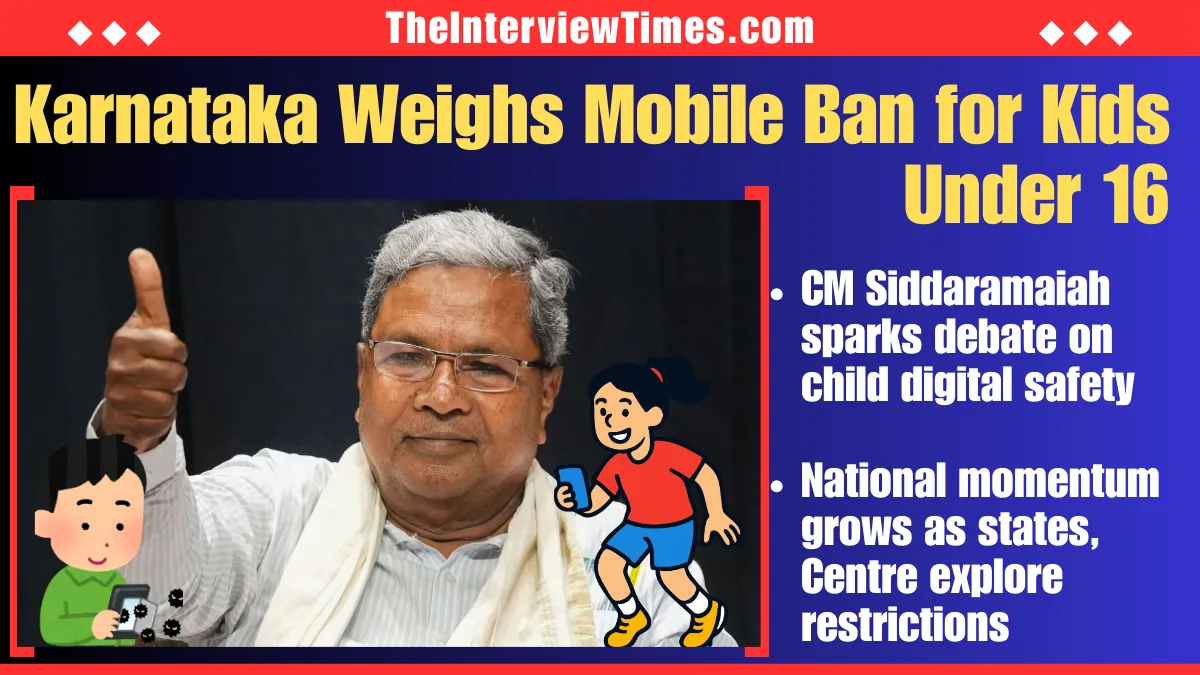
Karnataka government eyes social media and mobile phone ban for children under 16 amid addiction fears. CM Siddaramaiah seeks expert views as states like Goa, Andhra Pradesh join debate. Explore challenges, Australia model, and next steps in child digital safety.
Karnataka Chief Minister Siddaramaiah announced on February 21, 2026, that the state government is seriously evaluating a ban on mobile phone use for children under 16. The proposal emerged during a meeting with vice chancellors of state universities, where he highlighted rising addiction, exposure to harmful content like drugs, and negative impacts on mental health and behavior. Siddaramaiah invited feedback from educators before finalizing any decision.
This initiative positions Karnataka as a leader in India’s growing conversation on protecting minors from digital excesses. Other states such as Goa and Andhra Pradesh are pursuing similar measures, while the central government consults tech giants on age restrictions.
Background and Rationale
Siddaramaiah pointed to international examples, including Australia’s world-first social media ban for under-16s enacted in December 2025 via amendments to the Online Safety Act 2021. That law requires platforms like Facebook, Instagram, TikTok, Snapchat, X, YouTube, Reddit, Twitch, Kick, and Threads to block minors, with fines up to AUD 49.5 million for non-compliance. No penalties apply to children or parents, focusing enforcement on companies through age verification tech.
In Karnataka, concerns center on government school students, where mobile devices disrupt learning and expose children to risks. Vice chancellors largely supported curbs but raised issues about digital homework in private schools.
National Momentum Builds
Several states are aligning with Karnataka’s stance. Goa’s IT Minister Rohan Khaunte is reviewing Australia’s framework for a social media ban under 16. Andhra Pradesh’s Education Minister Nara Lokesh formed a Group of Ministers to assess legal feasibility, citing harms like online harassment and shortened attention spans.
Union IT Minister Ashwini Vaishnaw confirmed on February 17, 2026, that the Centre is discussing age-based rules with platforms, building on the Digital Personal Data Protection Act’s requirement for parental consent on data of under-18s. The Madras High Court also urged federal action in December 2025.
Karnataka IT Minister Priyank Kharge revealed ongoing stakeholder talks on responsible AI and social media use for children, including a Meta partnership for digital detox reaching over 300,000 kids and 100,000 teachers.

Key Challenges Ahead
Experts worry about enforcement without robust age verification, potential circumvention by minors, and effects on education tools. Australia’s ban deactivated 4.7 million teen accounts in its first month, showing platforms can act but face scalability issues in India, a key market.
Balancing protection with access remains tricky, as standalone apps for education or messaging are exempt in models like Australia’s. Karnataka plans public and expert input to address these gaps.
Next Steps and Outlook
Siddaramaiah expects vice chancellors’ opinions soon, with broader consultations to follow. If implemented, Karnataka could pioneer state-level enforcement, pressuring national policy. Success hinges on tech collaboration and public support amid global trends toward child online safety.
Top News: PM Modi Inaugurates India’s Fastest Meerut Metro and Full Delhi-Meerut Namo Bharat Corridor
