
TheInterviewTimes.com | March 12, 2026 | 11:49 PM IST | New Delhi
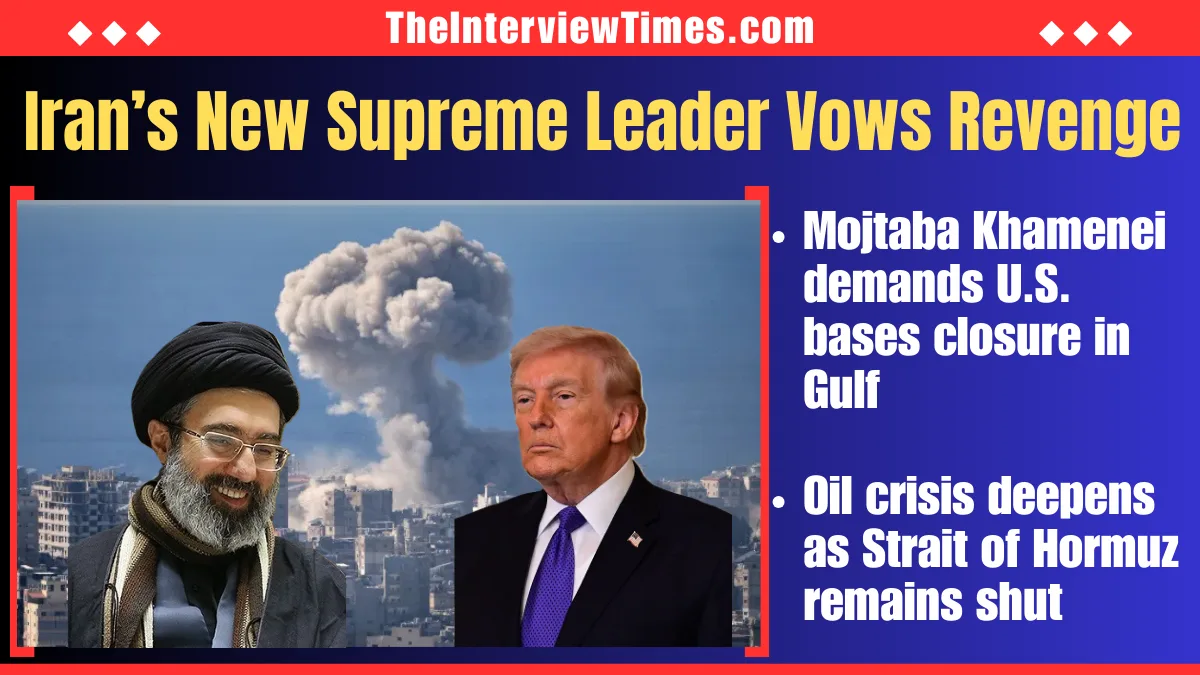
Iran’s Mojtaba Khamenei, new Supreme Leader, vows revenge in first address, demands closure of US bases in Gulf, keeps Strait of Hormuz shut as oil prices hit $100+ on March 12, 2026. IEA releases reserves amid escalating war.
Leadership Transition in Tehran
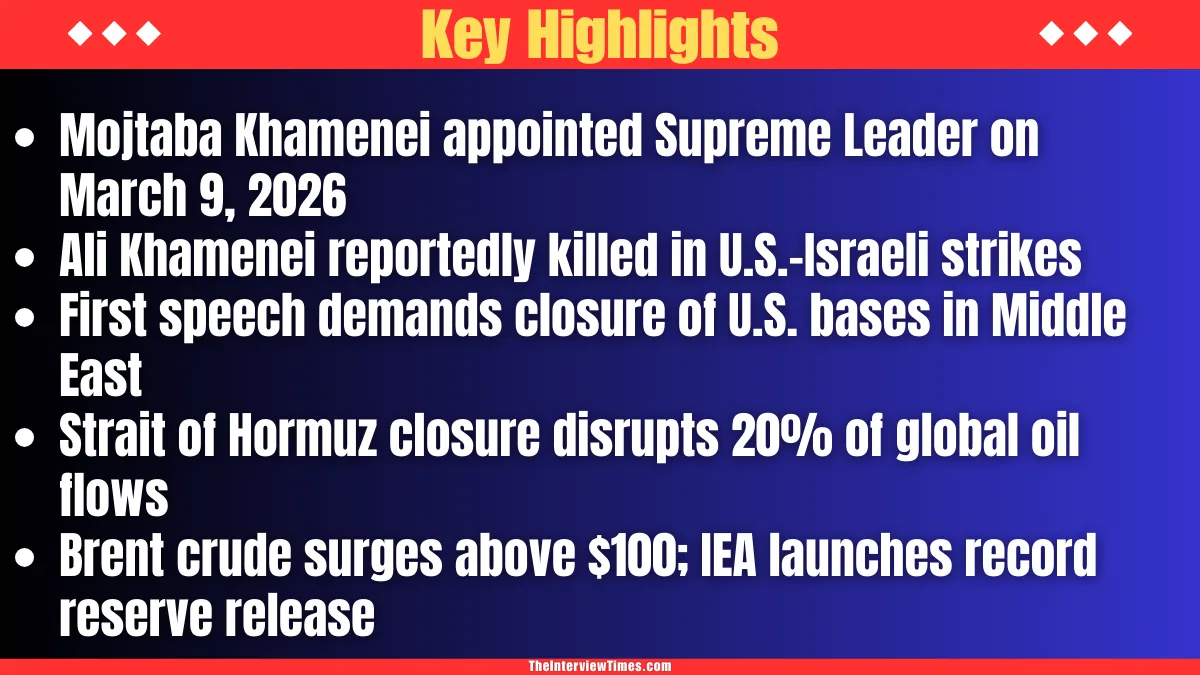
Iran has entered a dramatic new political phase after the appointment of Mojtaba Khamenei as the country’s new Supreme Leader of Iran.
The powerful Assembly of Experts confirmed Mojtaba Khamenei as the successor to his father Ali Khamenei, who was reportedly killed on February 28, 2026, during coordinated U.S.–Israeli airstrikes under Operation Epic Fury.
The 56-year-old cleric is widely believed to have close connections with the Islamic Revolutionary Guard Corps (IRGC), Iran’s most powerful military force.
His appointment comes in the middle of an escalating Iran–US conflict 2026, which has already entered its second week and has dramatically reshaped the Middle East security environment.
Analysts say the swift leadership transition reflects Tehran’s effort to maintain internal stability while projecting strength against Western military pressure.
First Address Signals Defiance
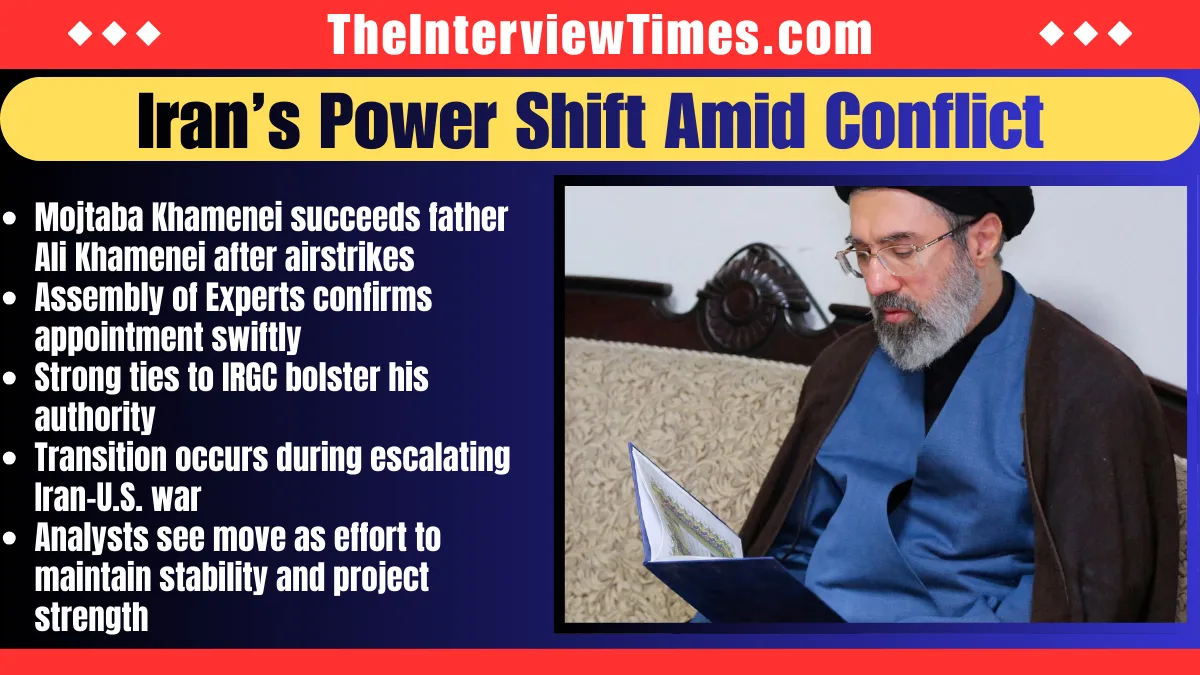
In his first televised speech on March 12, Mojtaba Khamenei struck a confrontational tone, promising retaliation for Iranian casualties in the conflict.
He demanded that all U.S. military bases across the Middle East be shut down immediately, calling their presence “a threat to regional sovereignty.”
Khamenei also warned Gulf nations hosting American forces that Iran could expand strikes against those installations if they continue to support Washington.
His speech included a major strategic declaration: Iran will keep the Strait of Hormuz closed until the conflict ends.
The strait is one of the world’s most critical energy chokepoints, carrying roughly 20 percent of global oil trade.
The closure is already disrupting tanker traffic and stranding dozens of oil shipments.
Energy Markets Reel from Disruptions
Global energy markets reacted immediately.
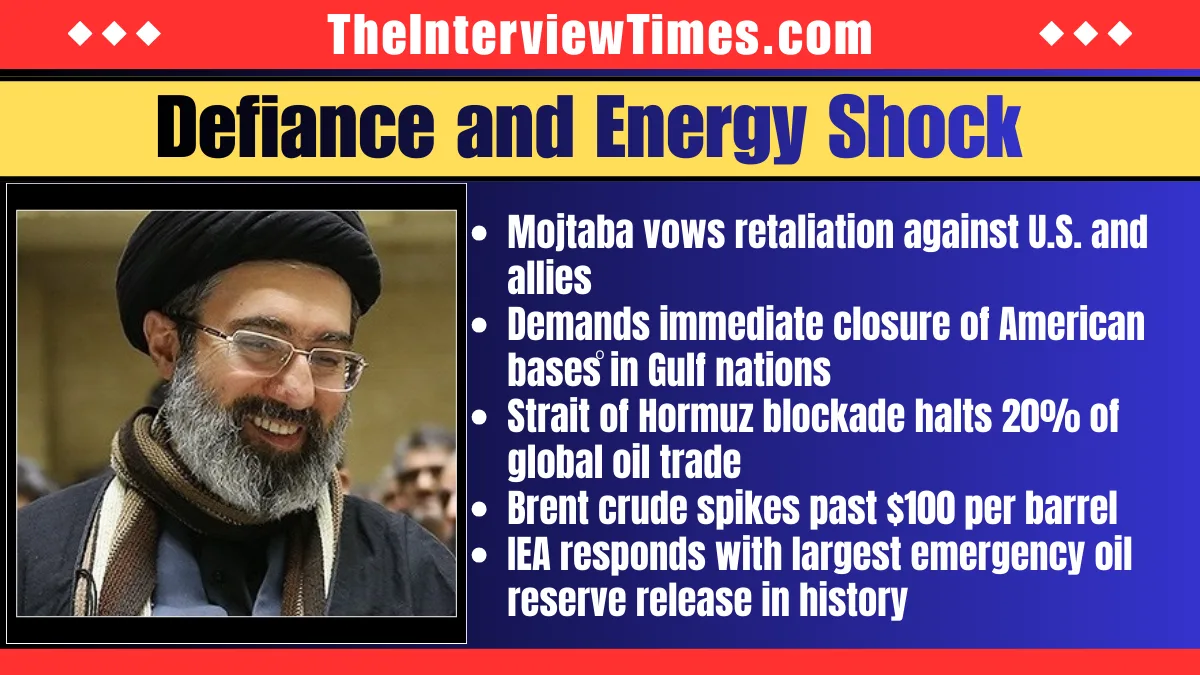
Benchmark Brent crude oil surged past $100 per barrel on March 12, marking an increase of nearly 38 percent since the conflict began.
The blockade of the Strait of Hormuz has prevented tankers from moving through the narrow waterway between Iran and Oman, a key route connecting Gulf oil producers with global markets.
In response to the supply shock, the International Energy Agency approved an unprecedented release of 400 million barrels from strategic oil reserves held by member nations.
Officials described the move as the largest coordinated emergency release in history, designed to stabilize global energy prices and prevent a deeper supply crisis.
Beyond oil markets, the disruption is spreading across other sectors including:
- global shipping
- metals markets
- fertilizer and petrochemicals
- aviation fuel supply chains
Economists warn the crisis could trigger a new global inflation wave if energy prices remain elevated.
Global Reactions and Escalation Risks
The crisis has triggered sharp international reactions.
U.S. President Donald Trump stated that the war would end “soon and on American terms,” signaling that Washington is preparing for further military operations.
Several Gulf countries including United Arab Emirates, Kuwait, and Saudi Arabia have reportedly intercepted Iranian missile launches aimed at regional targets.
Meanwhile, the United Nations Security Council condemned Iran’s regional attacks, calling them violations of international law.
Iran’s leadership, however, appears determined to continue the confrontation.
Iranian President Masoud Pezeshkian outlined conditions for ending the war, including:
- financial reparations for damage caused by Western strikes
- guarantees against future attacks
- recognition of Iran’s regional security interests
At the same time, major powers Russia and China signaled diplomatic support for Tehran’s leadership transition.
Top News: Nvidia CEO Jensen Huang Says AI Agents Will Replace Seat-Based Software Models
