

New Delhi | February 10, 2026, 03:17 p.m. IST
The Naravane memoir controversy deepens as Penguin denies publication, Delhi Police probe a leaked PDF, and Parliament erupts over security claims.
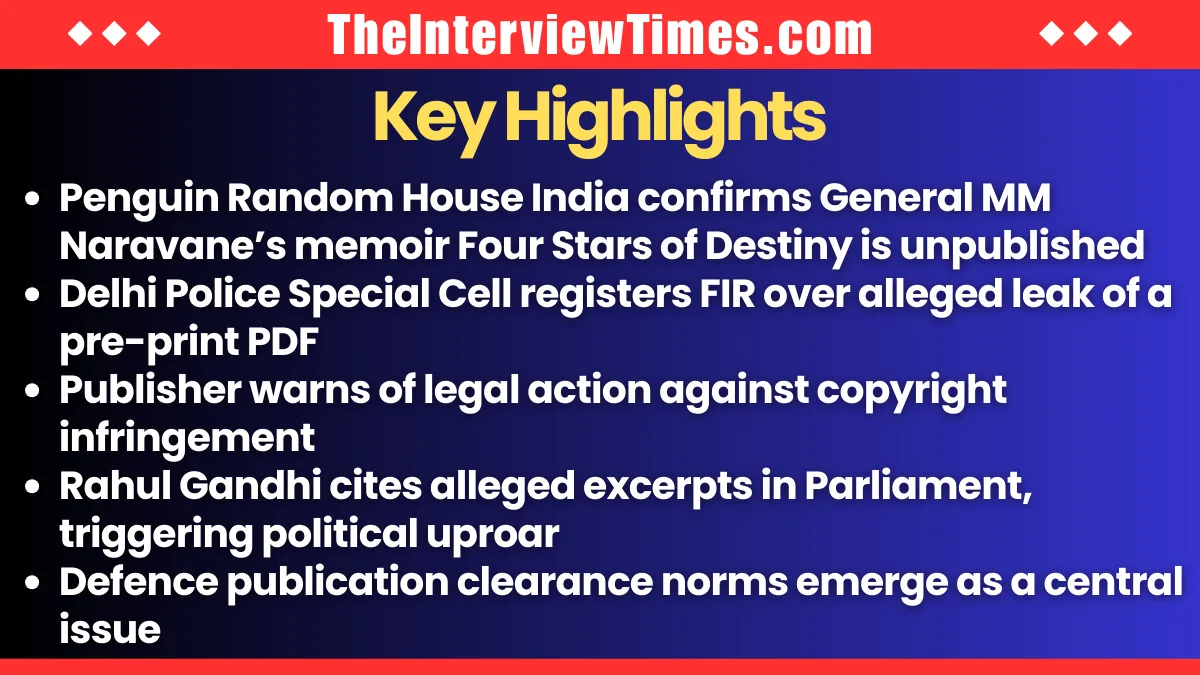
An unpublished memoir by former Indian Army Chief General Manoj Mukund Naravane has triggered a nationwide controversy, cutting across legal, security, and political domains. Penguin Random House India has categorically stated that the book titled Four Stars of Destiny has not been released in any format and that any circulating copies are illegal.
The statement comes amid reports of a leaked pre-print PDF circulating on websites, messaging platforms, and even appearing on select e-commerce listings. The incident has prompted the Delhi Police to launch a Special Cell investigation while also fuelling heated debate in Parliament.
Publisher Asserts Exclusive Rights and Legal Action
Penguin Random House India issued a firm clarification through PTI, asserting that it holds exclusive publishing rights to General Naravane’s memoir. The publisher confirmed that no physical copies, digital editions, or advance previews have been released to the public.
The company described all circulating versions as unauthorised and a clear violation of copyright law. It warned that legal action would be initiated against individuals or platforms involved in sharing, hosting, or selling the leaked material.
According to the publisher, the book is still undergoing mandatory review processes and has not received final clearance for publication. Any claims suggesting otherwise were termed misleading and unlawful.
Delhi Police Registers FIR, Special Cell Probing Leak
Following widespread circulation of the alleged PDF, the Delhi Police registered a First Information Report and handed the case to its Special Cell. Officials said the investigation was initiated after identifying a typeset manuscript appearing online and being marketed as an available book.
The probe aims to trace the origin of the leak and determine whether sensitive defence publication protocols were breached. Books authored by former senior military officials often require clearance from the Ministry of Defence before public release, especially when they reference operational details or national security matters.
Police sources indicated that investigators are examining whether internal documents were accessed without authorisation and how the manuscript reached public platforms before approval.
Top News: Violence Against Women: WHO-UN Report Finds 840 Million Survivors and No Progress in 20 Years
Parliamentary Uproar After Rahul Gandhi Cites Alleged Excerpts
The controversy escalated sharply after Leader of Opposition Rahul Gandhi referred to alleged excerpts from the unpublished memoir during proceedings in Parliament. Holding what he claimed was a copy of the book, Gandhi quoted passages related to the 2020 Galwan Valley clash with China and the Agnipath military recruitment scheme.
The move led to immediate objections from treasury benches, with parliamentary authorities blocking direct references to an unpublished and unapproved text. The incident caused repeated disruptions in the House and intensified political tensions during the ongoing session.
Gandhi later defended his remarks, stating that national security discussions could not be avoided simply because the book had not been officially released. He also expressed confidence in General Naravane’s credibility, arguing that the issues raised deserved public scrutiny.
Defence Clearance Norms Come Under Spotlight
At the heart of the dispute lies the issue of publication clearance for defence related material. Former chiefs of armed forces are bound by established protocols when publishing memoirs that touch upon strategic, operational, or diplomatic matters.
Officials confirmed that Four Stars of Destiny has been under review for more than a year. Until clearance is granted, public dissemination is considered a breach of procedure.
Security experts warn that premature circulation of such material can have implications beyond copyright law, particularly if sensitive assessments or operational insights are exposed without vetting.
Broader Legal and Political Implications
The Naravane memoir controversy has become a rare intersection of copyright enforcement, police investigation, and parliamentary conduct. It raises critical questions about intellectual property protection, information security, and the limits of political debate.
While Penguin Random House India continues to assert its legal rights, authorities are expected to intensify efforts to identify the source of the leak. Meanwhile, political parties remain sharply divided over the legitimacy of quoting from an unpublished manuscript.
As investigations continue, the episode highlights the growing challenges faced by publishers, security institutions, and lawmakers in the digital age, where unauthorised information can spread rapidly before official processes are completed.
Top News: Indus Valley Civilisation Dried Up, Not Destroyed: New Evidence of Centuries-Long Droughts
