New Delhi, January 17, 2026, 10:32 p.m. IST
OpenAI begins testing ChatGPT Ads for free users, reversing CEO Sam Altman’s past stance on AI advertising. Details on privacy safeguards, financial pressures, and competition from Google Gemini.
OpenAI, the company behind the popular ChatGPT AI chatbot, has kicked off testing advertisements within its flagship product for the first time. This step aims to tackle massive financial losses while keeping premium users ad-free.
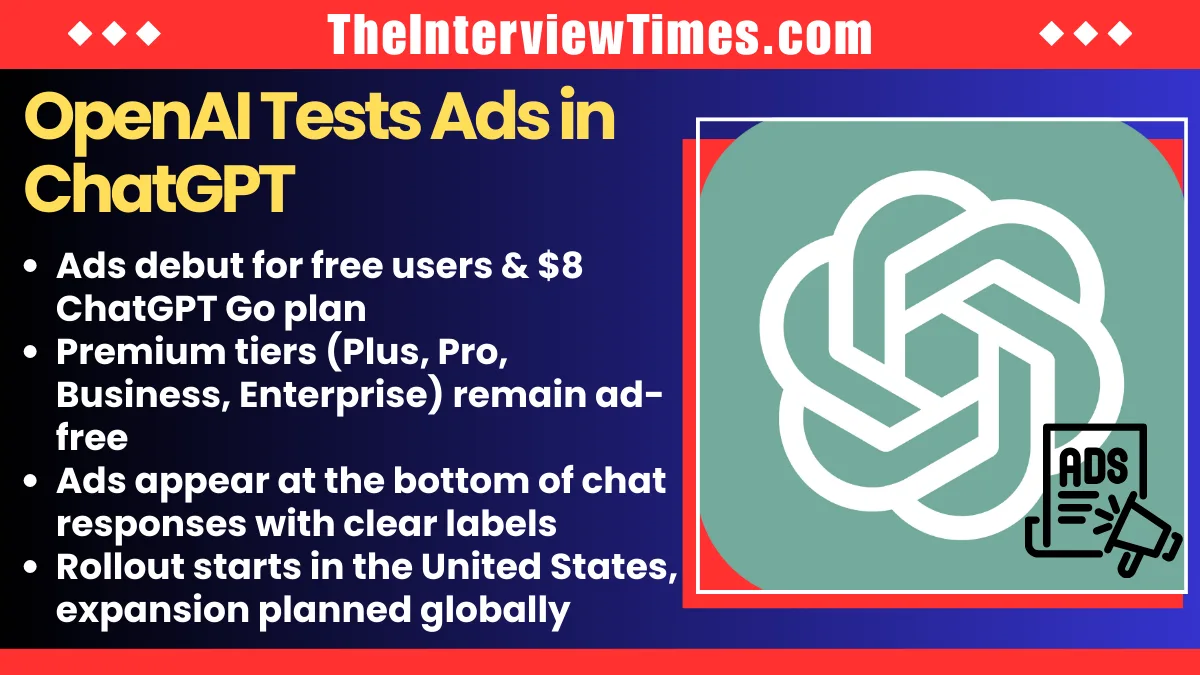
The company shared details in a blog post this week. Ads will roll out soon to free-tier users and those on the $8 monthly ChatGPT Go plan, mainly in the United States. They will show up at the bottom of relevant chat responses and carry clear labels. Higher plans like Plus, Pro, Business, and Enterprise stay untouched by promotions.
Top News: OpenAI Offers Free ChatGPT Go Subscription in India for One Year Starting November 4, 2025

Safeguards Prioritize User Privacy and Control
OpenAI stressed strong protections. Conversations remain private from advertisers, and the firm vows not to sell user data. Personalization options let users opt out completely.
Ads skip users under 18 and avoid sensitive areas like health, mental health, or politics. OpenAI claims it avoids optimizing ChatGPT for extended session times, setting it apart from social media models.
This approach seeks to balance revenue needs with trust. “We want to fund free access without compromising what makes ChatGPT special,” an OpenAI spokesperson said.
Top News: Modi Urges Startups to Build Homegrown AI, Lead Manufacturing as Startup India Marks 10 Years
Shift Marks Reversal from CEO Altman’s Earlier Views
The news flips past comments from CEO Sam Altman. In 2024, he labeled ads a “last resort” and found “ads-plus-AI… uniquely unsettling.” Views evolved by mid-2025. On OpenAI’s podcast, Altman admitted enjoying ads on platforms like Instagram and opened the door to them.
CFO Sarah Friar hinted at flexibility in a December 2024 Financial Times interview. She noted no firm ad plans then but said the team eyed diverse income sources.

Financial Strain Fuels Urgent Revenue Hunt
Behind the change lie steep costs. Reports from The Information reveal OpenAI could burn $17 billion in cash this year, doubling from $9 billion last year. Profitability might not arrive until 2029 or 2030.
Ads could bring in $1 billion by year’s end, scaling to $25 billion by 2029, per internal projections. About 95% of ChatGPT users now come from non-paying free access, straining resources.
OpenAI poured billions into models like GPT-5 and infrastructure. Deals with Microsoft provide support, but rivals loom large.
Google Gemini Eats Into ChatGPT Dominance
Market metrics highlight the growing strain. According to Similarweb data, ChatGPT’s market share fell sharply from 86 percent to 64 percent over the past year, while Google Gemini surged from 5.7 percent to 21.5 percent during the same period.
The ad test syncs with ChatGPT Go’s expansion to over 170 countries at local pricing. This low-cost option targets broader adoption in markets like India.
Broader Implications for AI Business Models
Experts see this as a bellwether for AI firms. “Monetizing conversations without alienating users is tricky,” said analyst Jane Doe of Tech Insights. “OpenAI’s targeted approach could set a template.”
Critics worry about quality dips or creep toward social media pitfalls. Supporters point to sustainability gains for free AI tools.
OpenAI joins peers testing ads. Anthropic and xAI explore similar paths, while Google already weaves promotions into Gemini.
For now, the test stays U.S.-focused with quick feedback loops. Global rollout and feature tweaks depend on results.
Top World News: Chabahar Port Project Explained: Why India Is Determined to Stay Despite US Sanctions Pressure
