
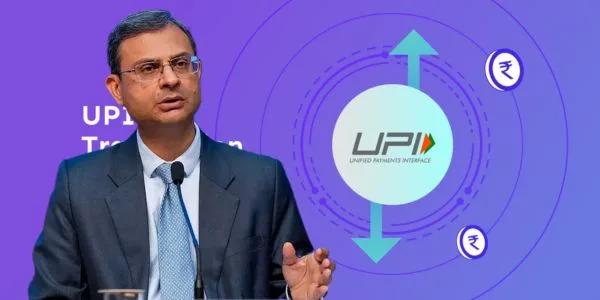
RBI hints at future UPI charges in India, sparking a national debate on the future of digital payments. Explore impact, public reaction, and expert views.
The Reserve Bank of India (RBI) has indicated that Unified Payments Interface (UPI) transactions—currently free for users—may not remain so in the long term. RBI Governor Sanjay Malhotra, addressing a press conference after the Monetary Policy Committee (MPC) meeting on August 6, 2025, raised critical questions about the sustainability of UPI’s zero-cost model.
“I never said that UPI cannot remain free forever. It is not free even now; someone is paying for it,” Malhotra clarified.
His remarks have sparked a nationwide debate on whether Indian consumers could eventually face UPI transaction charges, potentially reshaping one of the country’s most successful digital payment platforms.
Must Read: OpenAI ChatGPT Agent Launch Raises First-Ever Bioweapon Risk Warning
Will UPI Charges Remain Free Forever? RBI Opens the Debate
UPI, developed by the National Payments Corporation of India (NPCI), has become the backbone of India’s digital economy. In 2024 alone, the platform processed over 131 billion transactions worth ₹200 lakh crore.
Its zero-fee model has helped fuel rapid adoption—from kirana stores to online platforms—making digital payments accessible even in India’s remotest corners. However, the infrastructure that supports UPI—servers, security, network uptime, transaction validation—is not without cost.
Currently, these expenses are subsidized by banks and the government under schemes like the “Promotion of RuPay Debit Cards and Low-Value BHIM-UPI Transactions.” RBI had earlier raised this issue in its 2022 Discussion Paper on Charges in Payment Systems, though public backlash kept UPI free at that time.
Must Read: Why Germany is a Top Choice for Indian Engineering Students: Visa Insights and Opportunities
UPI Charges: Key Highlights
- RBI Governor Sanjay Malhotra suggests UPI may not stay free forever.
- UPI handled ₹200 lakh crore in 2024 via over 131 billion transactions.
- ICICI Bank starts charging payment aggregators nominal UPI fees.
- Public reacts strongly against any user-facing fees.
- Government remains committed to Digital India, but cost concerns rising.
Backend Monetization Begins: ICICI Bank Tests Fees Amid UPI Charges Debate
While UPI remains free for users, changes are already underway in the background. ICICI Bank recently introduced a nominal fee of 2 basis points (0.02%), capped at ₹6 per transaction, for payment aggregators like Razorpay. This does not affect end users directly, but it signals the beginning of a backend monetization model in the UPI ecosystem.
Industry experts suggest this may be a stepping stone towards broader cost-sharing arrangements between banks, merchants, and fintech firms—without immediately burdening users.
Public Reaction: Will Fees Hurt Digital Inclusion?
Reactions on social media platforms like X (formerly Twitter) reflect deep public concern. Many users worry that even nominal UPI fees could drive small merchants and low-income users back to cash transactions, reversing the progress of Digital India.
“If UPI isn’t free, small vendors will go back to cash. That’s a step backward,” wrote one user.
Another commented, “UPI should remain a utility, not a profit-making tool for private apps like Google Pay or PhonePe.”
UPI Charges: No User Charges Yet, But Future Policy in Discussion
The NPCI and government have not announced any immediate changes to UPI’s pricing structure. In fact, the government continues to highlight UPI as a public good and a pillar of the Digital India initiative. However, Governor Malhotra’s statement suggests that policymakers are now more open to rethinking the funding model as UPI scales further.
Analysts believe any future charges will likely be:
- Nominal and not profit-driven,
- Tiered, with exemptions for low-value or rural users,
- And targeted toward businesses or aggregators, not general consumers.
Conclusion: A Free Ride, But for How Long?
For now, UPI remains free—but the RBI’s remarks signal a shifting conversation in India’s digital payments space. As usage grows and infrastructure costs rise, the question becomes inevitable: Who will pay for UPI’s future—banks, the government, or users?