

Adani Ports enforces a Russian oil ban at its domestic terminals, threatening India’s crude imports, raising costs for refiners, and highlighting global compliance pressures.
Mumbai, September 13, 2025 — In a move set to reshape India’s energy trade, Adani Ports and Special Economic Zone Ltd. (APSEZ), the country’s largest private port operator, has enforced a sweeping Russian oil ban at all 15 of its domestic terminals. The directive, circulated through internal advisories to shipping agents on September 10, mandates pre-arrival verification ensuring that no vessel or operator is under sanctions imposed by the United States, European Union, United Kingdom, or United Nations. This effectively blocks tankers associated with Russia’s “shadow fleet,” a network circumventing Western export restriction.
The ban comes at a sensitive juncture for India’s energy security, as the country grapples with rising global oil prices, tightening sanctions on Russia, and the strategic need for affordable crude. Analysts warn the ban could disrupt roughly 5-10% of Russian crude flows to India, increasing costs for refiners and potentially prompting a re-evaluation of India’s dependency on Russian oil.
MUST READ: If America Stops Outsourcing to India: Who Loses More?
The Scope of the Russian Oil Ban
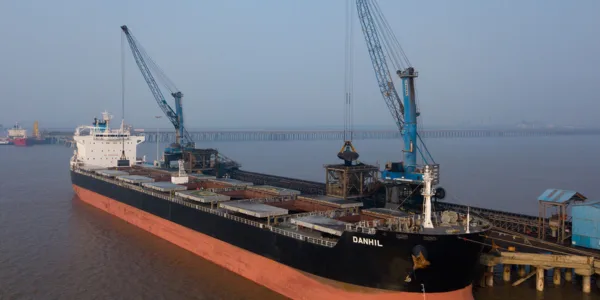
APSEZ controls approximately 25% of India’s port capacity and handles more than 400,000 barrels per day of crude at its flagship Mundra Port in Gujarat alone. The Russian oil ban applies to all berthing, loading, unloading, or port services for sanctioned vessels, with shipping agents liable for penalties in cases of non-compliance.
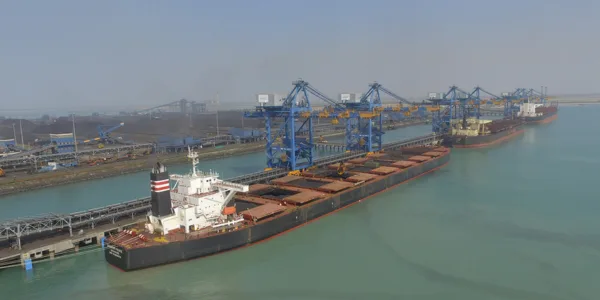
Mundra Port, processing nearly 10% of India’s crude throughput, is expected to feel the most immediate impact, given that over half of its oil volumes are Russian. Other affected ports include Hazira, Kandla in Gujarat, and Krishnapatnam in Andhra Pradesh, forming a network that collectively moved 418 million tonnes of cargo in FY2025.
Sources close to APSEZ indicate that the ban was triggered by a July 2025 wave of US Treasury sanctions on over 50 shadow fleet tankers, followed by EU and UK measures targeting vessels breaching the $60-per-barrel G7 price cap on Russian crude. An APSEZ spokesperson described the move as “precautionary,” aimed at avoiding secondary sanctions that could freeze assets or block US dollar transactions—risks that have already impacted international banks handling Russian energy trades.
Why India Relies on Russian Oil
India’s pivot to Russian crude following the 2022 Ukraine invasion has been a strategic and economic decision. Discounted Russian oil, priced $10-15 per barrel below Brent benchmarks, has saved Indian consumers $10-12 billion annually.
Russian crude now makes up more than 35% of India’s seaborne imports, translating to roughly 1.7 million barrels per day in August 2025. This energy relationship has bolstered domestic refinery operations while providing India with a cost advantage in a volatile global oil market.
However, the growing Russian oil ban pressure signals that private sector compliance is now emerging as a major factor in India’s energy calculations. While India has rejected unilateral Western sanctions, focusing instead on UN-mandated restrictions, private players like Adani are prioritizing legal safeguards over cost advantages, highlighting the tension between commercial pragmatism and geopolitics.
MUST READ: US Inflation Accelerates to 2.9% in August as Jobless Claims Hit Four-Year High
Western Pressure and Sanctions
The Russian oil ban aligns with a broader Western push to curb Russian energy exports. Last week, the US Treasury urged the EU and G7 to impose tariffs up to 25% on countries like India and China that continue to purchase Russian crude above sanctioned price caps. This follows blacklisting measures against Sovcomflot, Russia’s state-owned tanker firm, and investigations into Indian refineries processing Urals crude.
Washington has publicly criticized New Delhi for indirectly funding Moscow’s war efforts, intensifying diplomatic pressure on Indian policymakers and private corporations. Adani’s ban is therefore seen as a defensive measure, insulating the group from extraterritorial risks, while signaling compliance with international regulations to avoid punitive action.
Russian Oil Ban: Impact on Indian Refiners
The Russian oil ban is likely to affect key refiners reliant on APSEZ infrastructure:
- HPCL-Mittal Energy Ltd. (HMEL): Processes 11.3 million tonnes annually at Bathinda, Punjab. Limited alternatives mean the refinery may face supply constraints.
- Indian Oil Corp. (IOC): Routes 20-25% of Russian crude imports through Mundra for Panipat and Paradip plants. IOC may divert shipments to state-run ports like Deendayal and Jawaharlal Nehru, but longer voyages could increase freight costs by 20-30%.
Shipping intelligence data shows that Russian exports to India already fell 8% year-on-year in September 2025, a trend that may accelerate due to the ban. Meanwhile, Baltic Exchange tanker rates surged 5%, reflecting detours for shadow fleet vessels, while the Indian basket crude price increased 1.2% to $78.50 per barrel.
Manish Raj, oil analyst at Kpler, notes, “The ban may force a strategic rethink on India’s reliance on Russian crude. Refiners with limited port options face a short-term squeeze, potentially altering the dynamics of energy imports.”
Global and Market Repercussions
The Russian oil ban has already triggered minor stock market movements. Adani Ports shares dipped 0.8% to ₹1,382 on the BSE, underperforming the broader Nifty 50 index. While the ban may marginally reduce port revenues in the short term, it protects APSEZ from the far-reaching consequences of secondary sanctions.
Internationally, the move signals that Asian ports are increasingly becoming enforcers of Western sanctions, echoing similar restrictions in Singapore and South Korea, where sanctioned vessels have faced berthing denials.
Geopolitically, the timing is significant, coinciding with US election-year rhetoric where tariffs on allies buying Russian oil are being floated as leverage. India has responded carefully, maintaining engagement with the US through platforms such as the Quad framework, without making concessions on its energy sourcing.
Alternative Crude Options for India
With the Russian oil ban limiting access to discounted barrels, India may explore alternative suppliers:
- Iraq: Known for high-quality Basra crude, though prices are currently above Russian discounts.
- Saudi Arabia: Offers reliable supply but at a premium, impacting refinery margins.
- United Arab Emirates and Iran: Potential medium-term options, though geopolitical and logistical challenges remain.
Analysts predict that diversifying away from Russian crude will increase landed costs by $2-4 per barrel, highlighting the financial impact of the ban.
Compliance vs. Convenience in a Global Market
The Russian oil ban underscores a broader global shift: compliance with international sanctions now often outweighs immediate commercial benefits. Ports and private firms are balancing legal exposure, reputational risk, and operational continuity, even when such decisions increase costs.
For India, the ban raises critical questions about energy security, refinery planning, and trade strategy. It also highlights the growing influence of extraterritorial sanctions on Global South economies, forcing corporations to choose between profitable imports and regulatory compliance.
Conclusion
The Russian oil ban by Adani Ports is more than a corporate compliance measure—it is a signal of how geopolitical pressures can influence domestic energy strategies. While India remains committed to securing affordable crude, private players are increasingly acting as intermediaries in navigating Western sanctions.
For refiners, traders, and policymakers, the lesson is clear: discounted Russian barrels come with strings attached, and navigating this landscape will require strategic foresight, alternative sourcing, and rigorous compliance protocols.