
Explore the physics of earthquakes, from tectonic plates and seismic waves to the Richter scale. Learn why accurate earthquake prediction remains impossible and why preparedness is the key to saving lives.
Earthquakes are among the most destructive natural disasters, capable of leveling cities within seconds. Despite centuries of scientific inquiry, one haunting question remains: Can we ever predict earthquakes? To answer this, we must first understand the physics of earthquakes—how tectonic plates move, what seismic waves reveal, how the Richter scale measures intensity, and where the limits of modern science lie.
What Causes Earthquakes? The Role of Tectonic Plates
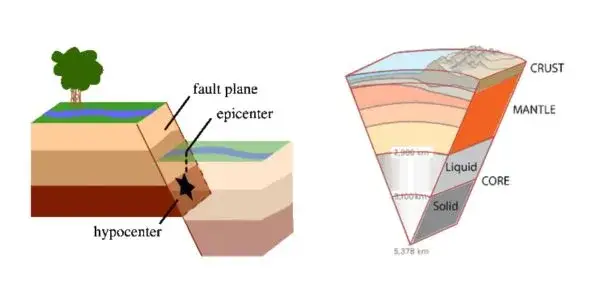
The Earth’s outer shell, known as the lithosphere, is broken into massive slabs called tectonic plates. These plates float on the semi-molten layer beneath them, called the asthenosphere. As plates slowly move, they interact in different ways:
- Convergent boundaries (plates collide, creating mountains or deep trenches)
- Divergent boundaries (plates move apart, forming rifts and new crust)
- Transform boundaries (plates slide past each other, causing friction)
When the accumulated stress at these boundaries exceeds the strength of rocks, energy is suddenly released. This release produces seismic waves, which we experience as earthquakes.
Must Read: The Science of Human Sleep: Why Do We Need 7–8 Hours a Night?
Understanding Seismic Waves: The Earth’s Tremors Explained
Earthquakes generate seismic waves that travel through the Earth:
- Primary Waves (P-waves): Fastest seismic waves, compressional, and travel through both solids and liquids.
- Secondary Waves (S-waves): Slower than P-waves, shear in motion, and cannot travel through liquids.
- Surface Waves: Travel along the Earth’s crust, slower but more destructive, causing most of the visible damage.
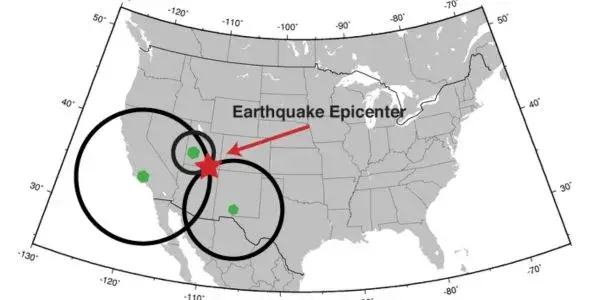
By studying how these waves travel through the Earth, seismologists can estimate the epicenter and magnitude of earthquakes.
Measuring Earthquakes: The Richter Scale and Beyond
The Richter Scale, introduced in 1935, was the first standardized method to measure earthquake magnitude. It calculates the energy released by analyzing seismic wave amplitudes. However, the Richter scale has limitations for very large earthquakes.
Today, seismologists use the Moment Magnitude Scale (Mw), which provides more accurate readings for both small and massive quakes. Magnitude is logarithmic, meaning each step (for example, from 6.0 to 7.0) releases about 32 times more energy.
The Limits of Earthquake Prediction
The big question is: Can we predict earthquakes with precision?
- What we can do:
- Identify earthquake-prone regions by mapping fault lines.
- Estimate the probability of quakes over decades using historical patterns.
- Use early warning systems to detect P-waves seconds before destructive S-waves arrive, giving people a brief window to take cover.
- What we cannot do (yet):
- Predict the exact time, place, and magnitude of an earthquake.
- Determine the long-term behavior of stress build-up inside Earth’s crust with current technology.
Scientists are exploring satellite data, AI models, and underground water-level changes as possible indicators, but reliable short-term earthquake prediction remains beyond our reach.
Must Read: AI Meets Solar Storms: How NASA-IBM’s Surya Could Shield Earth
Why Accurate Prediction Is So Difficult
The physics of earthquakes involves chaotic systems with countless variables: rock composition, fault geometry, underground fluids, and stress distribution. Unlike weather, which can be monitored continuously through satellites and sensors, the deep Earth is far harder to observe.
Earthquakes also follow a nonlinear pattern, where small changes can trigger massive effects. This makes precise forecasting nearly impossible.
Towards Earthquake Preparedness: Mitigation Over Prediction
Since perfect prediction is not possible, the focus shifts to preparedness and resilience:
- Earthquake-resistant infrastructure in seismic zones.
- Public awareness and drills to reduce panic.
- Early warning systems like Japan’s nationwide alert network.
- International collaboration in seismology research and data sharing.
Conclusion: The Physics of Earthquakes and the Unanswered Question
The physics of earthquakes—tectonic plates grinding, seismic waves rippling, and Richter scale measurements—has advanced our understanding of these natural phenomena. Yet, the dream of pinpoint earthquake prediction remains elusive. For now, science prioritizes reducing risk, strengthening infrastructure, and saving lives through preparedness rather than prediction.
Until technology advances further, the question “Can we ever predict earthquakes?” remains one of the great unsolved mysteries of modern physics.