
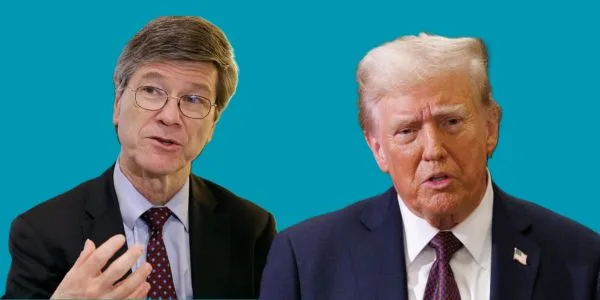
In an exclusive interview, Jeffrey Sachs condemns the Trump India tariffs as “stupid” and warns that the Trump India tariffs could derail U.S.–India relations and global trade stability.
Why Jeffrey Sachs Calls the Trump India Tariffs “Stupid”
Renowned economist Jeffrey Sachs, Columbia University professor, has sharply attacked the Trump India tariffs, branding them “stupid” and economically reckless. He argued that the new duties—announced by U.S. President Donald Trump in response to India’s purchase of Russian oil and defense equipment—lack both logic and strategic grounding.
“Putting a surcharge on India was as stupid as it could be from any norm,” Sachs told ANI, adding that such protectionist moves expose Trump as an “economic illiterate.” He warned that the Trump India tariffs risk damaging not only U.S.–India relations but also America’s global credibility.
Highlights at a Glance: Trump India Tariffs
- Jeffrey Sachs calls Trump India tariffs “stupid” and warns they could trigger global economic fallout.
- Tariffs now at 50% — 25% general surcharge + 25% penalty for Russian oil imports.
- $118 billion trade at stake: India–U.S. bilateral goods trade faces serious disruption.
- 7.4% of Indian exports hit hardest, including textiles, gems, jewelry, and footwear.
- U.S. consumers may pay more as costs rise across supply chains and retail markets.
- India pauses U.S. defense deals, pivots toward BRICS and self-reliance under PM Modi.
- Sachs doubts new trade pact, saying he’d be “hugely surprised” if India secures a deal this fall.
- Global South partnerships strengthen as India resists U.S. pressure.
What Are the Trump India Tariffs and Their Scope?
On August 1, Trump announced a 25% tariff on all Indian imports, worth nearly $85 billion annually. Just days later, on August 6, he doubled down—slapping an additional 25% duty on goods tied to India’s Russian oil purchases. This effectively raises duties to 50% on a wide range of Indian exports, including textiles, gems, footwear, and jewelry.
Economists at ICRIER note that while headlines suggest nearly 70% of India’s exports are affected, the Trump India tariffs significantly impact about 7.4% of total exports, mainly in labor-intensive sectors.
Must Read: Only Two Companies in the World Are Worth More Than India GDP
Economic Impact of the Trump India Tariffs
The U.S. and India traded goods worth $118 billion in 2024. With the new Trump tariffs, Indian exporters face shrinking market access, while American consumers could see higher prices across retail sectors. Analysts warn the tariffs will ripple through supply chains, raising costs for U.S. households much like earlier trade wars.
Indian industries—particularly textiles, gems, and small manufacturers—face severe losses. Meanwhile, U.S. companies dependent on Indian imports for raw materials and labor-intensive goods may be forced to pass rising costs onto consumers.
Strategic Fallout from the Trump India Tariffs
Diplomatic repercussions are also mounting. India has reportedly paused defense procurement talks with Washington and is doubling down on self-reliance programs under Prime Minister Narendra Modi (Reuters).
Sachs cautioned that the Trump tariffs could push India further toward BRICS partners like Russia, China, and Brazil, accelerating a multipolar global order. “The U.S. is not India’s ally—it’s using India against China,” Sachs argued, urging New Delhi to strengthen its Global South partnerships instead of relying on American assurances.
Must Read: BRICS: A Global Force Facing U.S. Pressure and Shifting Ties with India and Brazil
Sachs on the Costs of the Trump India Tariffs
Sachs warned that the Trump India tariffs could prove destructive for U.S. foreign policy as well as its own economy. He stressed that tariffs rarely achieve strategic goals, instead isolating Washington diplomatically.
“I will be hugely surprised if India pulled off an agreement with the U.S. this fall,” Sachs told Moneycontrol, signaling little optimism for a near-term trade deal.
Conclusion: A Turning Point in U.S.–India Relations
The Trump tariffs have emerged as a flashpoint in bilateral ties, threatening to undo years of careful diplomacy. While Trump defends the move as a show of strength, Sachs and other economists see only economic risk and diplomatic self-harm.
As India asserts its strategic autonomy and strengthens ties with the Global South, the coming months may determine whether the Trump tariffs mark a temporary setback—or the beginning of a long-term shift in the global economic order.