
Trump revokes chip export waivers for Intel, Samsung, and SK Hynix in China, escalating the U.S.-China semiconductor rivalry and raising fears of global supply chain disruption.
At a Glance: Trump Revokes Chip Export Waivers
- Trump revokes chip export waivers, ending streamlined U.S. equipment access for Intel, Samsung, and SK Hynix facilities in China.
- Effective from late December 2025, firms must seek case-by-case U.S. export licenses.
- Intel’s operations and Samsung/SK Hynix’s memory fabs in Xi’an, Wuxi, and Dalian face significant hurdles.
- Analysts warn of global supply chain disruptions, rising costs, and worsening U.S.-China tech tensions.
Why Trump Revokes Chip Export Waivers Now
The Validated End-User (VEU) program, run by the U.S. Bureau of Industry and Security (BIS), allowed trusted foreign companies to import U.S. chipmaking tools without repeated licenses. Intel, Samsung, and SK Hynix had secured this waiver in 2022.
Now, Trump revokes chip export waivers as part of his hardline “America First” technology agenda. A Federal Register notice (Aug 29, 2025) ends these waivers, giving companies 120 days before enforcement. From late December 2025 onward, firms must apply for licenses case by case.
This move follows earlier restrictions on AI chips, advanced lithography equipment, and semiconductor tariffs, underlining Washington’s push to limit China’s semiconductor progress.
Must Read: Economist Jeffrey Sachs Blasts ‘Stupid’ Trump India Tariffs, Warns of Global Fallout
Intel Faces New Uncertainty
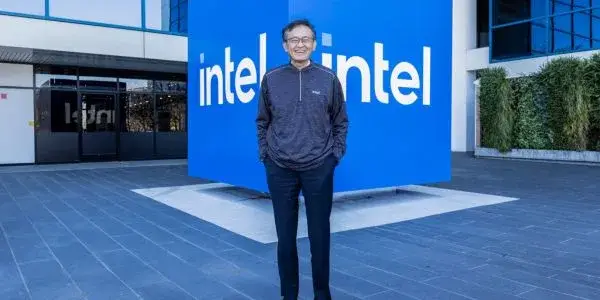
Intel’s presence in China—though reduced after selling its Dalian fab to SK Hynix—remains important. Its Chengdu assembly and R&D facilities still depend on U.S. equipment.
The company, a recipient of $8 billion under the CHIPS Act, is under pressure to shift production to the U.S. Yet, as Trump revokes chip export waivers, Intel faces operational uncertainty and volatile investor confidence. Shares of $INTC showed immediate swings after the announcement.
Must Read: Trump Demands Intel CEO Lip Bu Tan Resign Over Alleged China Ties
Samsung and SK Hynix: South Korea’s Memory Leaders Under Pressure
South Korea’s semiconductor giants are at the center of this decision.
- Samsung’s Xi’an facility contributes nearly 40% of its global NAND output, critical for smartphones and servers.
- SK Hynix’s Wuxi DRAM fab and Dalian NAND fab supply a significant portion of the world’s memory chips.
Without waivers, both must now obtain individual U.S. approvals, potentially delaying upgrades and expansion. Analysts warn this could disrupt nearly 70% of global DRAM and 50% of NAND markets, dominated by these two firms.
South Korea’s government is urgently lobbying Washington, as these companies are national economic pillars.
Global Supply Chain Fallout
Trump’s move to revoke chip export waivers has consequences far beyond the U.S. and China.
Supply Chain Disruptions
Without streamlined access to U.S. equipment, production bottlenecks could cause chip shortages, raising prices across electronics, AI hardware, and automotive industries.
Geopolitical Ripples
- South Korea fears economic damage as its champions face U.S. restrictions.
- Taiwan’s TSMC may gain as companies shift production outside China.
- China’s domestic chipmakers (SMIC, YMTC) could benefit if foreign firms cut back.
Economic Costs
Samsung and SK Hynix together face billions in potential lost revenue. Intel risks slowed innovation as it balances U.S. funding with its China operations.
Reactions and Outlook
Supporters in Washington hail the decision as vital to protect U.S. national security and stop “technology leakage” to China. Trump has framed it as part of his industrial sovereignty campaign.
Critics argue the policy could backfire, hurting U.S. companies and allies more than China. Former U.N. Ambassador Nikki Haley called aspects of the CHIPS Act a “mistake” for not fully cutting China ties.
For now, Intel, Samsung, and SK Hynix have 120 days to apply for licenses, but approvals remain uncertain. The broader outlook suggests further decoupling, with production shifting toward the U.S., Taiwan, and allied nations.
Conclusion
As Trump revokes chip export waivers, the semiconductor industry enters a new phase of uncertainty. The decision strikes at Intel, Samsung, and SK Hynix—three giants central to global memory and computing supply chains.
With the U.S.-China tech war intensifying, this move risks supply shortages, higher consumer costs, and deeper geopolitical fractures. December 2025 may mark the beginning of a profound realignment in global technology power.