
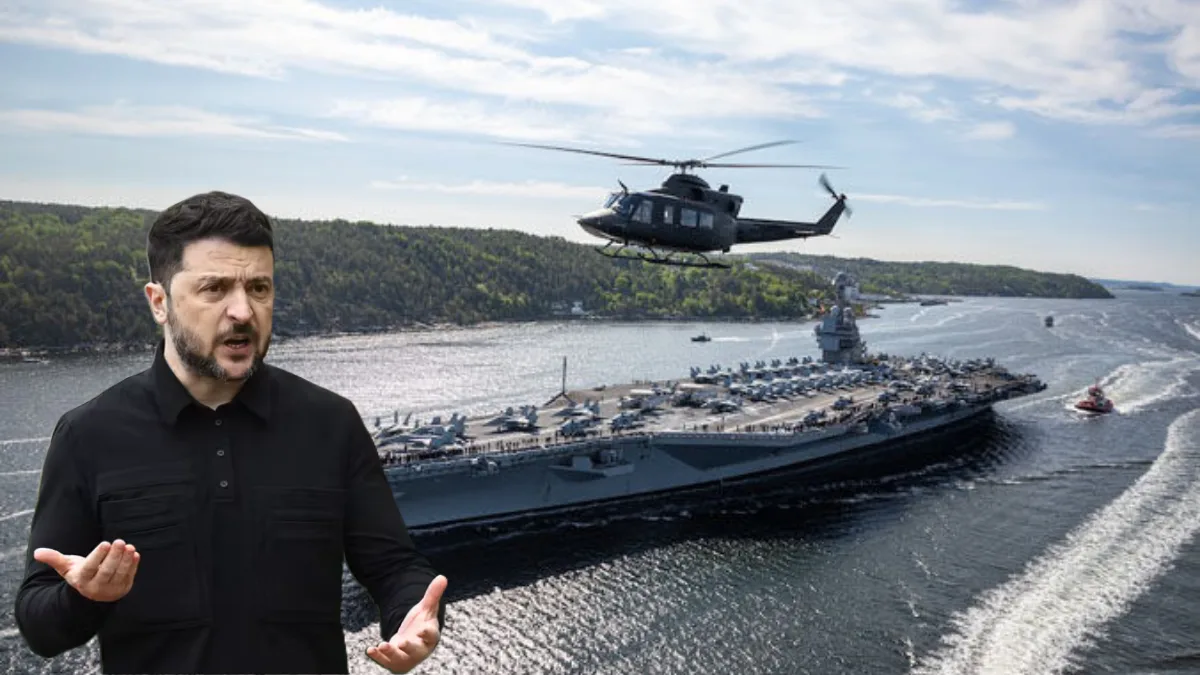
Ukraine has dropped its NATO membership bid during high-stakes Berlin peace talks, marking a major concession as Europe pushes for treaty-backed security guarantees. President Zelenskyy seeks Article 5-style assurances from the US and allies, while Russia maintains pressure amid continued attacks.
TheInterviewTimes.com | December 14, 2025 (IST): Ukraine has formally dropped its long-standing Ukraine NATO bid during critical peace negotiations in Berlin, signaling one of the most consequential shifts in Kyiv’s strategy since the war began nearly four years ago. The move comes as European powers intensify efforts to craft a new security framework that would protect Ukraine without extending NATO membership.
The Berlin peace talks, which began over the weekend, are being mediated by US envoy Steve Witkoff and senior adviser Jared Kushner, with Germany, France, and the United Kingdom playing central roles. European leaders see the moment as an opportunity to test whether concessions on security alignment can unlock a path toward a ceasefire.
Ukraine Drops NATO Path, Seeks “Ironclad” Guarantees
President Volodymyr Zelenskyy confirmed that Ukraine would no longer insist on NATO membership, acknowledging that the Ukraine NATO bid lacked unanimous backing among Western partners.
“From the outset, Ukraine sought NATO membership because it offers real security,” Zelenskyy said in remarks shared with international media. “But since this path was not supported by all our partners, we are now focused on strong, binding guarantees.”
Instead, Kyiv is demanding bilateral and multilateral security assurances modeled on NATO’s Article 5. Zelenskyy said Ukraine wants clear commitments from the United States, major European powers, Canada, and Japan that would deter future Russian aggression.
Despite stepping away from the Ukraine NATO bid, Zelenskyy stressed that Ukraine would not compromise on sovereignty. He rejected any externally imposed territorial settlement and said decisions on borders could only be made through democratic processes, potentially under international supervision.
Must Read: PM Modi to Visit Jordan on December 15-16; Focus on Strategic, Economic Cooperation
Demilitarized Zone Proposal Raises Concerns
According to diplomatic sources, Ukraine has presented a revised 20-point peace framework to Washington and Brussels. This proposal replaces an earlier 28-point outline drafted by US and Russian interlocutors, which Kyiv viewed as overly favorable to Moscow.
A key element under discussion is the establishment of a demilitarized zone in parts of the Donbas region. The proposal would require both Russian and Ukrainian forces to withdraw from current front lines, creating a buffer monitored by international mechanisms.
Zelenskyy expressed deep skepticism about the idea. He questioned how compliance would be enforced and warned that unilateral withdrawals could expose Ukrainian territory to renewed advances.
“If one side pulls back, who guarantees the other side will not move forward?” he asked. “What will stop the Russians?”
Washington has floated an alternative plan involving a “free economic zone” in the Donbas, aimed at stabilizing the region through shared administration and international investment. Moscow, however, continues to frame the issue strictly as demilitarization under Russian oversight, a position Kyiv and its allies reject.
Europe Pushes Treaty-Backed Security Commitments
European leaders are using the Berlin talks to press for legally binding security guarantees that would compensate for the end of the Ukraine NATO bid. German Chancellor Friedrich Merz is hosting Zelenskyy, French President Emmanuel Macron, and UK Prime Minister Keir Starmer for the next phase of negotiations at the Chancellery.
Diplomats say Europe wants any peace framework to include enforceable defense commitments, long-term military assistance, and sustained financial backing. The talks follow decisive action by the European Union earlier this week, when it froze €210 billion in Russian sovereign assets indefinitely.
By removing the requirement for six-month renewals, the EU has limited the ability of individual member states to block extensions. Brussels is now exploring ways to use the frozen funds to guarantee a €165 billion reconstruction and defense loan package for Ukraine through 2027.
“The European Union must stand behind Ukraine strategically and financially,” Chancellor Merz said ahead of the summit, underscoring Europe’s determination to anchor Ukraine’s security in formal agreements.
Russia Holds Firm as Attacks Intensify
Moscow has shown little sign of moderating its demands, even as Ukraine steps back from the Ukraine NATO bid. The Kremlin continues to insist that Kyiv cede the Donbas region and formally renounce Western military alignment, conditions Western officials consider unacceptable.
At the same time, Russian forces have intensified military pressure. Over the past week, Russia launched more than 1,500 drones, 900 guided bombs, and dozens of missiles across Ukraine. The strikes severely damaged power infrastructure in Odesa and Kharkiv, leaving hundreds of thousands without electricity.
European intelligence officials say the escalation is designed to strengthen Moscow’s leverage at the negotiating table. However, they warn that continued attacks could harden Ukrainian public opinion against any settlement perceived as rewarding aggression.
Key Takeaways
- Ukraine has dropped its NATO membership pursuit, marking a major shift in war-time strategy.
- Kyiv is now seeking Article 5-style security guarantees from the US and key allies.
- Europe is pushing treaty-backed commitments and leveraging frozen Russian assets.
- Russia remains uncompromising, even as military attacks intensify during talks.