
TheInterviewTimes.com | March 20, 2026 | 12:30 AM IST | New Delhi
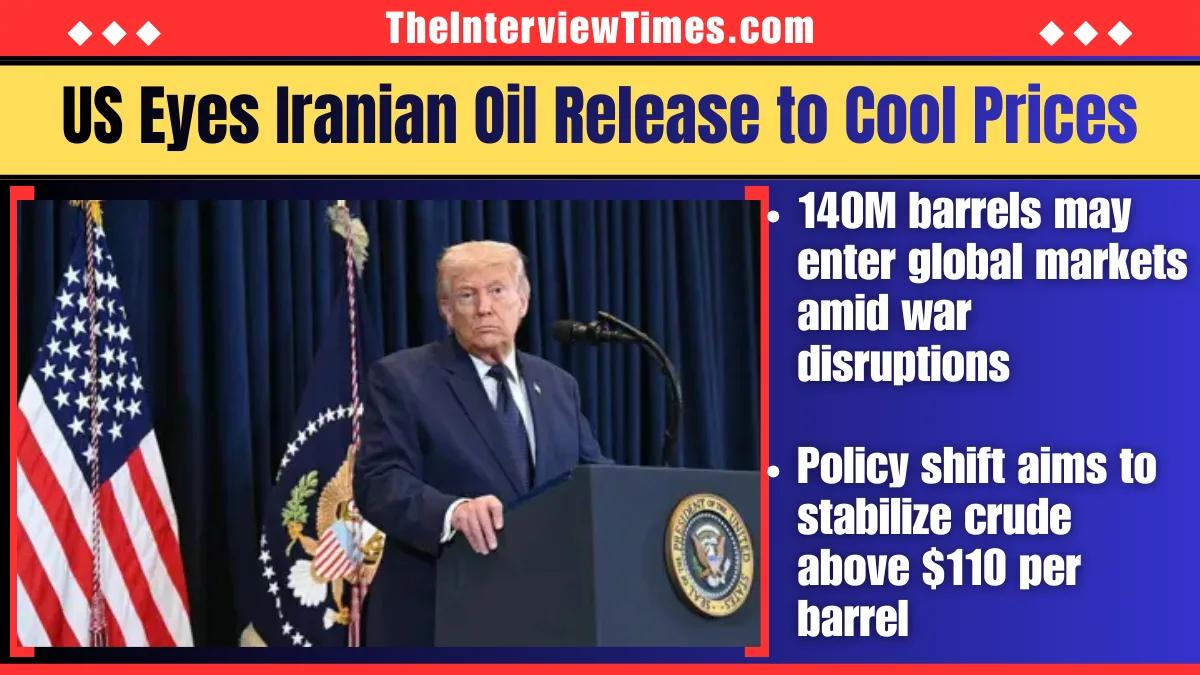
The US may lift sanctions on 140M barrels of Iranian oil to stabilize surging crude prices amid war disruptions in the Strait of Hormuz. With Brent trading above $110, coordinated G7 reserve releases and US emergency measures aim to ease one of the largest energy crises in modern history.
US Considers Major Shift on Iranian Oil Sanctions
The United States is preparing a major policy shift that could reshape global oil markets. Treasury Secretary Scott Bessent confirmed that the administration is considering lifting sanctions on around 140 million barrels of Iranian crude oil currently stored on tankers at sea.
The announcement came during an interview on Fox Business Network, where Bessent described the move as a direct supply-side intervention aimed at stabilizing surging crude prices.
According to officials, the strategy focuses on injecting immediate physical supply into global markets rather than influencing financial trading.
JUST IN: 🇺🇸🇮🇷 Treasury Secretary Bessent says US may unsanction Iranian oil on tankers to lower prices.
— BRICS News (@BRICSinfo) March 19, 2026
pic.twitter.com/d5eQo34R1l
War Disruptions Push Oil Markets Into Crisis
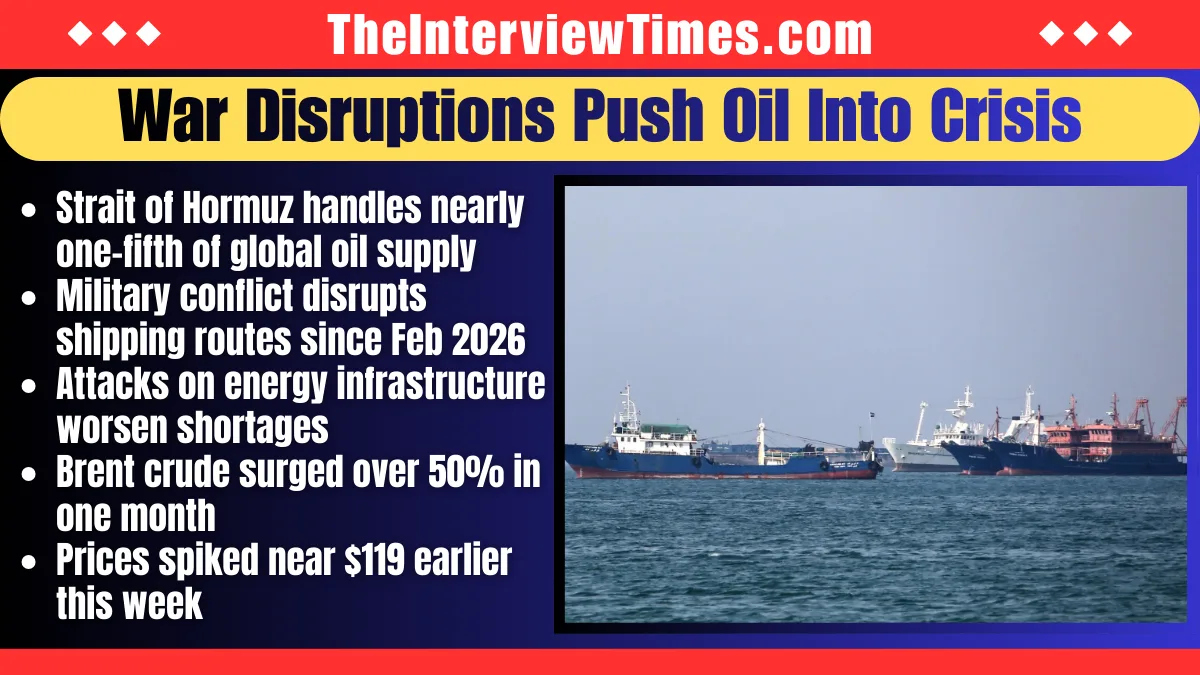
The global oil shock follows the ongoing military conflict involving the United States, Israel, and Iran. Since February 2026, shipping disruptions in the Strait of Hormuz have severely reduced oil flows.
This narrow passage typically handles nearly one-fifth of the world’s oil supply, making it one of the most critical energy chokepoints.
Recent attacks on energy infrastructure, including strikes affecting Qatar’s LNG facilities, have intensified the crisis. Analysts are calling this the largest oil supply disruption in modern history.
Benchmark Brent crude prices have surged more than 50 percent in a month, trading between $108 and $112 per barrel, with spikes nearing $119 earlier this week.
“Using Iranian Barrels Against Iran”
Bessent made it clear that the US is ready to act quickly.
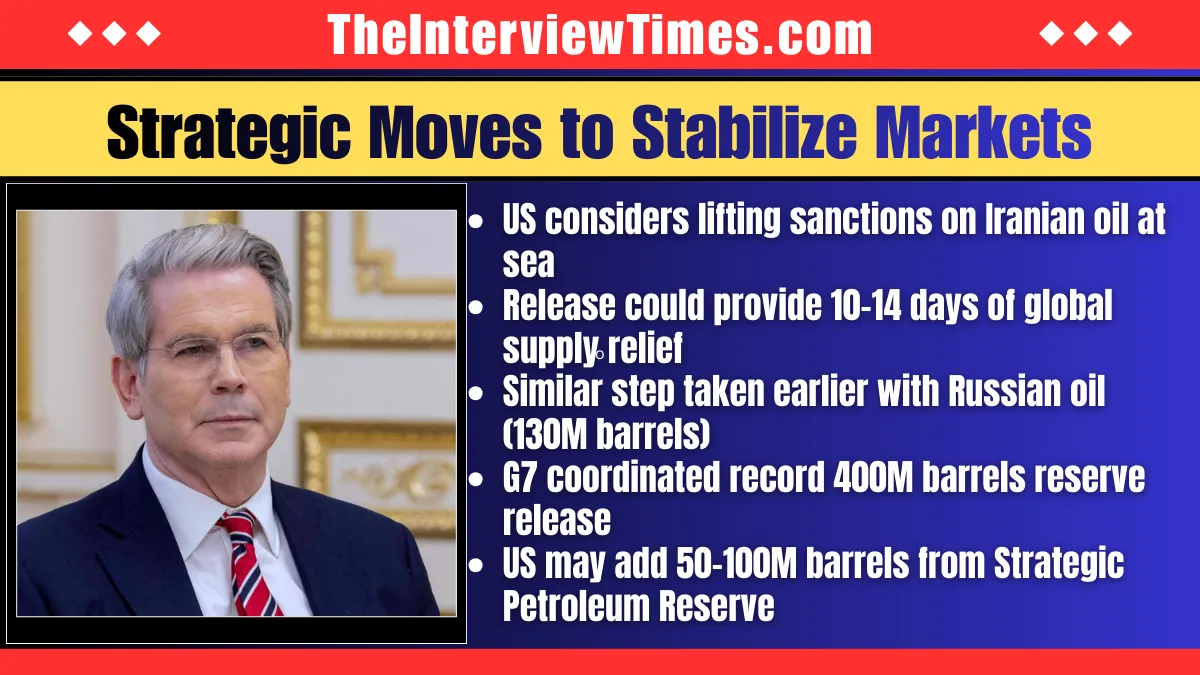
He stated that releasing Iranian oil already on water could provide 10 to 14 days of global supply relief. The administration had previously taken a similar step with Russian oil, freeing up around 130 million barrels.
Combined, these measures could inject nearly 260 million barrels into global markets.
Bessent emphasized that the focus remains on real supply:
“We are not intervening in financial markets. We are supplying the physical markets.”
Strategic Petroleum Reserve and Global Coordination
The Iranian oil plan is part of a broader emergency energy strategy.
The United States, along with the G7, has already announced a record 400 million barrels release from strategic reserves. The US alone has contributed 172 million barrels so far.
Further discussions include a potential additional release of 50 to 100 million barrels from the US Strategic Petroleum Reserve.
Meanwhile, President Donald Trump is set to engage with Japan’s leadership to secure maritime routes and coordinate further supply measures.
Market Reaction and Policy Debate
Oil markets responded immediately to the announcement, with prices easing slightly from intraday highs.
However, the policy has triggered debate. Critics argue that lifting sanctions could indirectly benefit Iran economically. Supporters counter that the oil would otherwise be redirected to countries like China, limiting global price relief.
Energy analysts believe the move could prevent oil prices from crossing $120 per barrel in the short term, offering temporary stability.
Impact on Global Economy and Consumers
Lower oil prices would directly benefit consumers, especially in fuel-sensitive economies like India.
In the United States, every $10 increase in crude oil raises gasoline prices by about 25 cents per gallon, highlighting the urgency behind the intervention.
However, experts warn that excessive use of strategic reserves could create vulnerabilities if the conflict continues or escalates further.
What Happens Next
The coming days will be critical as the US decides whether to officially lift sanctions on the floating Iranian oil.
If implemented, the move could temporarily ease one of the most severe energy crises in decades. However, long-term stability will depend on restoring secure oil flows through the Strait of Hormuz and reducing geopolitical tensions.
Top News: Trump Waives Jones Act for 60 Days Amid Iran Conflict to Stabilize U.S. Energy Supply
