

New Delhi, January 9, 2026, 8:20 p.m. IST
US Urges Prolonged Truce in Aleppo as Kurds Defy Syrian Evacuation Order Amid Clashing Regional Agendas
A tenuous ceasefire gripped Aleppo’s Kurdish enclaves on Friday after four days of intense fighting between Syrian government troops and Kurdish fighters, displacing over 140,000 residents and killing at least 21 civilians.
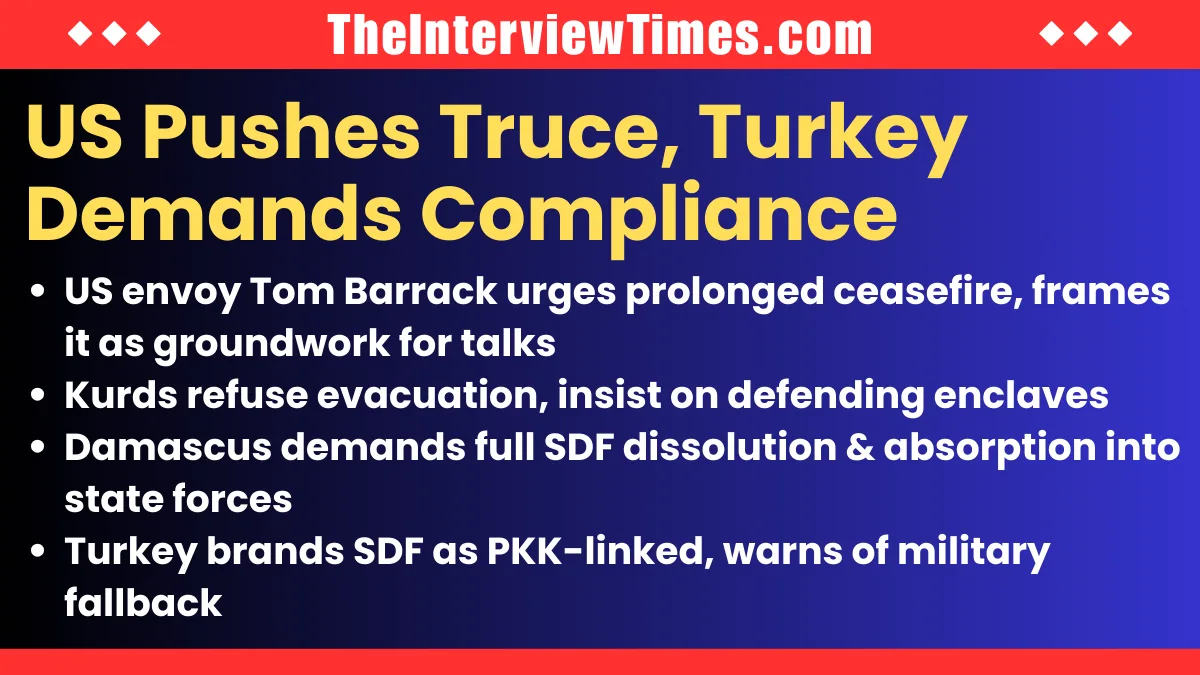
United States Special Envoy Tom Barrack hailed the pause as a step toward calm while pressing all sides to extend it beyond the morning deadline. Kurdish leaders branded Damascus’s withdrawal demand a non-starter, vowing to shield their districts as Turkey signalled readiness to back Syrian counterterrorism drives.
Clash Origins and Humanitarian Toll
Fighting ignited Tuesday in Aleppo’s Sheikh Maqsoud, Ashrafiyeh, and Bani Zeid neighbourhoods, Kurdish strongholds since 2011 when Syrian security forces clashed with local Kurdish militias amid stalled integration talks.
Each side levelled accusations of unprovoked attacks on civilians, hospitals, and ambulances, with Kurdish reports citing 12 deaths in their areas and government tallies noting nine in adjacent zones. Aleppo authorities opened evacuation corridors, but buses meant to ferry fighters out left empty after Kurds refused to vacate.
Syria’s Defence Ministry imposed a six-hour truce from 3 a.m. Friday, demanding Kurdish forces retreat to SDF-held northeast territories with light arms only. Local councils rejected the terms outright, calling them capitulation and pledging neighborhood defence despite heavy shelling.
The Aleppo Central Response Committee logged 142,000 displaced, many elderly or ill, straining civil defence resources.
US Diplomacy in the Spotlight
Barrack, leveraging US ties with both Damascus and the SDF which hosts 1,300 American troops, thanked parties for restraint and pledged intensive efforts for a durable halt. His X post spotlighted “goodwill” from Syrian officials, SDF commanders, and community heads, framing the truce as groundwork for talks.
Washington has tilted toward President Ahmed al-Sharaa’s post-Assad regime since its 2024 rise, nudging Kurds toward a March 10, 2025, pact for military integration by late last year.
That deal faltered over disputes: Kurds seek to preserve their SDF structure, while Damascus insists on full dissolution and state absorption. Deadline extensions proved temporary, fuelling Tuesday’s flare-up as a test of al-Sharaa’s authority eight months into transitional rule.
Must Read: Meloni Pushes for Coordinated EU Dialogue with Russia Amid Ukraine Peace Talks
Turkey’s Hardline Stance Fuels Tensions
Ankara, viewing the SDF as a PKK extension threatening its border, demands strict adherence to the March accord and offers Syrian forces operational aid against “terrorists.”
Foreign Minister Hakan Fidan accused Kurds of stalling integration to align with Israeli “divide-and-rule” tactics, warning of military fallback if diplomacy fails. President Recep Tayyip Erdogan reaffirmed commitment to Syrian unity via the deal, positioning Turkey as a mediator with Damascus.
Turkey’s 900-km frontier amplifies its stake, having warned of incursions absent SDF disbandment by January 2026. Fidan tied Aleppo unrest to broader regional woes, from Yemen to Sudan, urging SDF compliance for stability.
Sticking Points in Integration Talks
Core friction lies in command retention: SDF leader Mazloum Abdi met Syrian Defence Minister Murhaf Abu Qasra recently, but Aleppo violence underscores impasse. Damascus frames reclamation as essential for sovereignty, with Information Minister Hamza al-Mustafa deeming Kurds “partners” under state control. Kurds counter that autonomy safeguards gains against ISIS, where US-backed SDF forces proved pivotal.
As the 9 a.m. cutoff loomed Friday evening, buses idled and shelling echoes faded, but rejection statements cast doubt on extension. Regional powers’ duelling visions US restraint, Turkish pressure threatens to prolong Syria’s fragile peace or ignite wider conflict.
