
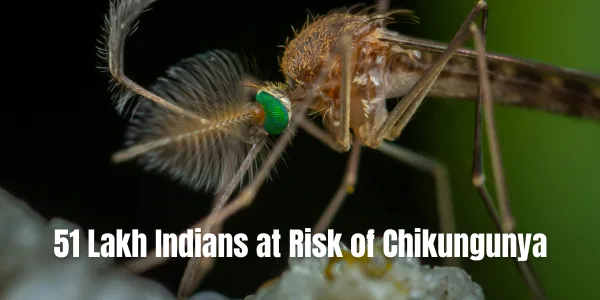
A new BMJ Global Health study reveals that over 51 lakh Indians are at risk of chikungunya annually. Learn about symptoms, prevention, and the growing impact of this mosquito-borne disease in India.
India Tops Global Risk Index for Chikungunya in 2025
In a startling revelation, a global study published in BMJ Global Health has found that nearly 5.1 million Indians (51 lakh) could be at risk of contracting chikungunya each year — the highest number globally.
The findings raise major public health concerns as rising temperatures, erratic rainfall, and urban overcrowding continue to fuel mosquito-borne diseases in India.
Researchers from the London School of Hygiene & Tropical Medicine, Nagasaki University, and the International Vaccine Institute used machine learning models to predict chikungunya transmission patterns worldwide.
Their analysis linked infection risk to temperature, rainfall, and mosquito habitats – and India emerged as the most vulnerable country.
Under a conservative model, 14.4 million people globally are at risk annually, with India alone accounting for 5.1 million cases. In an expanded scenario, this number could surge to 12.1 million, followed by Brazil and Indonesia.
“India and Brazil together represent nearly half of the global chikungunya burden,” the study notes, calling for urgent surveillance and vector control programs.
Must Read: Kidneys Under Pressure: Understanding Chronic Kidney Disease and Prevention Tips
What Is Chikungunya and How It Spreads
Chikungunya is a viral disease transmitted by Aedes aegypti and Aedes albopictus mosquitoes – the same species that spread dengue and Zika. The term “chikungunya,” derived from the Makonde language, means “that which bends up,” describing the severe joint pain it causes.
These mosquitoes breed in stagnant water sources like pots, tires, and open drains, and are daytime biters, making urban exposure especially high.
Unlike malaria, chikungunya does not spread directly from person to person but can rapidly multiply during outbreaks in densely populated cities.
Climate change, monsoon rains, and poor sanitation create perfect conditions for its spread. As India urbanizes and temperatures rise, experts fear that previously low-risk northern states may soon face outbreaks.
India’s Chikungunya Situation in 2025: Rising Hotspots
As of October 2025, India is witnessing increasing chikungunya cases in several states. The National Center for Vector Borne Diseases Control (NCVBDC) reports a steady uptick, especially in Karnataka, Gujarat, Maharashtra, Andhra Pradesh, and Delhi.
Urban hubs like Mumbai and Chennai have recorded spikes following the monsoon season. In August 2025, Mumbai alone reported over 220 cases, with experts warning of potential post-monsoon surges.
The World Health Organization (WHO) has flagged chikungunya as a re-emerging global threat, affecting 119 countries so far and putting 27 new nations at risk.
Recognizing Chikungunya Symptoms
Symptoms typically appear 4–8 days after an infected mosquito bite. Common signs include:
- High fever and chills (often above 102°F)
- Severe joint pain in wrists, ankles, and knees
- Headache and muscle pain
- Skin rash on the trunk and limbs
- Fatigue, nausea, and joint swelling
While most patients recover within a week, up to 50% experience long-term joint stiffness or arthritis-like pain lasting months or even years.
Vulnerable groups include the elderly, infants, and people with diabetes or hypertension.
If you experience these symptoms, seek medical evaluation immediately to rule out similar illnesses like dengue or Zika.
Prevention: The Only Effective Defense
With no specific cure or routine vaccine available in India yet, prevention is the strongest protection against chikungunya.
Key preventive measures include:
- Mosquito control: Eliminate stagnant water, clean containers weekly, and use larvicides.
- Personal protection: Apply DEET-based repellents, wear long sleeves, and use mosquito nets during the day.
- Community efforts: Participate in local fogging drives and awareness campaigns.
- Travel safety: Check for outbreak alerts before visiting endemic regions.
Experts emphasize integrated vector management combining community participation, sanitation, and climate monitoring.
Must Read: Scientists Create Human Egg Cells from Skin Cells, Revolutionizing Infertility Treatment
Treatment and New Vaccine Developments
There is no antiviral treatment for chikungunya; care focuses on relieving symptoms through rest, fluids, and pain management using acetaminophen or anti-inflammatory drugs. Aspirin is avoided due to bleeding risks.
However, recent advances bring hope:
- IXCHIQ, approved by the U.S. FDA in 2023, is a live-attenuated vaccine for adults.
- In 2025, VIMKUNYA, a virus-like particle (VLP) vaccine, became available for those aged 12 and above.
Both are recommended for travellers to outbreak zones.
India is currently conducting clinical trials for domestic vaccine development, but large-scale rollout remains pending.
For chronic cases, physiotherapy and pain management therapies can aid long-term recovery.
A Call for Vigilance and Action
With 51 lakh Indians at risk every year, chikungunya has evolved into a major public health challenge. Experts urge immediate steps to improve disease surveillance, vector control, and climate-based prediction systems.
Investing in vaccine research and public awareness campaigns could significantly reduce future outbreaks.
The fight against chikungunya begins at home — by keeping our surroundings clean and staying alert to early symptoms.
Stay informed. Stay safe.
Follow The Interview Times for verified health updates and share your experiences or insights in the comments below.