

TheInterviewTimes.com | March 15, 2026 | 09:06 PM IST
Explore 50 Indian folk dances from across the country, including Bhangra, Garba, Bihu and Chhau. Discover the traditions, festivals and cultures behind these vibrant dance forms.
Key Highlights
- India is home to hundreds of Indian Folk Dances, reflecting the traditions of diverse communities.
- Many folk dances are performed during harvest festivals, weddings, temple rituals and seasonal celebrations.
- Popular dances include Bhangra, Garba, Lavani, Bihu, and Kalbelia.
- These dances preserve regional identity, music traditions, and storytelling heritage.
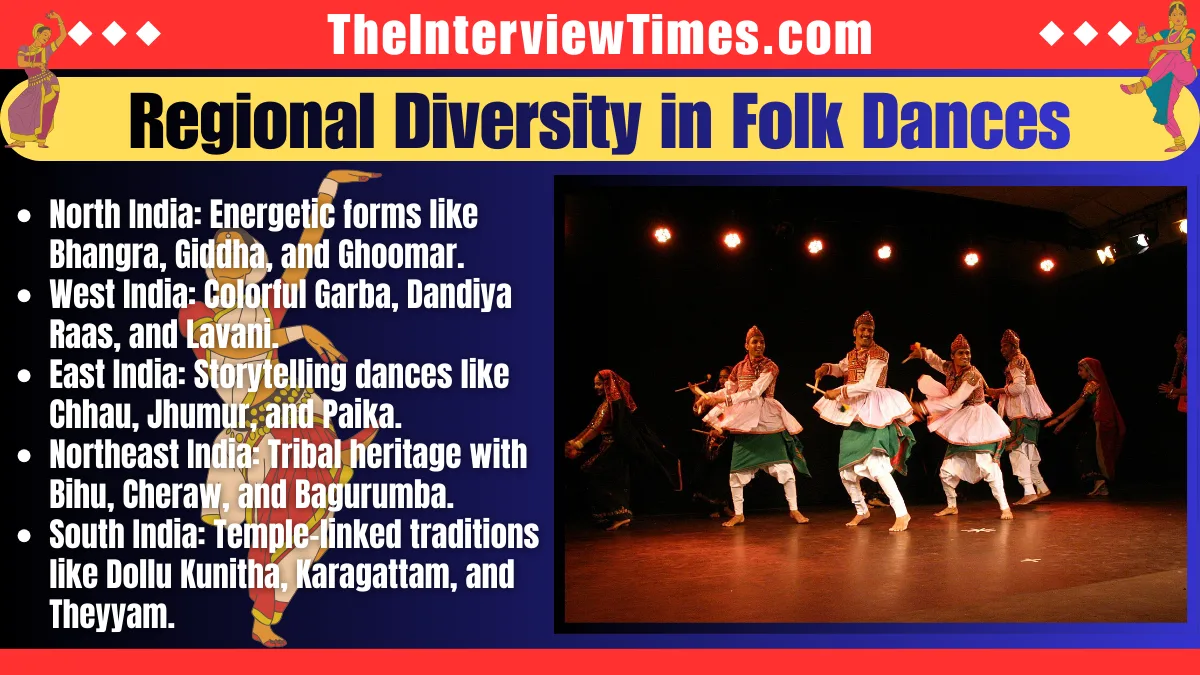
India’s cultural diversity is beautifully expressed through its Indian Folk Dances, which combine rhythm, storytelling, music and vibrant costumes. These dances have evolved over centuries within local communities and are deeply connected to everyday life, festivals, agriculture and religious traditions.
Unlike classical dance forms that follow formal rules and codified techniques, folk dances are spontaneous, energetic and rooted in community participation. Each region of India has developed its own dance traditions, shaped by geography, culture and social customs.
Today, Indian folk dances are performed not only in villages and festivals but also on national stages, cultural programs and international events, showcasing India’s rich heritage to the world.
Famous Indian Folk Dances by Region
North India
North India has some of the most energetic and celebratory folk dances.
- Bhangra – Punjab
- Giddha – Punjab
- Rauf – Kashmir
- Chholiya – Uttarakhand
- Nati – Himachal Pradesh
- Jhora – Uttarakhand
- Khyal Dance – Rajasthan
- Ghoomar – Rajasthan
These dances are often performed during harvest festivals, weddings, and community celebrations.
West India
Western India is known for its colourful costumes and rhythmic group dances.
- Garba – Gujarat
- Dandiya Raas – Gujarat
- Kalbelia – Rajasthan
- Bhavai – Rajasthan
- Lavani – Maharashtra
- Koli Dance – Maharashtra
- Dangi Dance – Gujarat
- Tamasha Dance – Maharashtra
Many of these dances are associated with Navratri celebrations and local folk theatre traditions.
East India
Eastern India has several folk dances inspired by nature, rural life and mythology.
- Chhau Dance – Odisha, Jharkhand, West Bengal
- Jhumur – Jharkhand and West Bengal
- Paika Dance – Odisha
- Brita Dance – West Bengal
- Gambhira – West Bengal
- Santhali Dance – Jharkhand
- Domkach – Bihar and Jharkhand
- Jhijhiya – Bihar
These dances often portray folk stories, community rituals and agricultural traditions.
Northeast India
The northeastern states have unique folk dances that reflect tribal heritage and natural landscapes.
- Bihu Dance – Assam
- Cheraw (Bamboo Dance) – Mizoram
- Hojagiri – Tripura
- Chang Lo – Nagaland
- Bagurumba – Assam
- Bardo Chham – Arunachal Pradesh
- Ponung – Arunachal Pradesh
- Nongkrem Dance – Meghalaya
These dances often involve intricate footwork, bamboo instruments and vibrant traditional costumes.
South India
Southern India has rich folk traditions linked to temple rituals and village festivals.
- Dollu Kunitha – Karnataka
- Karagattam – Tamil Nadu
- Kolattam – Tamil Nadu and Andhra Pradesh
- Padayani – Kerala
- Yakshagana Dance – Karnataka
- Kummi Dance – Tamil Nadu
- Veeranatyam – Andhra Pradesh
- Theyyam – Kerala
Many of these dances blend music, storytelling, devotion and dramatic performances.
Central India and Tribal Regions
Central India preserves many tribal dance traditions connected to nature and hunting rituals.
- Gaur Dance – Madhya Pradesh
- Saila Dance – Chhattisgarh
- Karma Dance – Madhya Pradesh and Chhattisgarh
- Raut Nacha – Chhattisgarh
- Panthi Dance – Chhattisgarh
- Matki Dance – Madhya Pradesh
- Jawara Dance – Madhya Pradesh
- Gendi Dance – Chhattisgarh
- Ahirai Dance – Uttar Pradesh
- Baredi Dance – Madhya Pradesh
These dances often symbolize strength, courage, and harmony with nature.
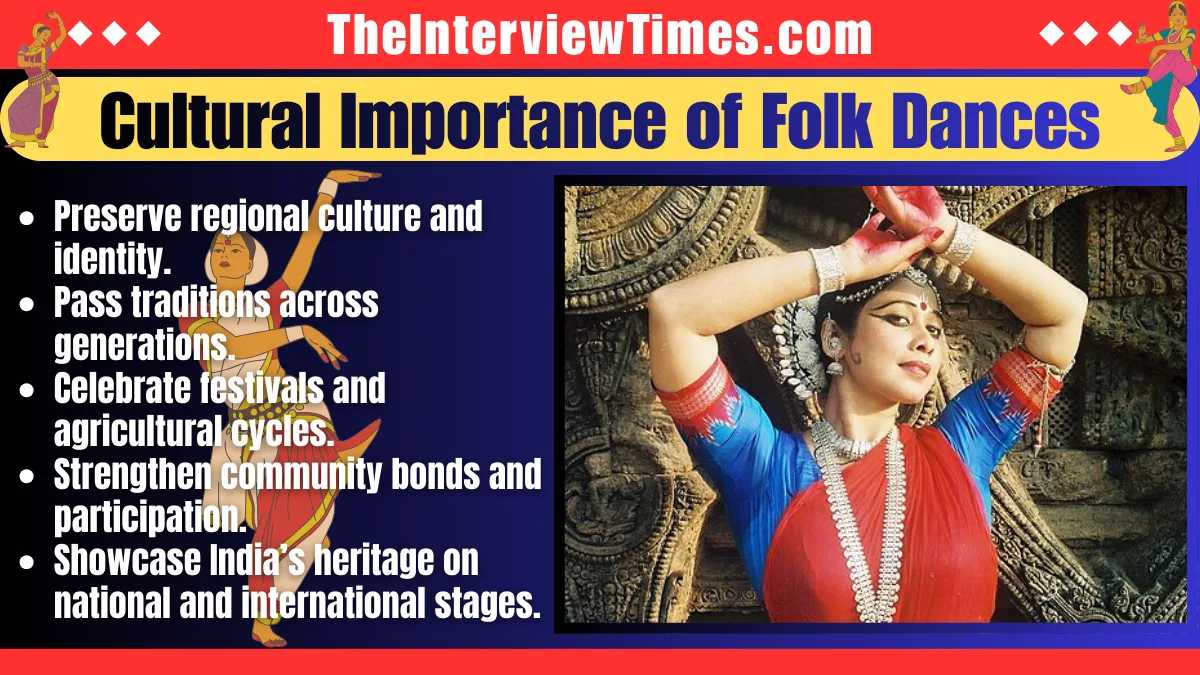
Cultural Importance of Indian Folk Dances
Indian folk dances are more than artistic performances. They play an important role in:
- Preserving regional culture and identity
- Passing traditions from one generation to another
- Celebrating festivals and agricultural cycles
- Strengthening community bonds
Through music, costumes and storytelling, these dances provide valuable insight into the history and social life of different communities across India.
The vibrant world of Indian Folk Dances reflects the spirit of India’s cultural diversity. From the energetic beats of Bhangra to the graceful rhythms of Cheraw, every dance form tells a story about the traditions, beliefs and celebrations of local communities.
As modern lifestyles evolve, efforts to preserve these dances through festivals, cultural programs and education are essential to ensure that these beautiful traditions continue to thrive for future generations.
Must Read: Indian Folk Dances: A Journey Through India’s Vibrant Cultural Traditions
