

TheInterviewTimes.com | March 19, 2026 | 12: 14 PM IST
Trump administration suspends Jones Act for 60 days to ease oil supply disruptions amid Iran conflict. Move aims to stabilize fuel prices and supply chains.
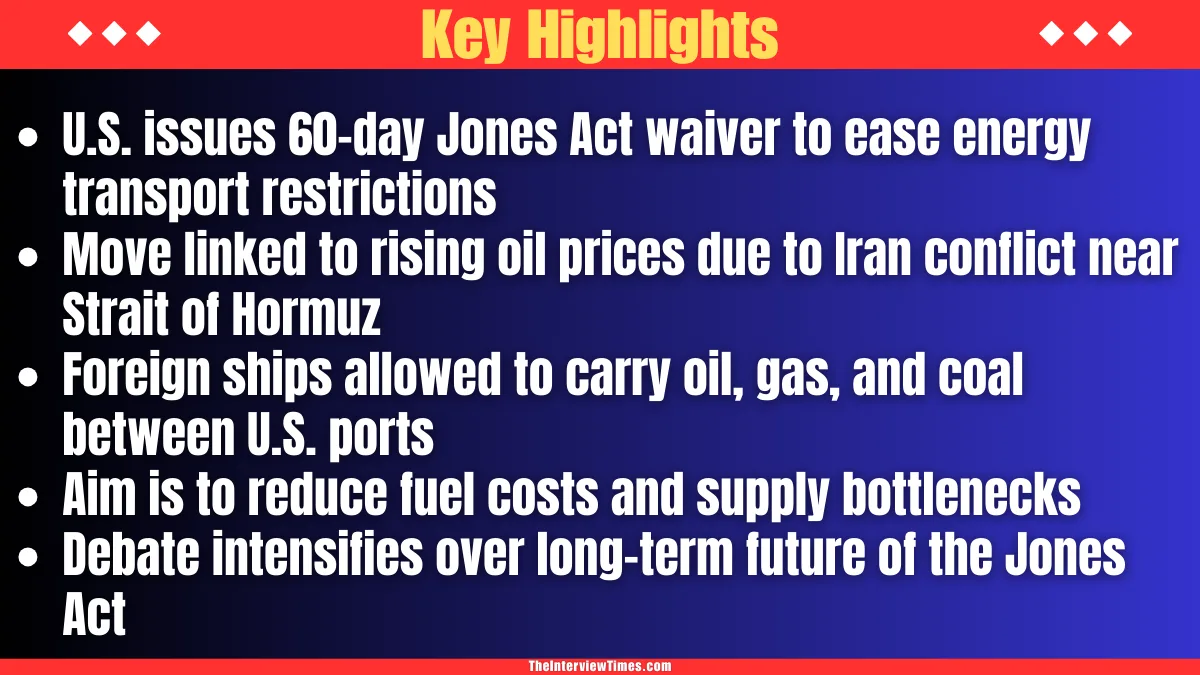
What is the Jones Act and Why It Matters

The Merchant Marine Act of 1920, commonly known as the Jones Act, is a key U.S. shipping law that regulates domestic maritime trade.
It mandates that any goods moved between U.S. ports be transported on ships that meet the following criteria:
- Built in the United States
- Registered under the U.S. flag
- Owned by U.S. citizens
- Crewed primarily by U.S. citizens
This law was designed to strengthen national security and support the domestic shipbuilding industry. However, it has long been criticized for increasing transportation costs due to a limited number of compliant vessels.
Trump Administration Announces 60-Day Waiver
On March 18, 2026, the administration of Donald Trump announced a temporary 60-day waiver of key provisions of the Jones Act.
This waiver allows foreign ships to transport essential commodities between U.S. ports, including:
- Crude oil and refined fuels like petrol and diesel
- Natural gas and related liquids
- Fertilizers
- Coal and other energy resources
The waiver took immediate effect and is aimed at addressing urgent supply chain disruptions.
President Trump waives Jones Act for 60 days in bid to free up the flow of oil to US portshttps://t.co/dq3u5ljxiW
— Karoline Leavitt (@PressSec) March 18, 2026
Iran Conflict and Global Oil Disruption
The decision comes amid escalating tensions in the Middle East, particularly around the Strait of Hormuz, a critical route for global oil shipments.
About 20 percent of the global oil supply moves through this critical narrow route. Ongoing military actions and threats have disrupted supply flows, leading to sharp increases in global oil prices.
As a result, the U.S. is facing internal logistical challenges in moving energy resources efficiently across regions.
Must Read: Strait of Hormuz Explained: Why This Narrow Waterway Controls the World’s Oil Supply
How the Waiver Helps the U.S. Economy
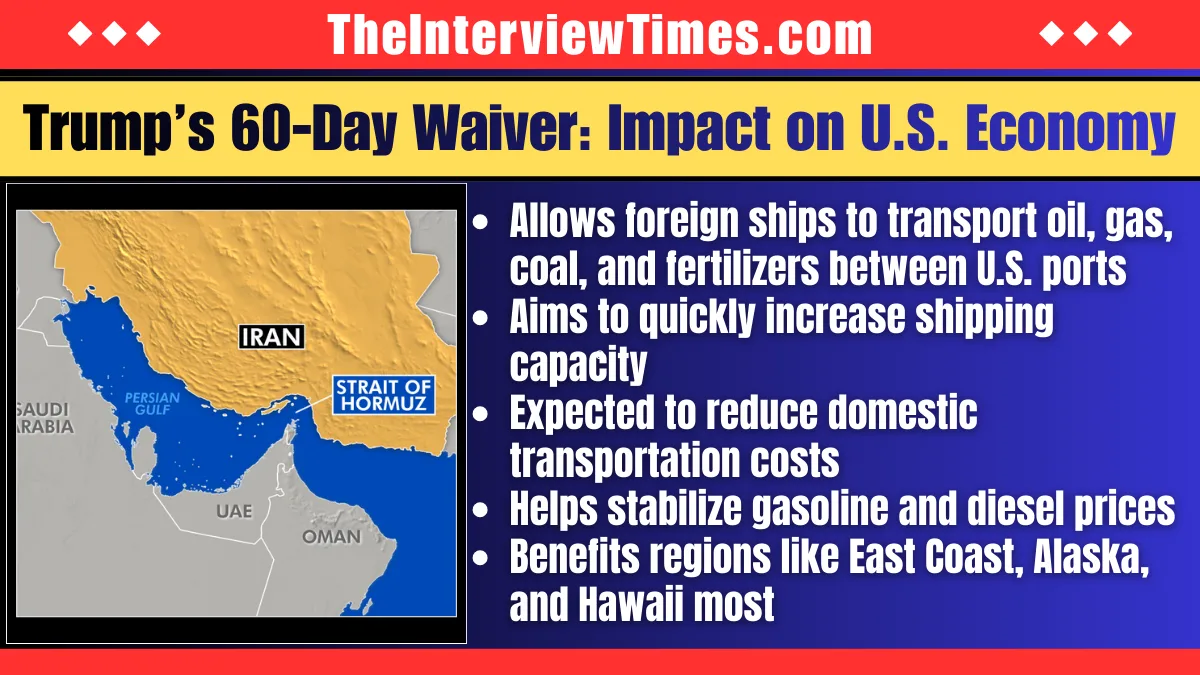
The primary objective of the Jones Act waiver is to:
- Increase shipping capacity quickly
- Reduce domestic transportation costs
- Improve fuel availability across states
- Stabilize rising gasoline and diesel prices
Regions like the East Coast, Alaska, and Hawaii are expected to benefit the most, as they often face higher fuel costs due to logistical constraints.
Debate: Temporary Relief or Policy Shift?
The waiver has reignited a long-standing debate over the relevance of the Jones Act.
Critics argue:
- The law is outdated and protectionist
- It increases costs for consumers and businesses
- It limits efficiency in domestic shipping
Supporters argue:
- It is vital for national security
- It ensures a strong domestic maritime workforce
- It reduces reliance on foreign shipping
Experts believe this waiver is a short-term emergency measure, not a permanent policy change.
What Happens After 60 Days?
The future of the waiver remains uncertain. Possible outcomes include:
- Extension if the crisis continues
- Expiry and full restoration of the law
- Increased political debate over reform
The situation will largely depend on developments in the Iran conflict and global energy markets.
Global Impact and India Perspective
While the waiver is a U.S.-specific policy, its impact is global.
India, which imports over 85 percent of its crude oil, is highly sensitive to global price fluctuations. If the U.S. manages to stabilize its internal supply, it may reduce pressure on global markets.
However, continued instability in the Middle East could still push oil prices higher, affecting India’s inflation and trade balance.
Top News: Rohingya Crisis 2026 Explained: 1.2 Million Refugees Face Aid Cuts, Violence and No Safe Return
