
TheInterviewTimes.com | March 24, 2026 | 10:26 PM IST | New Delhi
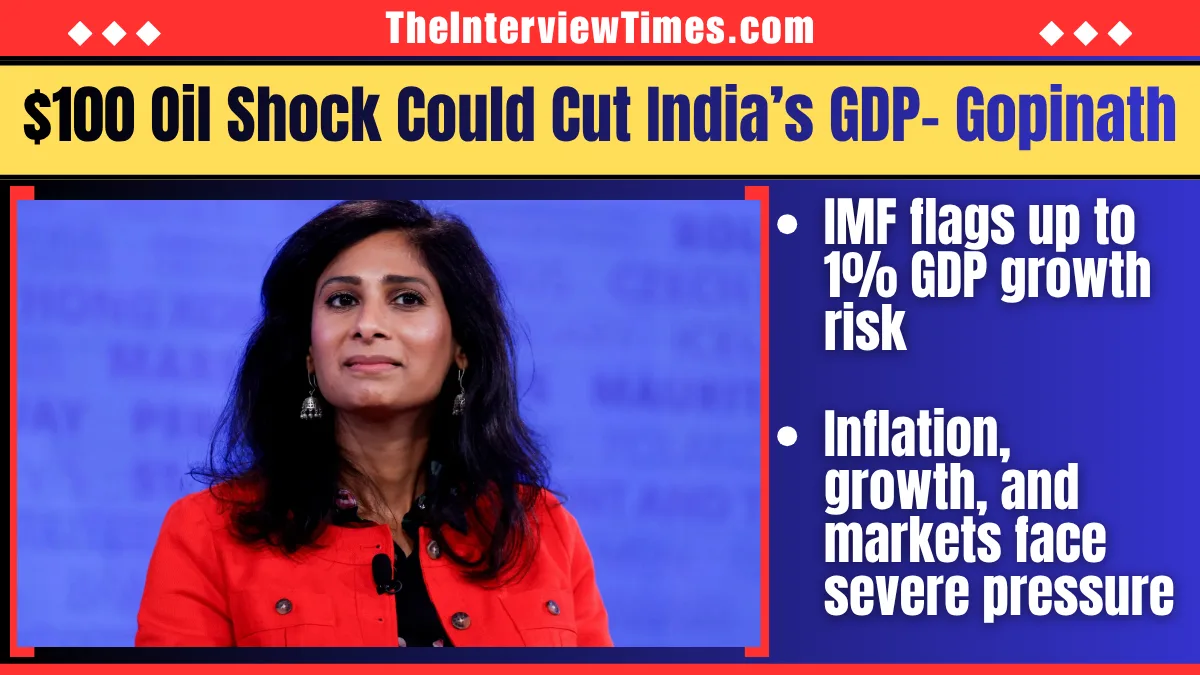
India faces up to 1% GDP risk as Gita Gopinath warns oil above $100 amid West Asia conflict, raising inflation and energy security concerns.
Article Summary
The ongoing West Asia conflict involving the United States, Israel, and Iran has triggered a sharp oil price surge above $100 per barrel. For India, which imports over 85% of its crude needs, the crisis is rapidly evolving into a major economic threat. Disruptions in the Strait of Hormuz, rising inflation risks, and market volatility are placing significant pressure on growth, fiscal stability, and energy security.
Key Highlights
- Crude oil prices surged past $100, peaking near $114 during peak tensions
- Up to 1% GDP growth risk flagged by Gita Gopinath
- Strait of Hormuz disruption affecting nearly 50% of India’s crude imports
- LPG supply crisis triggers 26% sales drop and rationing measures
- Sensex crashed 1,460 points, wiping out ₹20 lakh crore investor wealth
- India secures 2.2 million metric tons of US LPG amid supply diversification
Strait of Hormuz Crisis Disrupts India’s Energy Lifeline
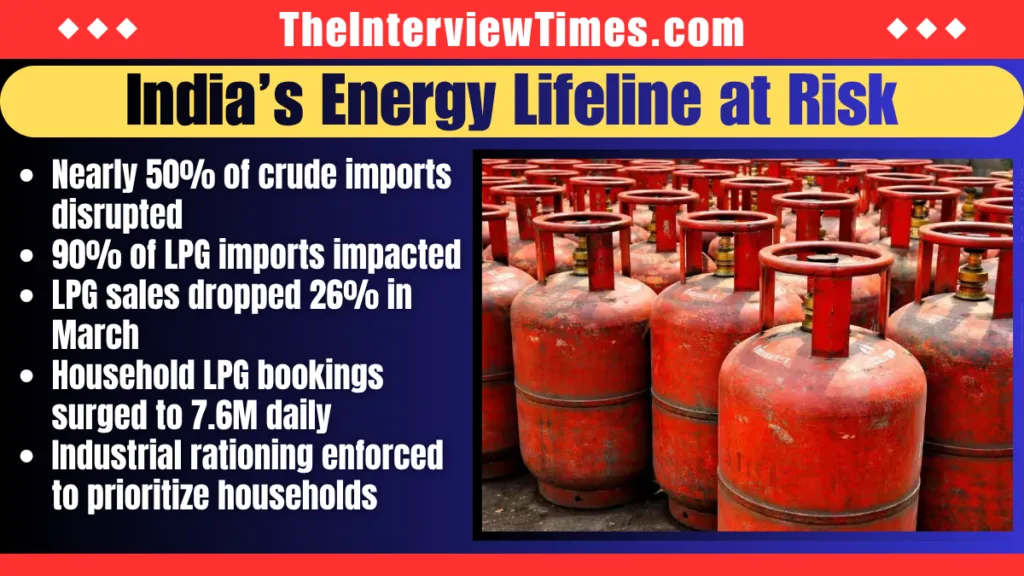
The effective blockade of the Strait of Hormuz by Iran has created a severe supply shock for India. The narrow waterway is critical for global energy flows and carries a substantial portion of India’s oil and LPG imports.
Nearly half of India’s crude oil shipments and 90% of LPG imports from the Middle East have been impacted. This has already translated into visible stress in domestic markets.
State-run fuel retailers reported a 26% drop in LPG sales in early March. At the same time, panic-driven demand surged, with daily household LPG bookings jumping from 5.5 million to 7.6 million.
The situation forced authorities to implement industrial rationing, prioritizing household consumption and essential sectors.
Shipping Disruptions and Emergency Supply Measures
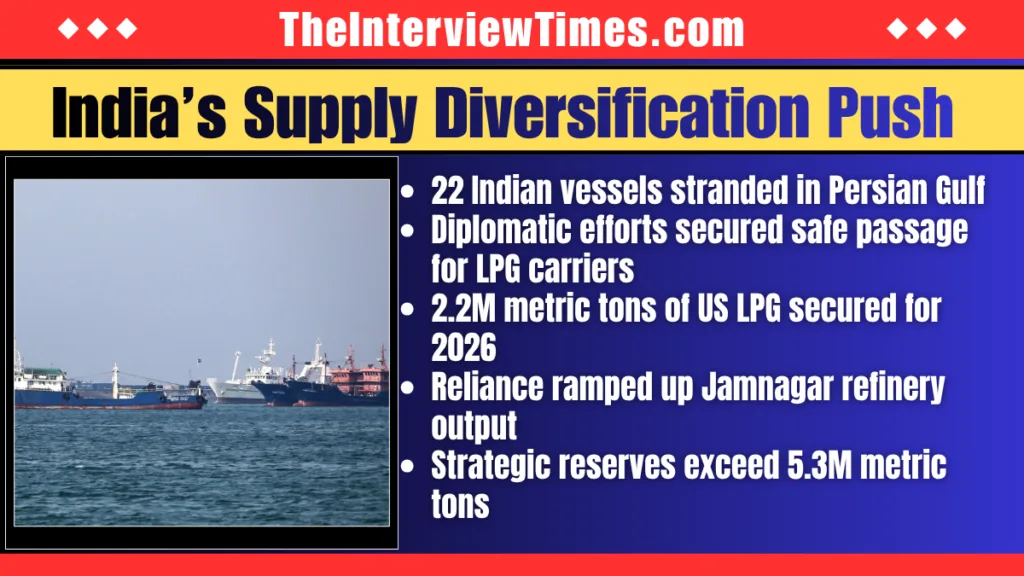
The crisis has also stranded 22 Indian vessels in the Persian Gulf, including LPG carriers and crude tankers. However, diplomatic intervention helped secure safe passage for two LPG carriers delivering 92,000 metric tons of fuel.
To offset supply shocks, India has aggressively pivoted toward alternative sources, particularly the United States, securing 2.2 million metric tons of LPG for 2026.
Domestic refiners, including Reliance Industries, have ramped up production at key facilities like Jamnagar to stabilize supply.
Modi’s Diplomatic Push to Stabilize Energy Flows
Prime Minister Narendra Modi has launched a multi-pronged diplomatic effort to contain the crisis.
India has expanded its energy sourcing base from 27 to 41 countries and maintains strategic petroleum reserves exceeding 5.3 million metric tons.
Direct engagement with Iranian President Masoud Pezeshkian and Gulf leaders, including Mohammed bin Salman, has focused on:
- Ensuring safe shipping routes
- Preventing attacks on energy infrastructure
- Avoiding further escalation
Simultaneously, India has conducted large-scale evacuation efforts, bringing back 375,000 citizens from the Gulf region.
Economic Fallout: Markets, Inflation, and Growth at Risk
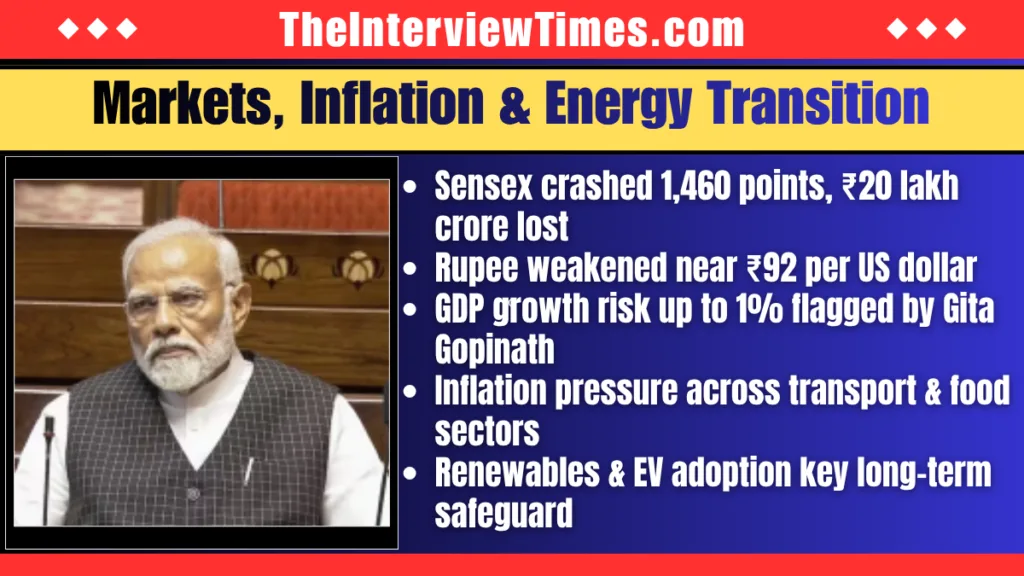
The financial impact has been swift and severe. The BSE Sensex plunged 1,460 points in a single session, erasing nearly ₹20 lakh crore in investor wealth.
The Indian rupee weakened sharply, nearing ₹92 per US dollar, reflecting capital outflows and rising import costs.
According to Gita Gopinath, sustained oil prices above $100 could:
- Reduce India’s GDP growth by up to 1 percentage point
- Increase fiscal pressure due to fuel subsidies
- Drive inflation higher across transport and food sectors
There are also concerns about potential attacks on energy infrastructure in major producers like Saudi Arabia, United Arab Emirates, and Qatar, which could prolong the crisis.
India’s Strategic Buffer: Diversification and Energy Transition
Despite the immediate risks, India’s long-term strategy offers some resilience.
The government has accelerated efforts in:
- Renewable energy expansion
- Electric vehicle adoption
- Diversified crude sourcing
These structural shifts aim to reduce dependence on volatile Middle Eastern supply chains.
However, in the short term, India remains highly exposed to global oil shocks, making geopolitical stability in West Asia critical.
Key Takeaways
- Oil above $100 poses a serious threat to India’s economic stability
- Hormuz disruptions are directly impacting fuel availability and prices
- Government diversification efforts are helping but cannot fully offset immediate risks
- Inflation, fiscal pressure, and market volatility are likely to persist if conflict continues
- Long-term energy transition remains India’s key strategic safeguard
