
TheInterviewTimes.com | March 26, 2026 | 2:20 PM IST | New Delhi
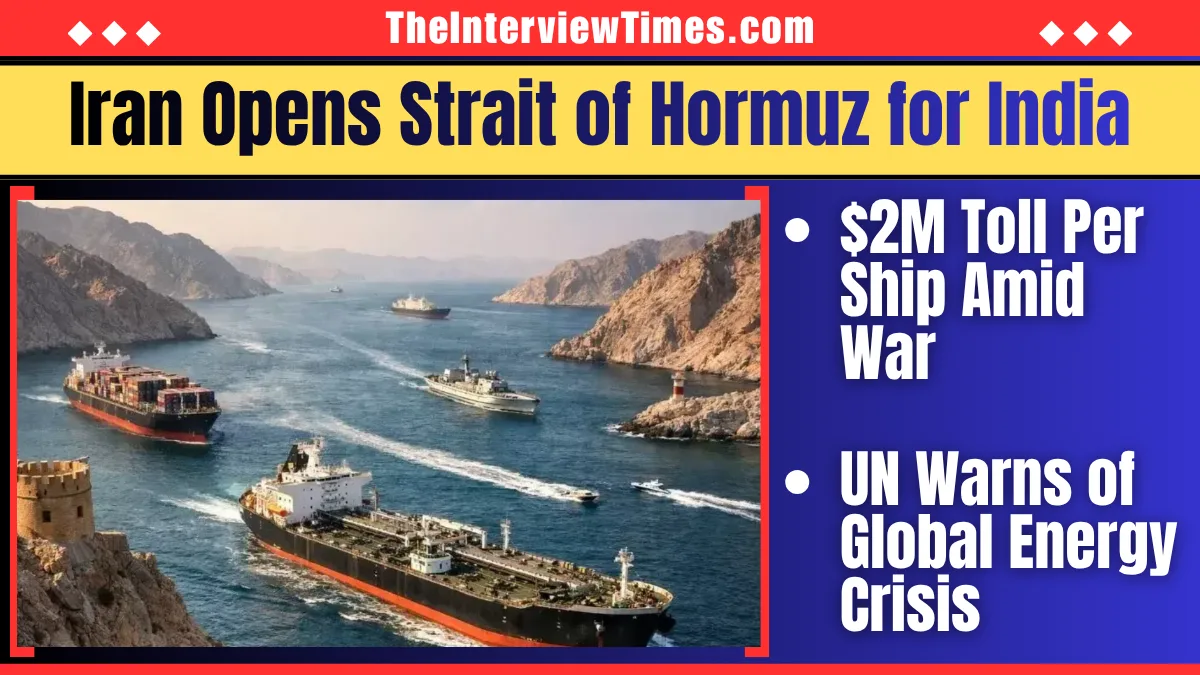
Iran allows India and allies to use Strait of Hormuz during US-Israel war, charging $2M per ship as UN warns of global energy risks.
Article Summary
Iran has partially reopened the Strait of Hormuz for select nations including India, charging $2 million per ship amid its war with the US and Israel. The UN warns of global supply risks if tensions continue.
Key Highlights
- Iran allows India, China, Russia, Iraq, Pakistan to transit through the strait
- Nearly 20% of global oil supply was disrupted after closure
- Iran charging $2M per vessel for passage
- US- and Israel-linked ships remain banned
- UN warns of risks to oil, gas, and fertilizer supplies
Strait of Hormuz Crisis: War Triggers Global Energy Disruption
The ongoing conflict began on February 28, 2026, when the United States and Israel launched large-scale strikes on Iran’s military infrastructure. The operation reportedly killed Iran’s Supreme Leader, Ali Khamenei, triggering a sharp escalation.
In response, Iran launched missile and drone attacks targeting US bases, Israel, and Gulf nations. By March 2, Iran’s Islamic Revolutionary Guard Corps (IRGC) moved to shut down the Strait of Hormuz, one of the world’s most critical oil routes.
The impact was immediate. Daily vessel movement dropped from around 150–160 ships to just 2 vessels, severely disrupting global oil supply chains and creating volatility in energy markets.
Selective Access Policy: Relief for India and Allies
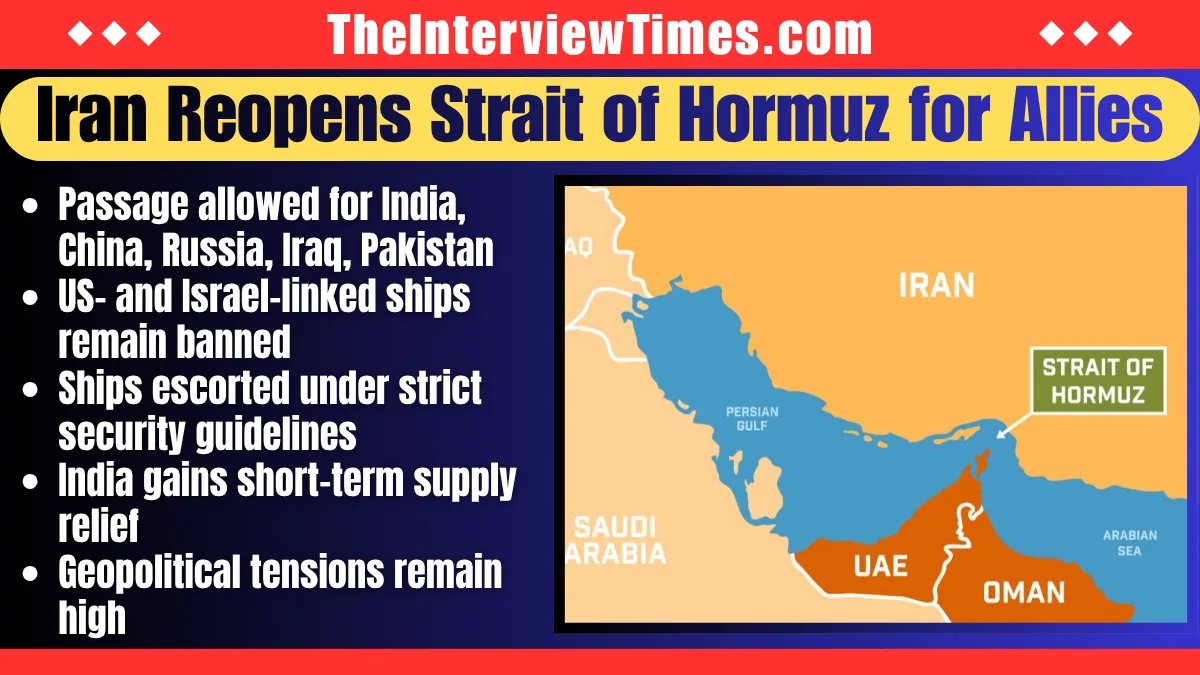
In a significant shift, Iran has started allowing limited passage through the strait, but only for what it calls “friendly nations.” According to Foreign Minister Abbas Araghchi, ships from India, China, Russia, Iraq, and Pakistan are now permitted under strict conditions.
Iran’s Mumbai consulate confirmed that vessels must comply with security guidelines and avoid any hostile actions. Approved ships are being escorted through the sensitive region.
For India, a major oil importer, this move is strategically important. It helps stabilize supply lines at a time when global energy markets remain uncertain. However, vessels linked to the United States and Israel continue to be barred, highlighting ongoing geopolitical tensions.
#Iran FM Abbas #Araghchi: We permitted passage through the Strait of #Hormuz for friendly nations including China, Russia, India, Iraq, and Pakistan. pic.twitter.com/RvLtiwYB4v
— Consulate General of the I.R. Iran in Mumbai (@IRANinMumbai) March 25, 2026
$2 Million Transit Fee: Strategic Control and Revenue Push
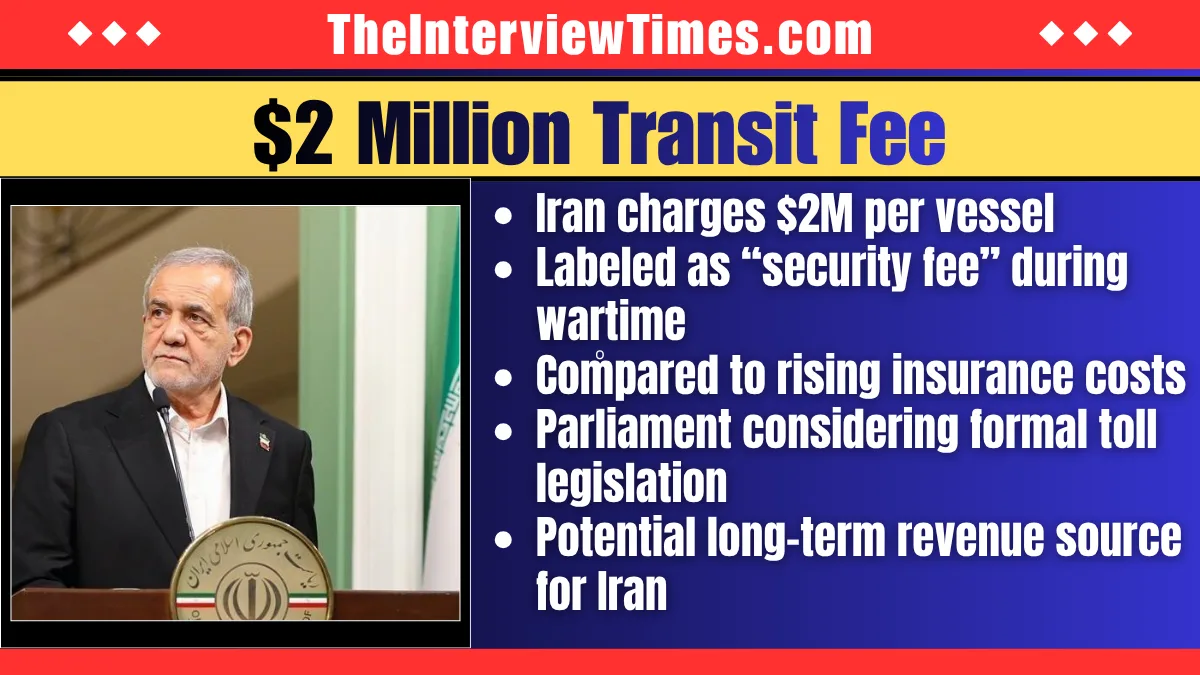
Iran is charging approximately $2 million per vessel for transit, calling it a necessary “security fee” amid wartime risks. Officials argue the charge is reasonable compared to rising insurance costs for ships operating in conflict zones.
Iran’s parliament is now considering a bill to formalize these tolls, potentially turning the strait into a long-term revenue source similar to major global trade routes.
Experts believe this move signals Iran’s intention to monetize control over a key global energy chokepoint, with some speculation that alternative currencies could be used for payments in the future.
UN Warning and Diplomatic Deadlock
UN Secretary-General Antonio Guterres has warned that the conflict is “out of control,” urging an immediate ceasefire and restoration of free navigation through the Strait of Hormuz.
He highlighted risks of global shortages in oil, gas, and fertilizers if disruptions continue. Several countries, including the UK, France, and Germany, have also criticized Iran’s actions.
Meanwhile, US President Donald Trump has claimed progress in negotiations and delayed further strikes. However, Iran has rejected the US proposal, demanding reparations, sovereignty over the strait, and permanent toll rights.
This diplomatic standoff continues to keep global markets volatile, with oil prices fluctuating around $89 per barrel.
Global Impact: High Stakes for Energy Markets
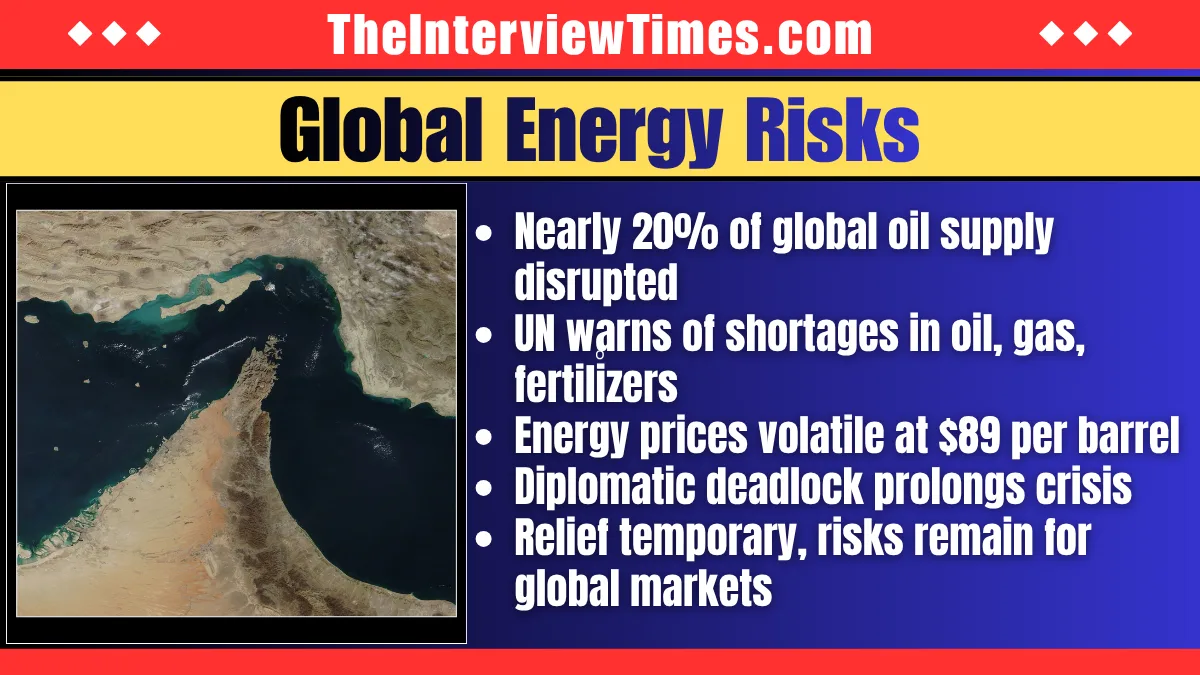
The partial reopening of the Strait of Hormuz offers temporary relief but does not eliminate the broader risks.
Key concerns remain:
- Continued disruption to global oil supply
- Rising energy costs affecting economies worldwide
- Escalating geopolitical tensions impacting trade
For India, access to the route provides short-term stability, but long-term risks depend on how the conflict evolves.
Key Takeaways
- Iran has partially reopened the Strait of Hormuz for select countries
- A $2 million fee per ship signals strategic control of the route
- UN warns of a potential global energy crisis
- India gains temporary relief, but risks remain amid ongoing war
Top Travel News: India e-Arrival Card and eVisa 2026: Complete Digital Entry Guide for Foreign Travellers – theinterviewtimes.com
