
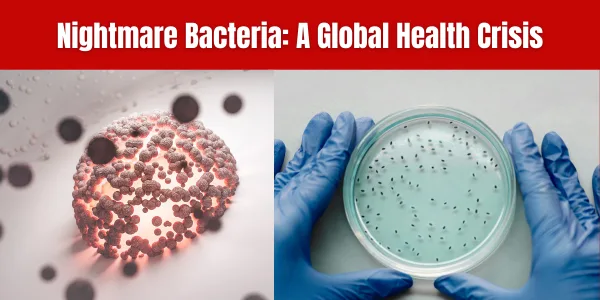
‘Nightmare bacteria’ are spreading worldwide, threatening modern medicine with deadly antibiotic resistance. Learn about their rise, impact, and global response.
New Delhi | October 12, 2025 | The Interview Times — In an age of cutting-edge medicine, one silent killer is steadily undoing decades of progress — Nightmare Bacteria. Health agencies worldwide, including the Centers for Disease Control and Prevention (CDC) and the World Health Organization (WHO), warn that antibiotic-resistant pathogens, dubbed Nightmare Bacteria, are now among the gravest global health threats. Drawing on verified reports and data from The Lancet, this analysis explores what these bacteria are, why they’re spreading, and how they’re reshaping global healthcare.
What Are Nightmare Bacteria?
The CDC uses the term Nightmare Bacteria to describe a dangerous class of antibiotic-resistant microbes known as carbapenem-resistant Enterobacterales (CRE). These Gram-negative bacteria, including Escherichia coli and Klebsiella pneumoniae, have evolved resistance to carbapenems — a last line of defense in modern antibiotic therapy.
These Nightmare Bacteria produce enzymes like carbapenemases that destroy antibiotics, rendering most drugs useless. One of the most infamous variants carries the New Delhi metallo-β-lactamase (NDM) gene, which spreads easily between bacteria through horizontal gene transfer, accelerating resistance globally.
CRE infections typically target vulnerable individuals — hospitalized patients or residents of long-term care facilities. They cause bloodstream infections, pneumonia, urinary tract infections, and wound infections, often with devastating outcomes. Mortality rates are severe: nearly 50% of patients with CRE bloodstream infections die. Between 2019 and 2023, the U.S. recorded a 69% rise in CRE cases, while NDM-producing variants surged 460%, reaching 4,341 total cases in 2023.
Overuse and misuse of antibiotics in human medicine, agriculture, and veterinary care have driven this resistance, while lapses in hospital hygiene and sterilization have hastened its spread. Although Nightmare Bacteria rarely infect healthy individuals, asymptomatic carriers can transmit them unknowingly — especially during hospital stays or international travel.
Must Read: AI Breakthrough Detects Cervical Cancer with 95% Accuracy — Transforming Women’s Health in Africa
The Global Impact of Nightmare Bacteria
The global rise of Nightmare Bacteria feeds into the broader antimicrobial resistance (AMR) crisis — what the WHO calls a “global health emergency.” AMR makes even routine surgeries, cancer treatments, and organ transplants riskier, threatening to roll back decades of medical gains.
A 2024 study in The Lancet estimated that bacterial AMR directly caused 1.27 million deaths in 2019 and contributed to 4.95 million additional deaths. Between 2025 and 2050, projections warn of 39 million direct deaths from AMR, with fatalities expected to hit 1.91 million annually — equivalent to three deaths every minute. Among these, Gram-negative bacteria like CRE remain the dominant culprits, with carbapenem resistance doubling since 1990.
Low- and middle-income countries (LMICs) suffer the worst impacts. Poor sanitation, limited healthcare access, and weak infection control enable Nightmare Bacteria to thrive, especially in South Asia and sub-Saharan Africa, where the NDM gene first emerged. A 2025 ECDC report found alarming resistance levels in Klebsiella pneumoniae and E. coli strains across Europe and Asia.
The WHO estimates that 92 million deaths could be prevented by 2050 through stricter infection prevention, stronger antibiotic stewardship, and global equity in drug access. Yet the antibiotic pipeline remains dangerously thin — with only five new drugs targeting critical pathogens like CRE in recent years.
Economic and Pandemic Implications
Beyond mortality, Nightmare Bacteria carry a massive economic burden, projected to cost trillions of dollars in healthcare expenses and productivity losses by 2050. In bone marrow transplant patients, CRE infections affect up to 2%, with 30-day mortality rates exceeding 60%.
The COVID-19 pandemic worsened this threat, as disrupted infection controls led to a 20% surge in hospital-acquired resistant infections in the U.S. This starkly illustrates how global crises can amplify the Nightmare Bacteria menace.
Must Read: Gut Health and Immunity: How Your Digestive System Protects You from Diseases
Conclusion: A Race Against Resistance
Nightmare Bacteria are not just a clinical anomaly — they are the frontline of a post-antibiotic era that could undo a century of medical progress. Data from the CDC, WHO, and The Lancet confirm that without urgent global coordination, research investment, and responsible antibiotic use, the world could soon face infections untreatable by any known drug.
Fighting Nightmare Bacteria requires vigilance from policymakers, scientists, and the public alike. Awareness, prevention, and accurate information are our most potent defenses against this evolving global health crisis.