
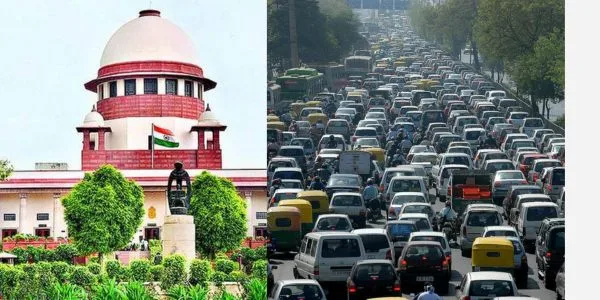
Supreme Court pauses enforcement of the age-based ban on older vehicles in Delhi-NCR, giving relief to millions of diesel and petrol vehicle owners as it reviews the policy.
New Delhi, August 12, 2025 – In a major relief for lakhs of older vehicle owners in the National Capital Region (NCR), the Supreme Court on Tuesday ordered that no coercive action be taken against owners of diesel vehicles over 10 years old and petrol vehicles over 15 years old, while it hears a review petition filed by the Delhi government against the blanket age-based ban.
A three-judge bench headed by Chief Justice of India B.R. Gavai, along with Justices K. Vinod Chandran and K.V. Anjaria, passed the interim order while issuing notices to the Centre, the Delhi government, and the Commission for Air Quality Management (CAQM). The court clarified that, until further orders, authorities must not impound or penalize vehicles solely on the basis of their age.
Background of the Older Vehicles Ban
The controversy stems from a 2015 order by the National Green Tribunal (NGT) prohibiting the operation of diesel vehicles older than 10 years and petrol vehicles older than 15 years in Delhi-NCR as an emergency measure to curb air pollution. This ruling was upheld by the Supreme Court in October 2018, leading to strict enforcement in subsequent years.
The 2018 judgment came at a time when Bharat Stage IV (BS-IV) emission standards were in force and the more stringent Bharat Stage VI (BS-VI) norms had not yet been implemented. The complete ban was seen as a necessary step to address deteriorating air quality in the capital and surrounding areas.
However, the Delhi government has now argued that significant changes in technology, policy, and enforcement mechanisms since 2018 warrant a fresh look at the ban.
Must Read: 6 Amazing Benefits of Regular Cycling for Health, Happiness, and a Greener Planet
Impact on Older Vehicle Owners
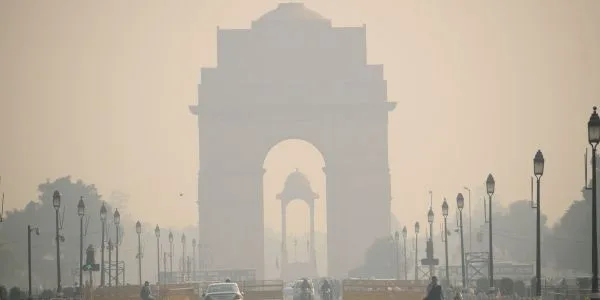
According to transport department data, Delhi alone has an estimated 6.2 million vehicles that fall into the “end-of-life” category under the current rule—diesel vehicles older than 10 years and petrol vehicles older than 15 years. Across the wider NCR, which includes Noida, Gurugram, Ghaziabad, and Faridabad, the number of affected vehicles is estimated to be around 10 million.
In recent months, the CAQM and state transport departments had stepped up enforcement, including a “no fuel” policy for these vehicles at petrol and diesel pumps, monitoring through CCTV networks, and on-road checks. Owners were facing the risk of hefty fines, seizure, or mandatory scrapping of their vehicles, regardless of whether they met pollution standards.
Must Read: India’s Environmental Challenges 2025: Solutions for a Sustainable Future
Delhi Government’s Argument in the Review Petition
The Delhi government, in its petition dated July 25, stated that the road-worthiness of a vehicle should be determined by scientific testing of emissions and safety, rather than a fixed age limit. It argued that:
- Blanket bans are unscientific as they do not account for actual emissions, mileage, or vehicle maintenance.
- Technological advancements, such as Bharat Stage VI engines, have drastically reduced permissible emission levels.
- There is better enforcement today, with widespread Pollution Under Control (PUC) testing and stricter monitoring of emission norms.
- Retrofitting options, such as conversion to CNG or electric power, offer sustainable alternatives to scrapping.
The government said that the 2018 order was passed during a period when emission technology and monitoring were far less advanced. In the current scenario, a more graded and balanced policy is needed—one that targets truly polluting vehicles rather than all vehicles crossing a certain age.
It urged the Supreme Court to direct the Union government or the CAQM to conduct a comprehensive, scientific study on whether the ban should continue, taking into account environmental, economic, and social impacts.
The Court’s Interim Relief
The Supreme Court’s directive to halt coercive action provides breathing room to older vehicle owners who were facing immediate penalties or loss of their vehicles. This relief will remain in place while the bench examines whether the 2018 blanket ban remains justified in light of current technology and environmental conditions.
The court has scheduled the matter for further hearing in about four weeks. During this period, stakeholders are expected to submit responses and possibly propose alternative policy frameworks.
Must Read: Single-Use Plastic Pollution in 2025: Global Impacts and Solutions
Why This Case Matters
This legal battle touches on the broader question of how environmental regulations should adapt to technological progress. It also raises the issue of balancing public health concerns with citizens’ rights and economic realities.
While environmentalists caution that vehicle age often correlates with higher emissions, the Delhi government’s position reflects a push toward evidence-based, vehicle-specific enforcement rather than blanket rules. If the court accepts this approach, it could set a precedent for pollution control measures across India.
What Happens Next
Over the next month, the court will hear arguments from the Centre, the CAQM, and other stakeholders. Possible outcomes range from upholding the existing ban to modifying it into a performance-based system that allows older but compliant vehicles to operate.
For now, owners of older vehicles in Delhi-NCR can continue to use them without fear of immediate penalties—at least until the Supreme Court delivers its next order.