Trump tariffs TikTok deal 2025 brings sweeping import duties and a $14B TikTok approval. Explore impacts on U.S. trade, tech security, and global markets.
In a whirlwind of executive actions underscoring his aggressive “America First” agenda, President Donald Trump has reignited debates on global trade and digital sovereignty. On September 25, 2025, the 47th President unveiled sweeping tariffs on pharmaceuticals, heavy trucks, and household goods—while simultaneously approving a $14 billion TikTok deal that resolves the app’s looming U.S. ban.
Analysts are calling this dual announcement the “Trump tariffs TikTok deal 2025” pivot, framing it as a two-pronged strategy to reshore American manufacturing and tighten safeguards over digital platforms with foreign ties. While businesses brace for compliance challenges and consumers fear higher costs, policymakers see long-term shifts in trade, tech security, and U.S. global standing.
Anatomy of Trump’s Sweeping Tariffs
Pharmaceuticals: Up to 100% Tariffs
The most striking move is the imposition of up to 100% tariffs on branded and patented pharmaceutical imports—unless companies pledge to build U.S. facilities by October 1. The White House has framed this as a national security measure, citing over-reliance on China and India for life-saving drugs.
- Exemptions: Select European imports under existing pacts may be spared.
- Impact: Economists warn of 15–25% short-term drug price hikes, affecting uninsured populations, but the administration claims it could create 50,000 biotech jobs in hubs like Boston and San Francisco.
White House spokesperson Karine Jean-Pierre emphasized: “These tariffs aren’t punishment—they’re a wake-up call for fair play in global health.”
Heavy Trucks and Household Goods
The tariff plan extends beyond pharma:
- Heavy Trucks: 25% levy, aimed at Mexican and Canadian imports, to shield U.S. truck makers like Peterbilt and Kenworth.
- Kitchen Cabinets & Bathroom Vanities: 50% duty, targeting Asian producers.
- Upholstered Furniture: 30% duty, with Italy and Vietnam among the hardest hit.
These measures, justified under Section 301 of the Trade Act, are projected to bring $300 billion annually in revenue but may drag GDP by 0.5–1% in 2026, according to the U.S. Chamber of Commerce.
Must Read: Top 10 Study Apps for Students 2025: Boost Learning and Productivity
The TikTok Deal: A $14 Billion Lifeline
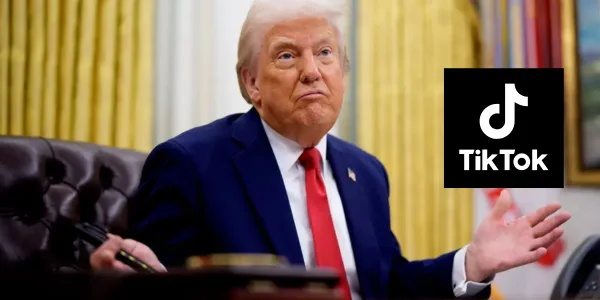
While tariffs made headlines, the other half of the Trump tariffs TikTok deal 2025 narrative was a tech-sector shocker. Trump approved ByteDance’s divestiture of TikTok’s U.S. arm to a consortium of American investors led by Oracle, averting a ban on the app used by 170 million Americans.
- Ownership Shift: U.S. firms now hold majority control; ByteDance’s share falls below 20%.
- Algorithm Oversight: Oracle takes responsibility, while the U.S. government gets access to a “black box” copy to monitor content and prevent Chinese influence.
- Compliance with Law: This satisfies the 2024 Protecting Americans from Foreign Adversary Controlled Applications Act, which required a sale or ban by January 2025.
TikTok CEO Shou Zi Chew welcomed the deal as a “win for creators and innovation,” though watchdogs worry about content moderation transparency under Oracle’s oversight.
Market Mayhem and Global Ripples
Wall Street’s initial reaction highlighted the complexity of the Trump tariffs TikTok deal 2025:
- Dow Futures: Fell 1.2% on tariff fears; retailers and logistics firms slid.
- Oracle: Stock surged 7% on TikTok approval, helping the Nasdaq stay buoyant.
Internationally, backlash was swift. China’s Ministry of Commerce denounced the tariffs as “economic coercion,” signaling possible retaliatory tariffs on soybeans and Boeing jets. The EU called for WTO consultations.
For U.S. households, the American Enterprise Institute projects an added $1,200 per year in costs from higher prices, turning the issue into a likely flashpoint in the 2026 midterm elections.
Expert Perspectives
- Pro-Trump: Former USTR Robert Lighthizer hailed the measures as “strategic sovereignty,” arguing that reshoring pharmaceuticals and securing TikTok are vital for both health and national security.
- Skeptics: Yale economist Dani Rodrik compared the tariffs to “Smoot-Hawley pitfalls,” warning of trade war escalation.
- Tech Concerns: Dr. Rumman Chowdhury, AI ethicist, warned that Oracle oversight without transparency risks “swapping one opaque system for another.”
What the Trump Tariffs TikTok Deal 2025 Means for Americans
For investors, the tariffs signal opportunities in domestic manufacturing and biotech—but risks in retail and logistics. Consumers face higher costs on goods ranging from medicine to furniture. Content creators, however, celebrate TikTok’s survival, at least in the short term.
Politically, the package underscores Trump’s effort to show strength in both economic protectionism and tech sovereignty. Whether voters embrace the higher costs as a trade-off for U.S. jobs and security will be tested in the coming election cycle.
Conclusion: A High-Stakes Gamble
The Trump tariffs TikTok deal 2025 represents a defining moment in U.S. economic and tech policy. By coupling aggressive trade barriers with a pragmatic resolution to a tech standoff, Trump is betting that Americans will accept near-term price hikes in exchange for long-term security and industrial revival.
As the October 1 implementation date approaches, the world will watch closely—whether this gamble ushers in renewed U.S. strength or triggers another round of costly trade wars.