
TheInterviewTimes.com | March 22, 2026 | 2:36 PM IST | New Delhi
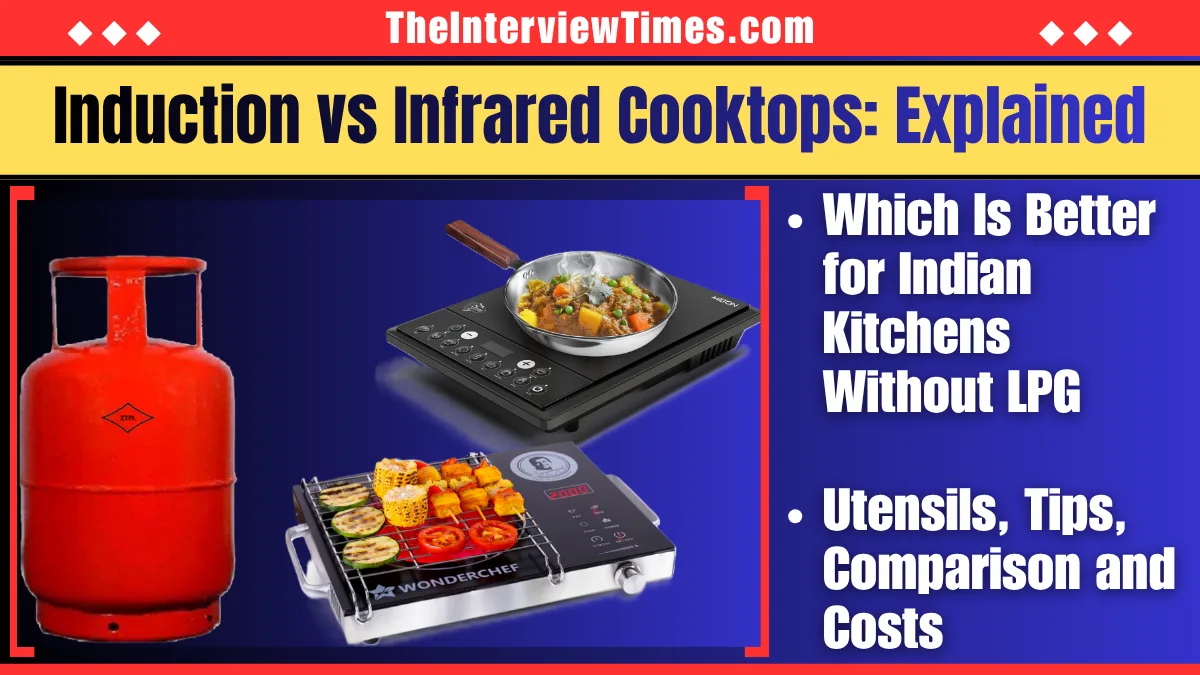
Induction vs infrared cooktops explained with cost, electricity usage, utensils, tips and comparison. A complete guide for Indian households shifting from LPG.
Induction vs Infrared Cooktops: India’s Electric Kitchen Shift Gains Momentum
India is rapidly moving toward electric cooking solutions as households look beyond LPG cylinders. Rising refill costs, urban lifestyle changes and improved electricity access are driving demand for alternatives like induction and infrared cooktops.
While both technologies eliminate the need for gas, they differ in efficiency, cost, safety and cooking style. For Indian consumers, the choice is increasingly about practicality and long term savings.
Key Highlights
- Induction cooktops are faster and up to 90 percent energy efficient
- Infrared cooktops support all utensils and traditional cooking
- Electric cooking can reduce monthly costs depending on usage
- Power supply and voltage stability remain key limitations in India
- Hybrid kitchens using both LPG and electric cooktops are rising
Why Indian Households Are Moving Beyond LPG
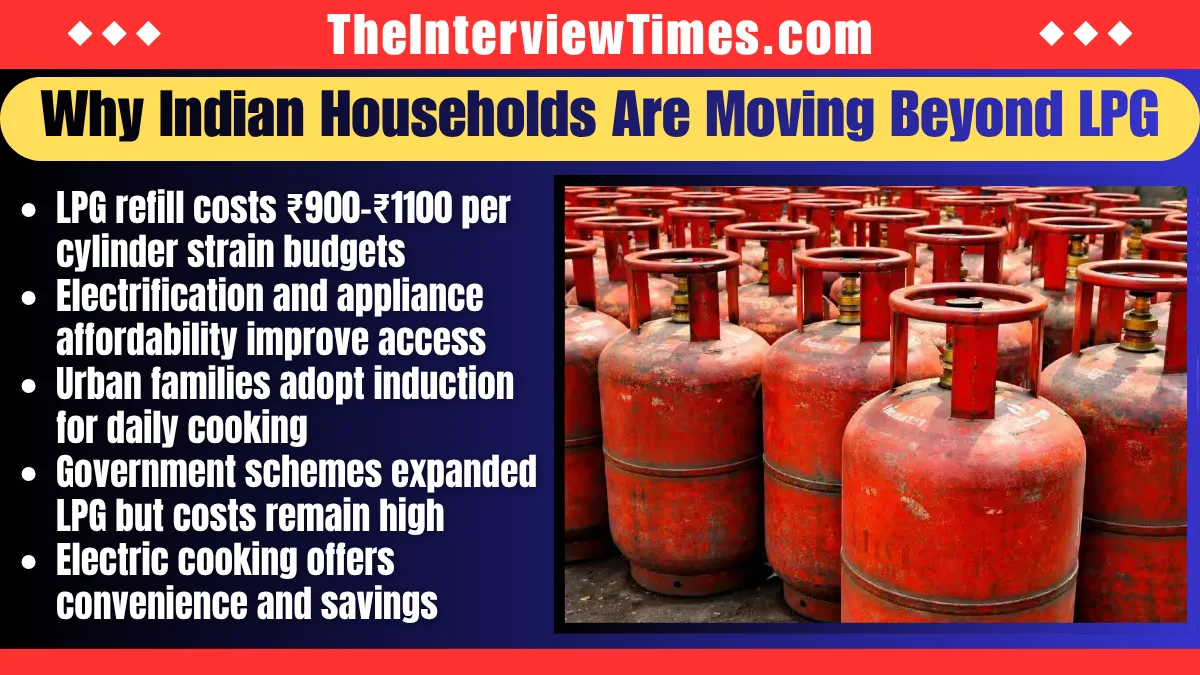
Government schemes such as Pradhan Mantri Ujjwala Yojana expanded LPG access across India. However, rising refill costs, often between ₹900 and ₹1100 per cylinder, continue to strain household budgets.
At the same time, better electrification and appliance affordability are making electric cooking more accessible. Urban households, in particular, are adopting induction cooktops for daily use.
How Induction Cooktops Work
Induction cooktops use electromagnetic energy to directly heat cookware instead of the cooking surface. This results in faster cooking and minimal heat loss.
Key Features of Induction Cooktops
- High efficiency of 85 to 90 percent
- Faster cooking times
- Precise temperature control
- Safer surface with minimal heat
What Utensils Work on Induction Cooktops
Induction cooktops require magnetic cookware.
Compatible Utensils
- Stainless steel (magnetic grade)
- Cast iron
- Induction compatible non stick cookware
- Iron tawa and kadai
Not Compatible
- Aluminum (without induction base)
- Copper utensils
- Glass and ceramic
Quick Test Tip
If a magnet sticks to the base, the utensil will work.
Brands like Prestige and Philips offer a wide range of induction compatible cookware in India.
How Infrared Cooktops Work
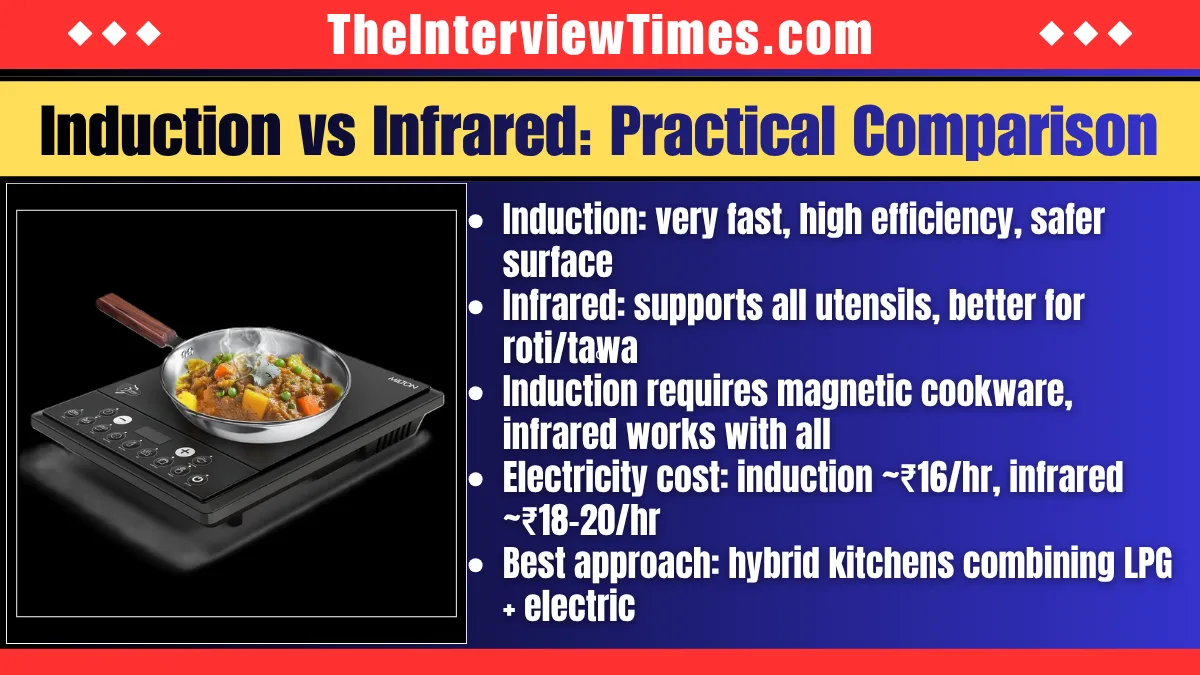
Infrared cooktops use heating coils or halogen elements to generate heat. The heat is transferred from the surface to the cookware.
Key Features of Infrared Cooktops
- Works with all utensils
- Suitable for traditional Indian cooking
- Can roast, grill and use tawa directly
- Lower upfront cost
However, these cooktops lose more heat and consume more electricity compared to induction.
Electricity Consumption and Monthly Cost Comparison
Electricity cost is a major factor for Indian households.
Induction Cooktop Example
- 2000W cooktop used for 1 hour = 2 units electricity
- At ₹8 per unit = ₹16 per hour
Infrared Cooktop
- Slightly higher consumption due to heat loss
- Approx ₹18 to ₹20 per hour
LPG Comparison
- One LPG cylinder costs around ₹900 to ₹1100
- Lasts about 25 to 30 days for an average family
In many cases, induction cooking can be cheaper or comparable, especially for small to medium usage.
Induction vs Infrared Cooktops: Quick Comparison
| Feature | Induction | Infrared |
| Speed | Very fast | Medium |
| Efficiency | High | Moderate |
| Utensils | Limited | All |
| Safety | High | Medium |
| Best For | Daily fast cooking | Traditional cooking |
Cooking Reality: Roti, Tawa and Indian Food
Cooking habits play a major role in decision making.
- Induction cooktops are not ideal for direct flame cooking
- Infrared cooktops handle roti and tawa cooking better
- LPG remains best for:
- Phulka
- Direct roasting (baingan, papad)
This is why many households prefer a combination setup.
Power Supply and Practical Limitations
Electric cooking depends heavily on power conditions.
Key Challenges
- Requires 1200W to 2200W power
- Not suitable in areas with frequent power cuts
- Voltage fluctuations can affect performance
Experts recommend using stabilizers in low voltage regions.
Safety and Maintenance
Induction Cooktops
- Cooler surface reduces burn risk
- Auto shut off features
- Easy to clean
Infrared Cooktops
- Surface remains hot after use
- Higher burn risk
- Requires careful handling
In terms of durability, induction cooktops have more electronic components, which can make repairs costlier. Infrared cooktops are simpler and easier to maintain.
Market Trends and Consumer Preferences
Leading brands such as Bajaj Electricals, Prestige and Philips are expanding their electric cooking product lines.
Retail trends suggest a growing shift toward hybrid kitchens, where induction cooktops are used for daily cooking while LPG or infrared systems are used for traditional needs.
Industry experts believe electric kitchens will become more common as India pushes toward cleaner and more efficient energy use.
Future Outlook: Electric Kitchens in India
India is gradually moving toward cleaner cooking solutions. Electric cooktops are expected to play a major role in reducing dependence on fossil fuels.
With better infrastructure, falling appliance prices and rising awareness, induction cooking could become the primary method in urban households over the next decade.
Conclusion
The transition from LPG to electric cooking is gaining momentum across India. Induction cooktops offer speed, efficiency and safety, while infrared cooktops provide flexibility and compatibility with traditional cooking methods.
For most Indian households, the best approach is a balanced one. Using induction for daily cooking and retaining infrared or LPG for specific needs offers both convenience and efficiency.
