
TheInterviewTimes.com | April 27, 2026 | Sri Aurobindo Centre for Arts & Creativity, New Delhi
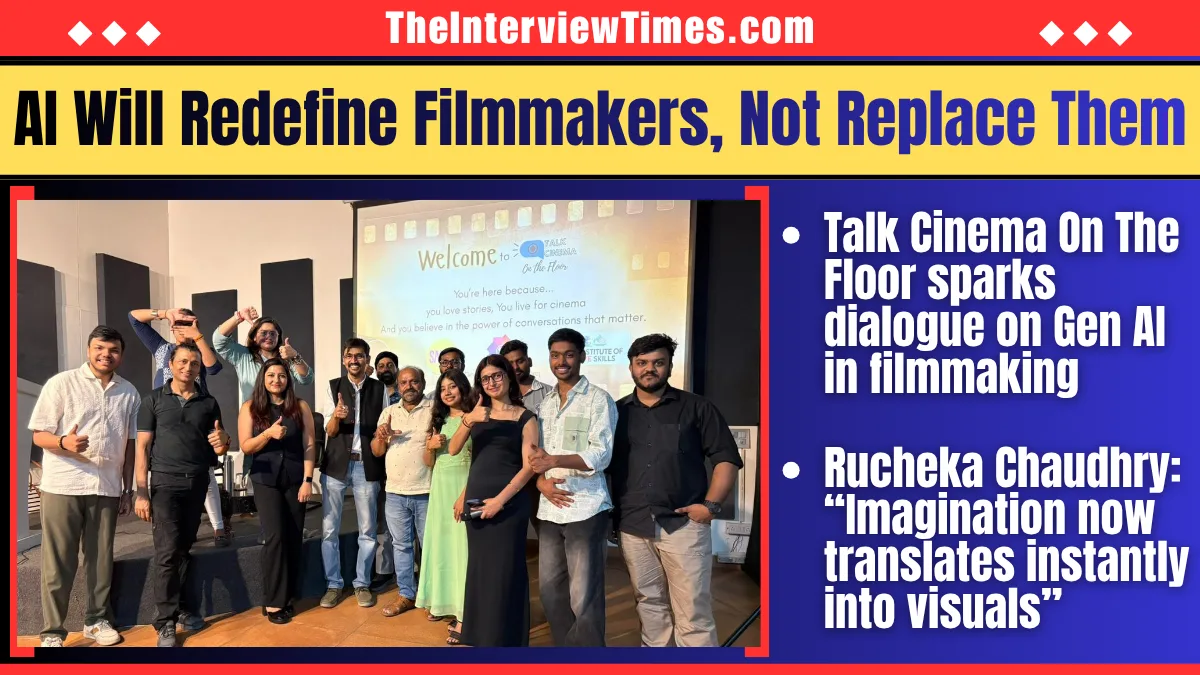
AI Filmmaking is reshaping cinema, not replacing creators. Key insights from NDFF’s Talk Cinema session on creativity, tools, and ethics.
“Today’s filmmaker is no longer just an executor, but an explorer — someone who can instantly translate imagination into visual form.”
This was highlighted by filmmaker and AI practitioner Rucheka Chaudhry during the April Chapter of Talk Cinema On The Floor, a monthly initiative by the New Delhi Film Foundation (NDFF). The session, themed “Filmmaking in the Age of Gen AI,” brought together filmmakers, aspirants, and cinema enthusiasts for a meaningful dialogue on the evolving relationship between artificial intelligence and cinematic storytelling.
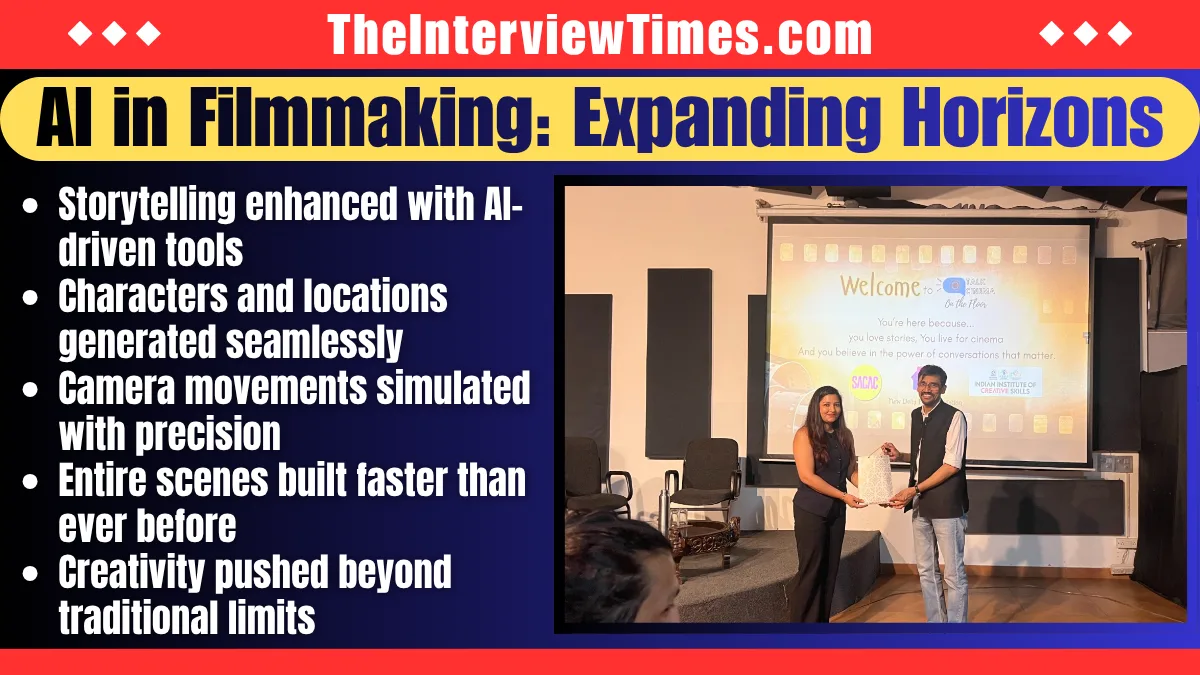
The session began with a welcome address and an introduction to NDFF and its flagship initiative Talk Cinema On The Floor, which aims to build a vibrant creative ecosystem where filmmakers and audiences can engage, learn, and collaborate. As part of the traditional opening format, participants introduced themselves and shared their connection with cinema, setting an engaging and participatory tone for the session.
On this occasion, NDFF Founder Ashish K Singh spoke about the growing focus on developing Delhi as a hub of the “Orange Economy.” Referring to his participation in the recent high-level roundtable at the International Film Festival of Delhi, he emphasized the need for strong convergence between policy, skilling, and the creative community. He noted that NDFF’s initiatives, including this session on AI filmmaking, are aligned with this broader vision at the grassroots level.
Must Read: 50 Indian Folk Dances Every Culture Lover Should Know – theinterviewtimes.com
Craft & Crew: Exploring AI in Filmmaking
The highlight of the session was the Craft & Crew segment, where Rucheka Chaudhry presented a structured and insightful exploration of AI-driven filmmaking. Covering key areas such as AI in storytelling, tools and workflows, creative possibilities, ethical concerns, and the future of filmmaking, she demonstrated how AI is transforming the filmmaking process.
She explained that AI tools today enable filmmakers to easily create characters, design locations, simulate camera movements, and build entire scenes with greater efficiency. “Filmmakers now have access to a wide spectrum of possibilities, allowing them to push creative boundaries beyond traditional limitations,” she noted.
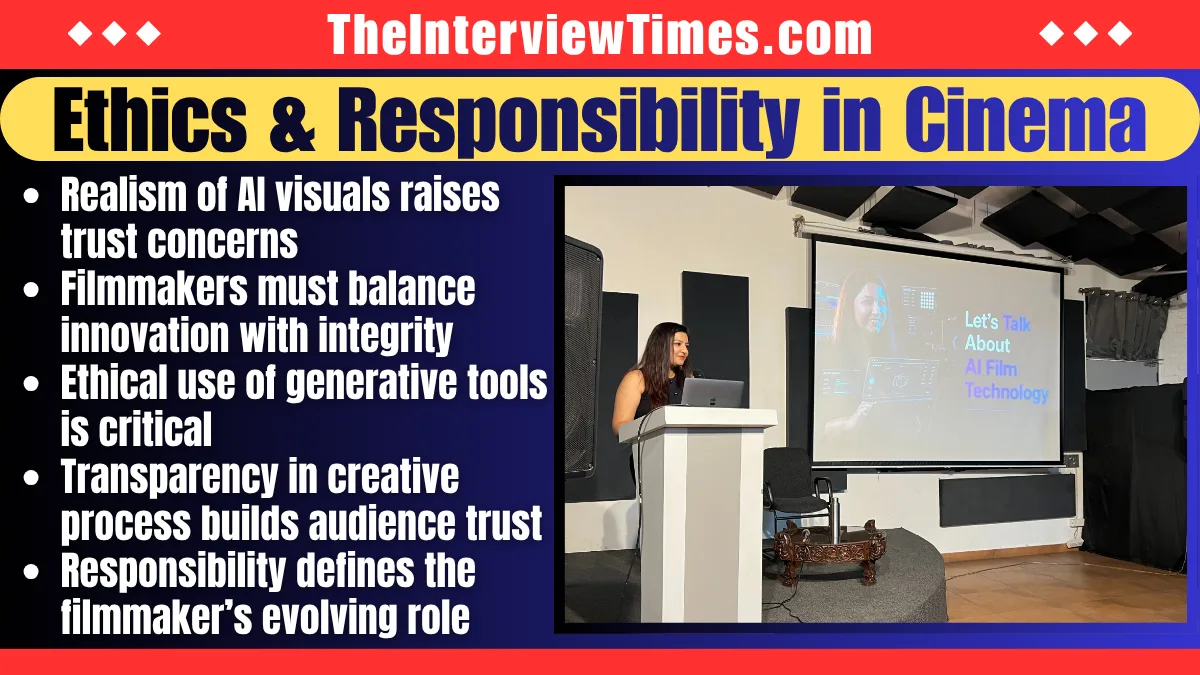
At the same time, she highlighted the growing importance of ethics and responsibility. “When AI-generated visuals begin to appear indistinguishably real, the question of trust becomes critical — and that conversation is still evolving,” she said.
Chaudhry also emphasized that AI will not replace filmmakers but redefine their role. “Ultimately, only those filmmakers who bring a unique voice and genuine sensitivity to their work will be able to truly connect with audiences,” she added.
Take the Floor: A Platform for New Ideas
The Take the Floor – 5 Minute Window segment gave emerging creators an opportunity to pitch their ideas. Student Tanvi Tripathi presented her AI-assisted short film project, seeking technical collaborators. The segment continues to serve as a valuable platform for aspiring filmmakers to find creative partnerships and move their ideas forward.
Showcase Your Work: Let Your Cinema Speak
The newly introduced segment, “Showcase Your Work — Let your cinema speak,” allowed participants to present their recent works and showreels. Actor-model Pankaj Kataria shared highlights from his recent projects, while host Nivriti Khatri spoke about her upcoming poetry book Scattered Thoughts, reflecting on her creative journey that began on the TCOTF platform itself.
Tribute to Satyajit Ray
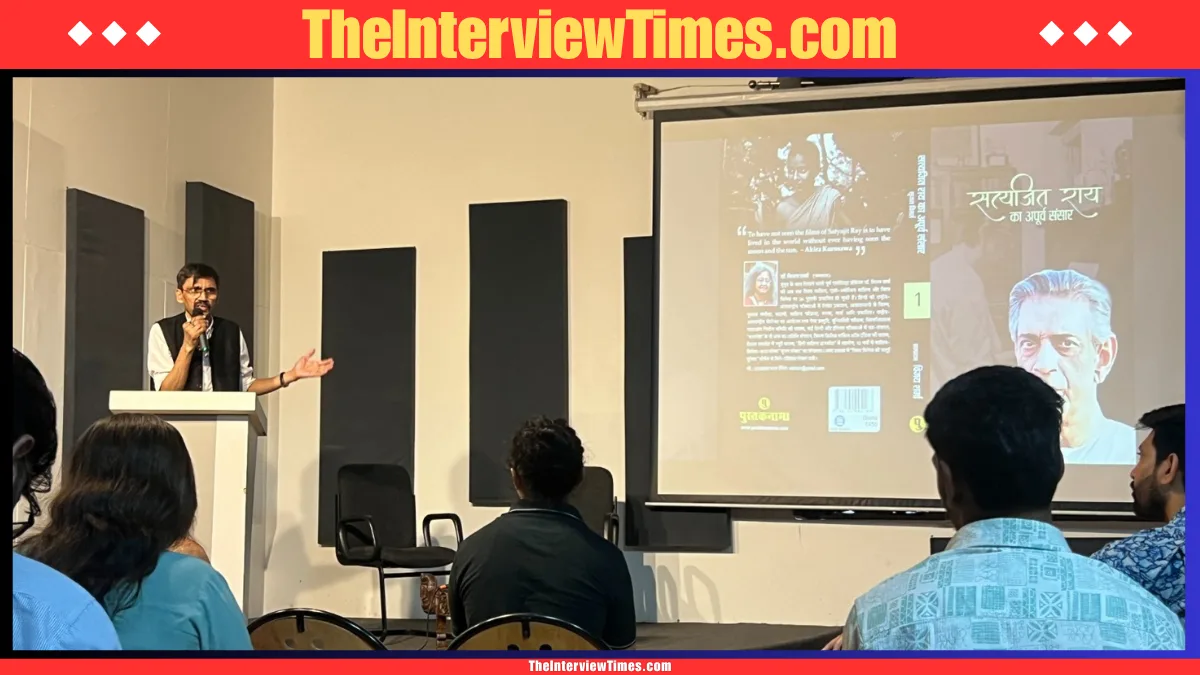
The session concluded with a tribute to legendary filmmaker Satyajit Ray. Clips from his film Hirak Rajar Deshe were screened as a reminder of his enduring cinematic legacy.
Ashish K Singh also read excerpts from his contribution to the book Satyajit Ray Ka Apoorv Sansar (edited by Dr. Vijay Sharma), reflecting on how Hirak Rajar Deshe goes beyond being a political satire of its time to emerge as a timeless cinematic warning with global relevance.
The session concluded with the felicitation of the guest, followed by a vote of thanks. The networking tea that followed saw participants engaging in conversations, building connections, and exploring future collaborations.
Talk Cinema On The Floor is steadily emerging as a dynamic space where meaningful conversations on cinema translate into creative collaboration and new opportunities.
