
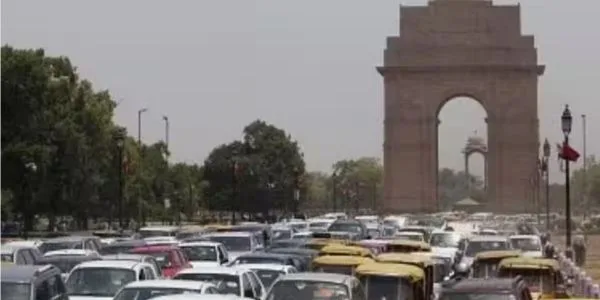
Older vehicles in Delhi-NCR are fueling the region’s air pollution crisis, contributing heavily to PM2.5, NOx, and SO2 emissions. Experts call for stricter enforcement, scrappage incentives, and NCR-wide strategies to combat worsening air quality.
New Delhi, August 12, 2025 – As Delhi-NCR chokes under a persistent smog blanket, older vehicles have emerged as a significant contributor to the region’s worsening air quality. With the Air Quality Index (AQI) frequently hovering in the “severe” category, recent data underscores the outsized role of aging diesel and petrol vehicles in driving pollution levels, prompting renewed calls for stricter enforcement and sustainable solutions.
The Scale of the Problem
According to a 2023 analysis by the Centre for Science and Environment (CSE), vehicular emissions account for nearly 50% of Delhi’s PM2.5 pollution during peak winter months, when temperature inversions trap pollutants close to the ground. Older vehicles—those exceeding 10 years for diesel and 15 years for petrol—are a particularly potent source of harmful emissions. A 2018 study by The Energy and Resources Institute (TERI) and the Automotive Research Association of India (ARAI) estimated that the transport sector contributes around 40% to PM2.5 pollution in Delhi, with older vehicles playing a disproportionate role.
Data from the Delhi Transport Department indicates that vehicles older than 15 years, which constitute approximately 6% of the city’s registered fleet, are responsible for nearly 25% of total vehicular emissions. Diesel vehicles over 10 years old are particularly egregious, contributing about 65% of on-road nitrogen oxide (NOx) emissions and 28% of PM2.5 emissions from the transport sector. These vehicles also emit 41% of sulphur dioxide (SO2), a key contributor to secondary particulate formation, despite stricter Bharat Stage (BS) emission norms introduced over the years.
“Older vehicles, especially those predating BS4 standards, emit up to 4.5 times more particulate matter than newer BS6-compliant models,” said Dr. Anumita Roychowdhury, Executive Director at CSE. “Their continued presence on Delhi-NCR roads undermines years of regulatory progress.”
Policy Measures and Challenges
The Delhi government has implemented policies to phase out older vehicles, including a ban on diesel vehicles over 10 years and petrol vehicles over 15 years, in line with Supreme Court directives. However, enforcement remains a sticking point. As of mid-2024, only 60% of Automatic Number Plate Recognition (ANPR) systems used to detect non-compliant vehicles were functional, according to a report by the Commission for Air Quality Management (CAQM). Cross-border refueling in neighboring states like Haryana and Uttar Pradesh, where restrictions are less stringent, further complicates compliance.
A 2023 TERI survey revealed that 40% of vehicle owners in NCR were unaware of the end-of-life vehicle policy, highlighting a gap in public awareness. Critics also argue that the blanket ban on older vehicles may be overly simplistic. “A well-maintained older vehicle with a valid Pollution Under Control (PUC) certificate can emit less than a poorly maintained newer one,” noted a senior official at ARAI, speaking on condition of anonymity. “The focus should be on emissions testing and retrofitting, not just age.”
In a recent development, the CAQM postponed a fuel ban for end-of-life vehicles to November 1, 2025, for Delhi and select NCR districts, with an extension to April 1, 2026, for others, citing logistical challenges. On August 5, 2025, the Supreme Court temporarily halted coercive actions, such as vehicle impounding, for four weeks, pending a review of the ban’s scientific basis. This decision has sparked debate, with environmentalists warning that delays could exacerbate the pollution crisis.
Must Read: Older Vehicles in Delhi-NCR Get Relief from Supreme Court
Broader Pollution Context
While older vehicles are a significant factor, they are part of a complex pollution mix in Delhi-NCR. Construction dust, industrial emissions, crop burning in neighboring states, and waste-to-energy incinerators collectively contribute to the region’s air quality woes. According to the Indian Institute of Tropical Meteorology (IITM), vehicles as a whole (not just older ones) account for 20-25% of Delhi’s total pollution load, with crop burning and dust each contributing similar shares during peak seasons.
The lack of recent, targeted studies on older vehicles’ specific contributions adds uncertainty. In 2025, the CAQM admitted that no dedicated study on diesel vehicles over 10 years or petrol vehicles over 15 years has been conducted, with the current ban relying largely on court orders and older data. This gap has fueled calls for more granular research to inform policy.
Public Health and Economic Toll
The health impacts of Delhi-NCR’s air pollution are staggering. A 2024 study by the Lung Care Foundation linked prolonged exposure to PM2.5 and NOx to a 20% increase in respiratory ailments among Delhi residents, with children and the elderly most vulnerable. The economic cost is equally alarming, with a 2023 World Bank report estimating that air pollution costs India $95 billion annually in lost productivity and healthcare expenses, with Delhi-NCR bearing a significant share.
Older vehicles’ high emissions exacerbate these issues, releasing fine particulates and toxic gases that penetrate deep into the lungs and bloodstream. “NOx and PM2.5 from diesel vehicles are key drivers of cardiovascular diseases and premature mortality,” said Dr. Siddharth Mandal, a public health researcher at AIIMS Delhi.
Must Read: 6 Amazing Benefits of Regular Cycling for Health, Happiness, and a Greener Planet
The Path Forward
Experts agree that addressing the older vehicle problem requires a multi-pronged approach. Strengthening public transport, such as expanding Delhi’s metro and electric bus fleet (currently at 1,650 electric buses, with a target of 8,000 by 2027), is critical to reducing private vehicle dependency. Incentives for scrapping older vehicles and transitioning to electric or BS6-compliant models could also accelerate progress. The Delhi government’s Vehicle Scrappage Policy, launched in 2022, offers tax rebates for scrapping old vehicles, but uptake has been slow, with only 12,000 vehicles scrapped in NCR by mid-2025.
Public awareness campaigns, improved enforcement technology, and regional coordination with NCR states are equally vital. “Pollution doesn’t respect state boundaries,” said Sunil Dahiya, an analyst at the Centre for Research on Energy and Clean Air. “A unified NCR-wide strategy is essential to tackle cross-border vehicle movement and emissions.”
Voices from the Ground
For many Delhi-NCR residents, the pollution crisis is a daily reality. “I drive a 12-year-old diesel car because I can’t afford a new one,” said Rajesh Kumar, a cab driver in Noida. “The fines and restrictions make it harder to earn a living, but there’s no affordable alternative.” Meanwhile, schoolteacher Priya Sharma expressed frustration: “My students are falling sick more often due to the smog. The government needs to act faster.”
Conclusion
Older vehicles remain a critical driver of Delhi-NCR’s air pollution, contributing significantly to PM2.5, NOx, and SO2 emissions. While policies like the age-based vehicle ban aim to curb their impact, enforcement gaps, public unawareness, and the lack of recent data highlight the need for a more robust approach. As Delhi battles its air quality crisis, phasing out older vehicles, bolstering public transport, and fostering regional cooperation will be key to clearing the skies. With the Supreme Court’s review looming, the coming months will be pivotal in shaping the region’s path to cleaner air.