
TheInterviewTimes.com | September 28, 2026 | New Delhi
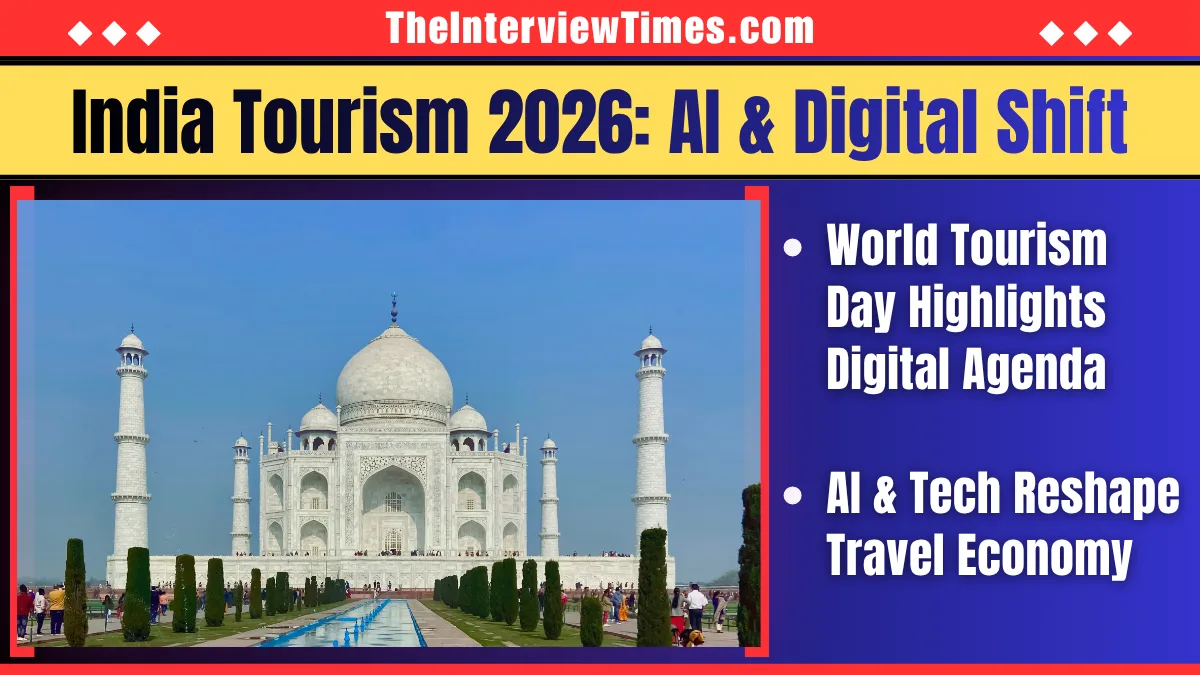
India tourism 2026 is entering a digital era as AI, e-Visa and new tourism platforms reshape travel, jobs and the country’s tourism economy.
India’s tourism industry is entering a new phase in which artificial intelligence, digital platforms and data-driven services are becoming increasingly important to how travellers discover, plan and experience destinations.
As the world observes World Tourism Day 2026, the Indian government has highlighted the growing economic contribution of tourism while outlining a broader push to build a digitally connected tourism ecosystem.
The theme of this year’s World Tourism Day, observed on September 27, is “Digital Agenda and Artificial Intelligence to Redesign Tourism.” The theme focuses on how technology and AI could change tourism while making travel more personalised, accessible and sustainable.
Tourism’s growing contribution to India’s economy
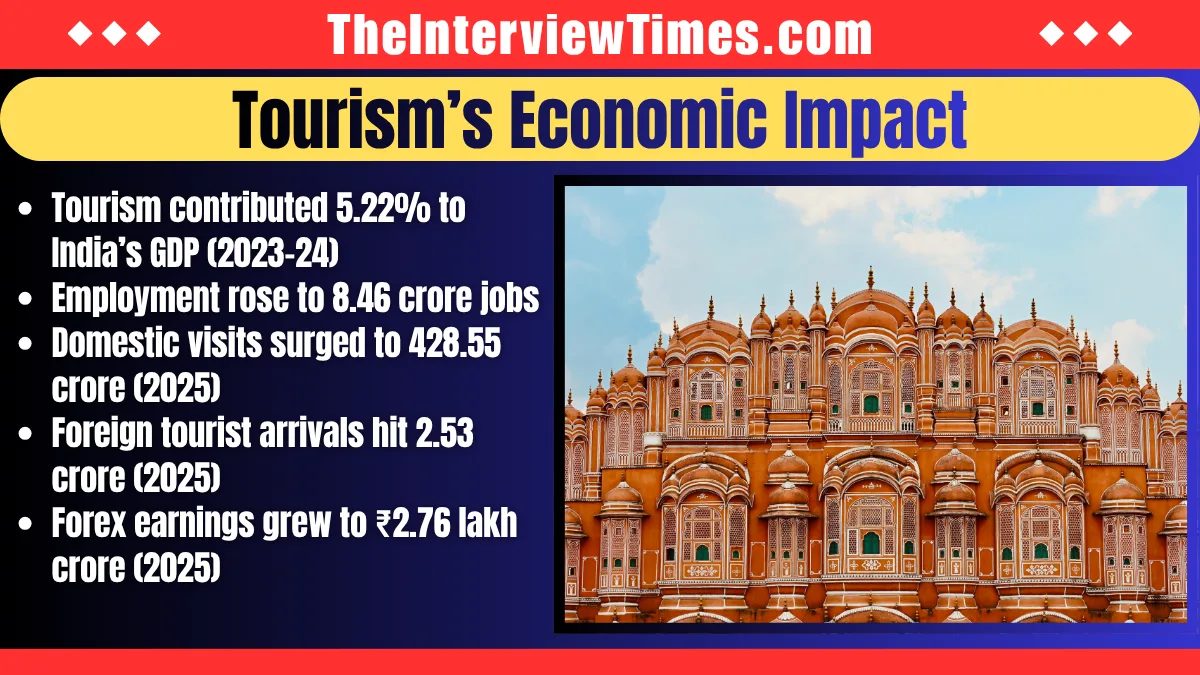
According to the latest Tourism Satellite Account estimates cited by the Ministry of Tourism, the tourism sector contributed 5.22% to India’s GDP in 2023-24.
Tourism-related employment also increased from 6.94 crore in 2019-20 to 8.46 crore in 2023-24, highlighting the sector’s importance for livelihoods and employment.
The number of domestic tourist visits has risen sharply in recent years. Government data cited in the PIB backgrounder puts domestic tourist visits at 428.55 crore in 2025, compared with 67.7 crore in 2021.
Foreign tourism has also recovered and expanded. Foreign Tourist Visits increased from around 0.1 crore in 2021 to 2.53 crore in 2025.
Foreign exchange earnings from tourism rose from ₹63,978 crore in 2021 to ₹2,76,831 crore in 2025, according to the government figures.
From travel websites to AI-assisted journeys
The tourism experience is increasingly moving beyond traditional websites and guidebooks.
India’s revamped Incredible India Digital Platform is designed to bring different tourism experiences onto a digital interface, including heritage, culture, adventure, food, wellness, arts and crafts and rural tourism.
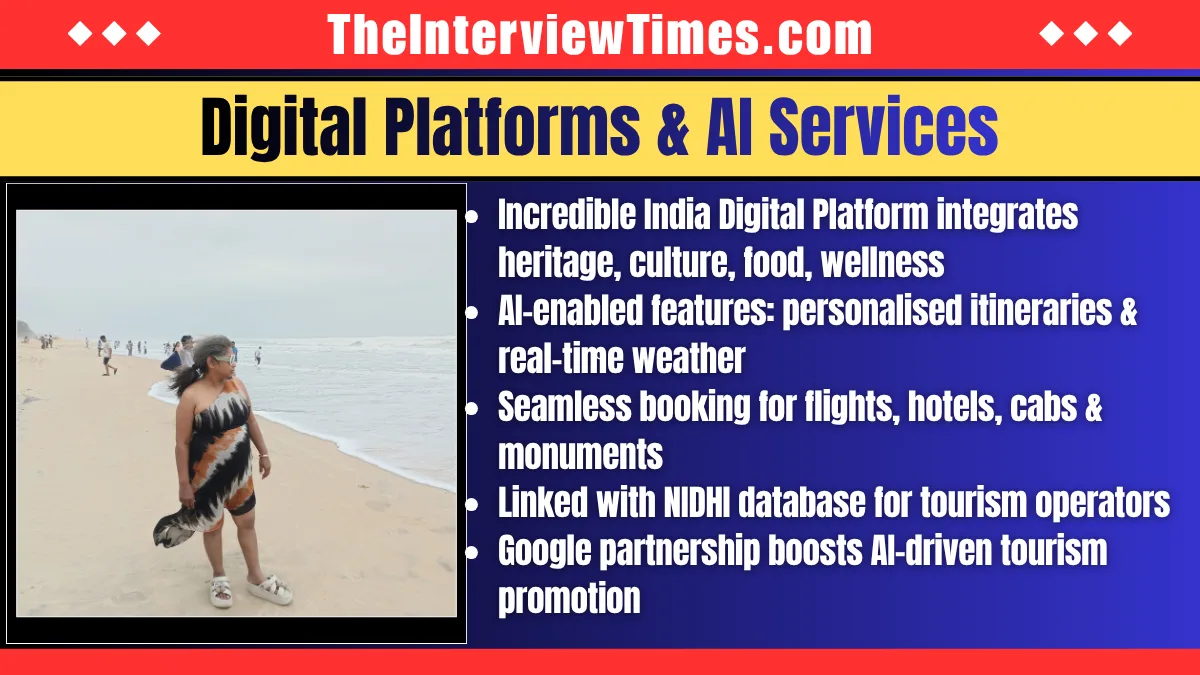
The platform also uses AI-enabled features to provide personalised services, including real-time weather information and city exploration.
Travellers can also access links to services such as flights, hotels, cabs, buses and tickets for Archaeological Survey of India monuments through the wider digital ecosystem.
The integration of the platform with NIDHI, the National Integrated Database of Hospitality Industry, is intended to make information about registered tourism operators and service providers more accessible.
India expands its e-Visa system
Digitalisation is also changing the first stage of the international visitor journey: obtaining a visa.
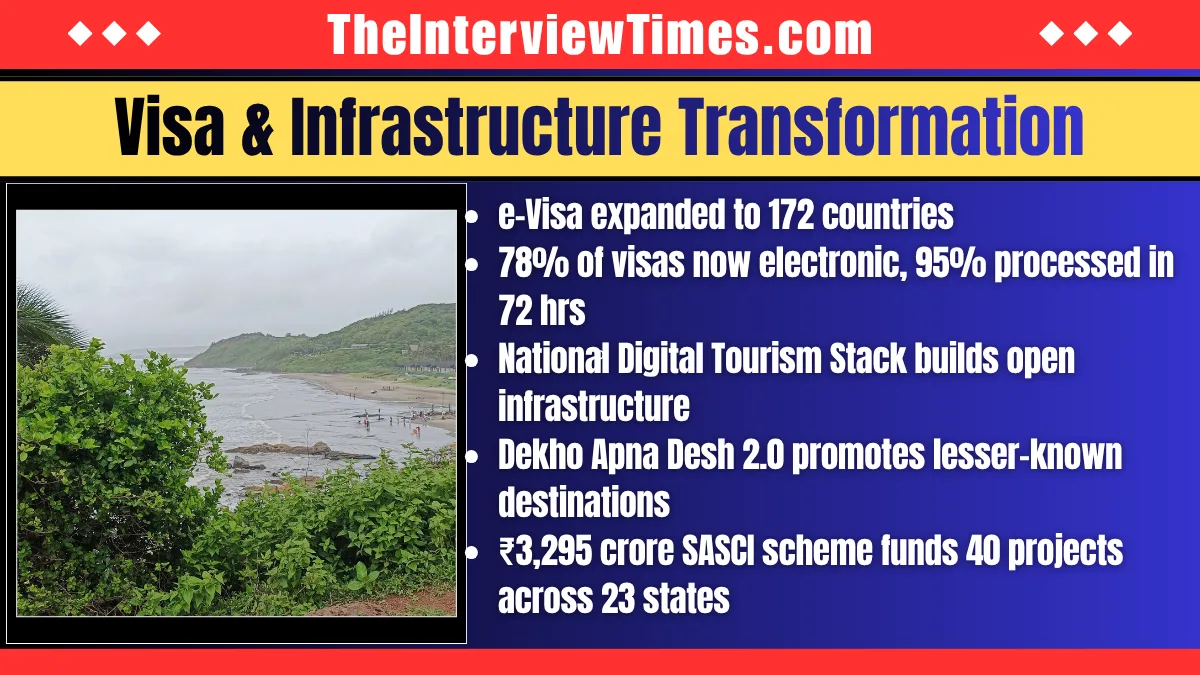
India introduced its electronic visa facility in 2014 for citizens of 43 countries. According to the PIB backgrounder, the facility has now expanded to 172 countries, with entry permitted through 88 international ports, including airports, seaports and land ports.
The government says approximately 78% of visas issued by India are now electronic visas, while around 95% of e-Visa applications are processed within 72 hours.
For international travellers, such systems can reduce paperwork and make travel planning more predictable.
Top Travel News: India e-Arrival Card and eVisa 2026: Complete Digital Entry Guide for Foreign Travellers – theinterviewtimes.com
A new digital tourism infrastructure
The government has also announced the National Digital Tourism Stack, described as an open digital public infrastructure initiative intended to make tourism offerings more discoverable, accessible and trustworthy.
Another initiative, Dekho Apna Desh 2.0, is focused on promoting lesser-known destinations and encouraging a more balanced distribution of tourist traffic.
The broader objective is to move tourism beyond a handful of established destinations and bring more locations, communities and businesses into the tourism economy.
NIDHI+ and the formalisation of tourism services
Digitalisation is not limited to tourists.
The NIDHI+ platform provides a digital system for the registration, recognition and classification of tourism service providers.
A related PIB release states that, as of September 23, 2026, the platform had listed 63,740 accommodation units, 54 convention centres, 215 food business operators, 1,450 online travel aggregators and 15,531 tourism service providers.
Such databases can help create a more organised digital record of tourism businesses and make information about service providers easier to access.
Google partnership brings AI into tourism promotion
India is also seeking greater involvement from technology companies.
The Ministry of Tourism signed an MoU with Google India in June 2026 to strengthen the digital promotion of Indian tourism through technology, artificial intelligence, data-driven insights and capacity building.
The partnership is expected to draw on information about travel trends, traveller behaviour and digital engagement to support tourism promotion.
Top Travel Destination: Sri Lakshmi Narayani Golden Temple: A Journey Into Gold, Silence and Spiritual Grandeur
Infrastructure, skills and local employment remain crucial
Digital technology is only one part of the tourism transformation.
Under the Special Assistance to States for Capital Investment (SASCI) scheme for tourism, 40 projects across 23 states have been approved. The scheme received ₹3,295.76 crore in FY 2024-25 with 100% central funding, according to the PIB.
The government is also focusing on tourism-related skills.
The Capacity Building for Service Providers programme provides training and reskilling for local communities, young people and workers involved in tourism.
A Quality Council of India evaluation cited by the government found that the programme trained more than 1.68 lakh people and placed over 36,000 between FY 2020-21 and FY 2024-25.
The Paryatan Mitra/Paryatan Didi initiative has also trained around 4,382 candidates, including people working as drivers, hotel and restaurant staff, guides, homestay operators, vendors and other local service providers.
Top Travel News: Top 10 Travel Destinations in India to Explore in 2026 – theinterviewtimes.com
The bigger question for India’s tourism industry
The rapid adoption of AI and digital platforms could make travel more convenient, but technology alone will not determine the future of tourism.
The quality of roads, airports, public transport, accommodation, safety, cleanliness, heritage conservation and the experience offered to visitors will remain equally important.
India’s tourism strategy is therefore increasingly combining digital services with destination development, infrastructure investment and skill-building.
The World Tourism Day 2026 theme reflects a broader global shift: tourism is becoming a data- and technology-driven industry, but its economic value still depends heavily on people and places.
For India, the challenge will be to ensure that the benefits of this digital transition reach not only large tourism platforms and major destinations, but also local businesses, communities and lesser-known destinations.
As AI becomes part of travel planning and digital platforms become the gateway to Indian destinations, the next stage of the country’s tourism story may be shaped as much by technology as by the destinations themselves.
Source: Press Information Bureau, Ministry of Tourism, Government of India.