
TheInterviewTimes.com | Noida, October 24, 2026
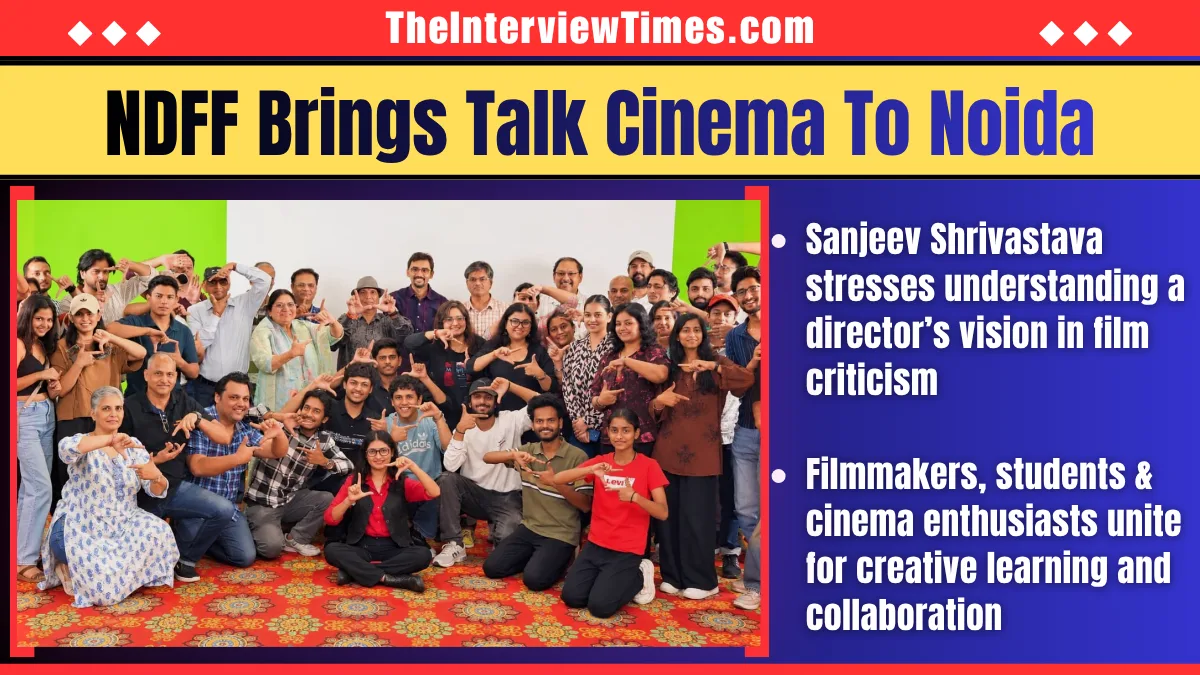
NDFF launched the first Noida chapter of Talk Cinema On The Floor, bringing together filmmakers, students and cinema enthusiasts. National Award-winning critic Sanjeev Shrivastava highlighted the importance of understanding a director’s vision in film criticism.
“A film review should bring out the director’s vision and examine how effectively that vision has been translated onto the screen.” This was the central message shared by National Film Award-winning film critic Sanjeev Shrivastava at the Noida Chapter of Talk Cinema On The Floor (TCOTF), a monthly initiative of the New Delhi Film Foundation (NDFF).
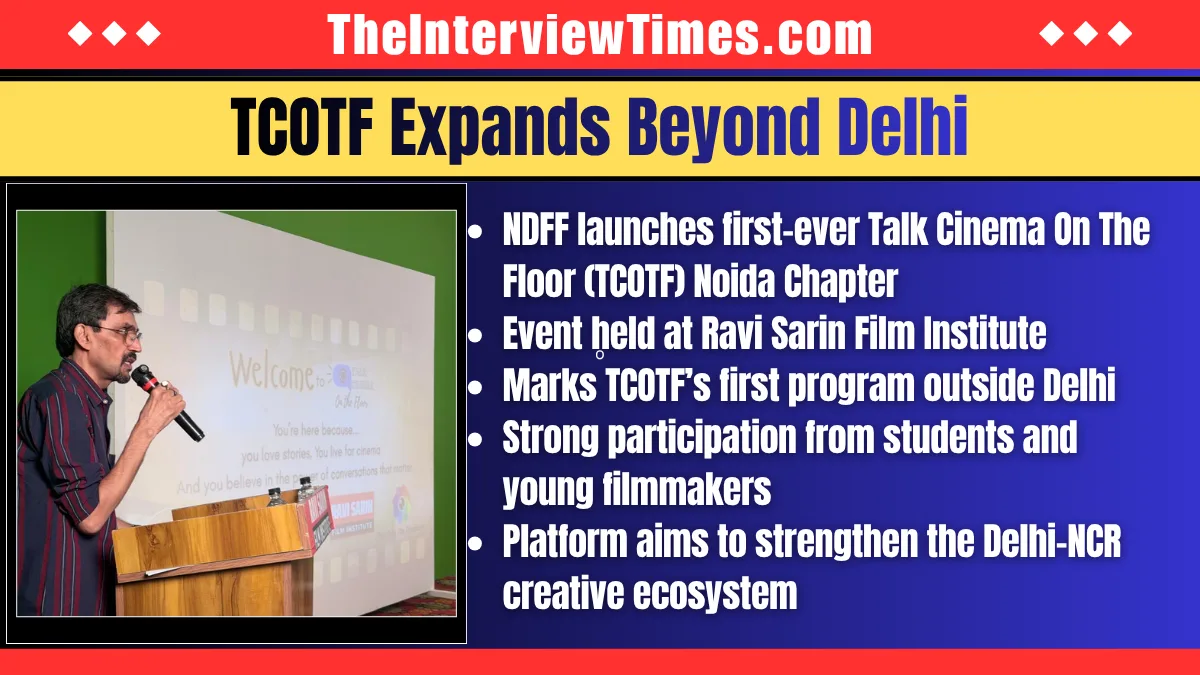
Held on October 24 at Ravi Sarin Film Institute, the event marked TCOTF’s first chapter in Noida and its first programme outside Delhi. Particularly encouraging was the strong participation of young people, alongside attendees from diverse professional backgrounds and age groups, including senior citizens.
NDFF Expands Its Cinema Platform Beyond Delhi
For nearly a year and a half, TCOTF has been bringing together members of the film fraternity in Delhi every month. The initiative has featured National Film Award-winning filmmakers and several distinguished artists, creators and experts from the world of cinema, who have shared their experiences, ideas and creative perspectives. The Noida Chapter marks an important step in expanding this platform across the wider Delhi-NCR film and creative ecosystem.
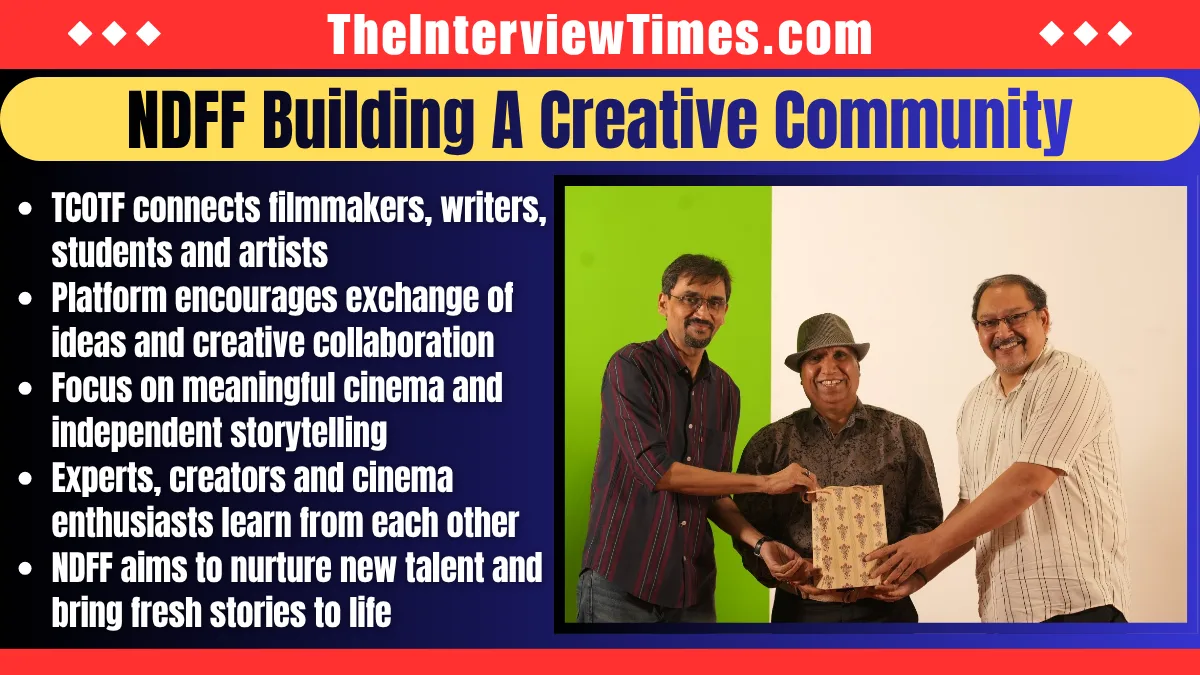
The programme opened with Founder’s Frame, a session by Ashish K Singh, Founder of NDFF. He spoke about the need to encourage meaningful cinema, independent filmmakers and sensitive, purposeful storytelling. “Cinema is not merely a medium of entertainment; it is a powerful medium to observe and understand society and nurture sensitivity towards it. NDFF seeks to encourage meaningful cinema and independent storytellers,” he said.
Ashok Dhingra Explores the Visual Language of Cinema
A key highlight was Craft & Crew: A Masterclass on the Visual Language of Cinema, conducted by filmmaker and cinema educator Ashok Dhingra. He explored the elements that shape the visual language of cinema, explaining how a scene is constructed through framing, composition and the relationship between different elements within the frame. He also explained the French term mise-en-scène and its significance in cinematic storytelling, highlighting how a film’s visual impact depends on much more than the camera alone.
Sanjeev Shrivastava on What Makes Film Criticism Meaningful
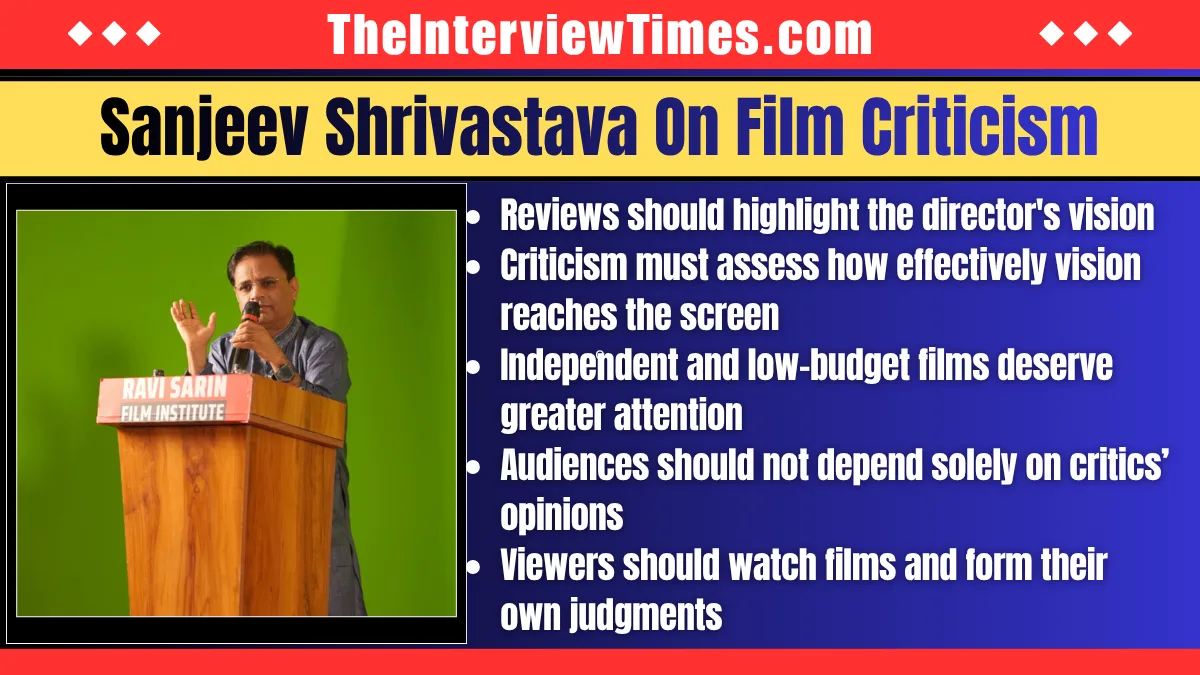
At the Writer’s Word session, Sanjeev Shrivastava, a Swarn Kamal recipient and National Film Award winner for Best Film Critic, spoke about film criticism and the importance of developing an independent cinematic perspective. He emphasised that reviews should extend beyond mainstream commercial cinema to include independent and low-budget films, helping them reach wider audiences and encouraging constructive discourse around them.
Referring to the growing volume of online film reviews, Shrivastava advised audiences not to make their final viewing decisions solely on the basis of a critic’s opinion. He encouraged viewers to watch films and form their own judgements. During the discussion, noted cinephile Sundeep Pahwa, who was among the audience members, cited Johny Mera Naam and Sholay as examples of films that did not receive the expected appreciation from critics when they were initially released.
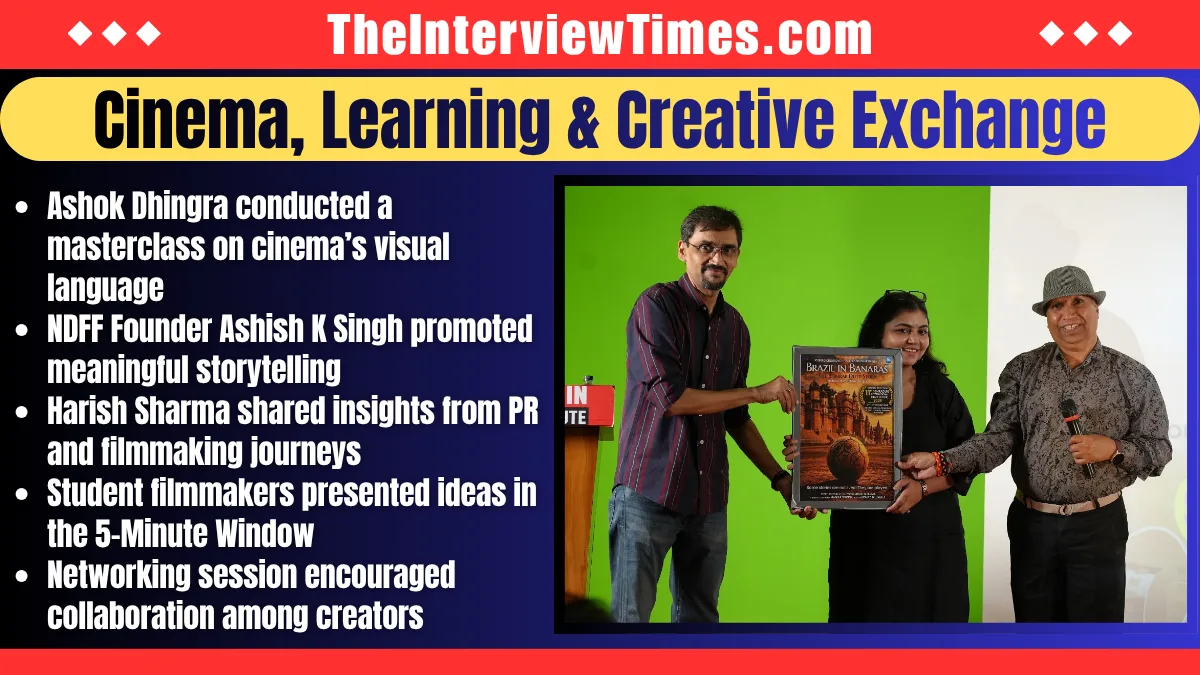
Harish Sharma Shares Three Decades of Film Industry Experience
The My Journey session featured Harish Sharma, whose career spans over three decades in film publicity, media, public relations and celebrity management, with associations with more than 400 films. Sharing his transition from film PR to filmmaking, Sharma spoke about his work as a documentary and feature filmmaker. Having made more than ten documentaries, he discussed the creative vision behind his films on Ladakh and Adi Kailash, as well as his award-winning documentary Brazil in Banaras, offering insights into the process of bringing real-life stories to the screen.
Young Filmmakers Get a Platform to Present Ideas
The Take the Floor: The 5-Minute Window segment provided filmmaking students Nitish Sharma and Dewansh Singh an opportunity to present their creative ideas. The Music Chapter added another dimension to the programme, featuring Wg Cdr (Dr.) RD Deshpande, Executive Presence Coach, Image Consultant and Leadership Trainer, who brought music into the creative exchange.
The programme concluded with a vote of thanks by Vaibhav Maitreya. Krish Gupta coordinated the event, while Mukesh and the Ravi Sarin Film Institute team contributed to media coverage. A networking tea followed, allowing participants to connect, exchange ideas and explore possibilities for professional and creative collaboration.
NDFF expressed its gratitude to Ravi Sarin Film Institute for supporting the Noida Chapter. The Foundation also acknowledged Sri Aurobindo Centre for Arts & Creativity (SACAC) for its support in the inception of TCOTF, and Media & Entertainment Skills Council (MESC) and Indian Institute of Creative Skills (IICS) for their partnership in events held in Delhi.
Through TCOTF, NDFF aims to build an active and collaborative creative community where filmmakers, writers, students, artists, content creators and cinema enthusiasts can meet, learn from one another, exchange ideas and work together to bring new stories to life
Must Read: India Tourism 2026: How AI and Digital Technology Are Changing Travel