
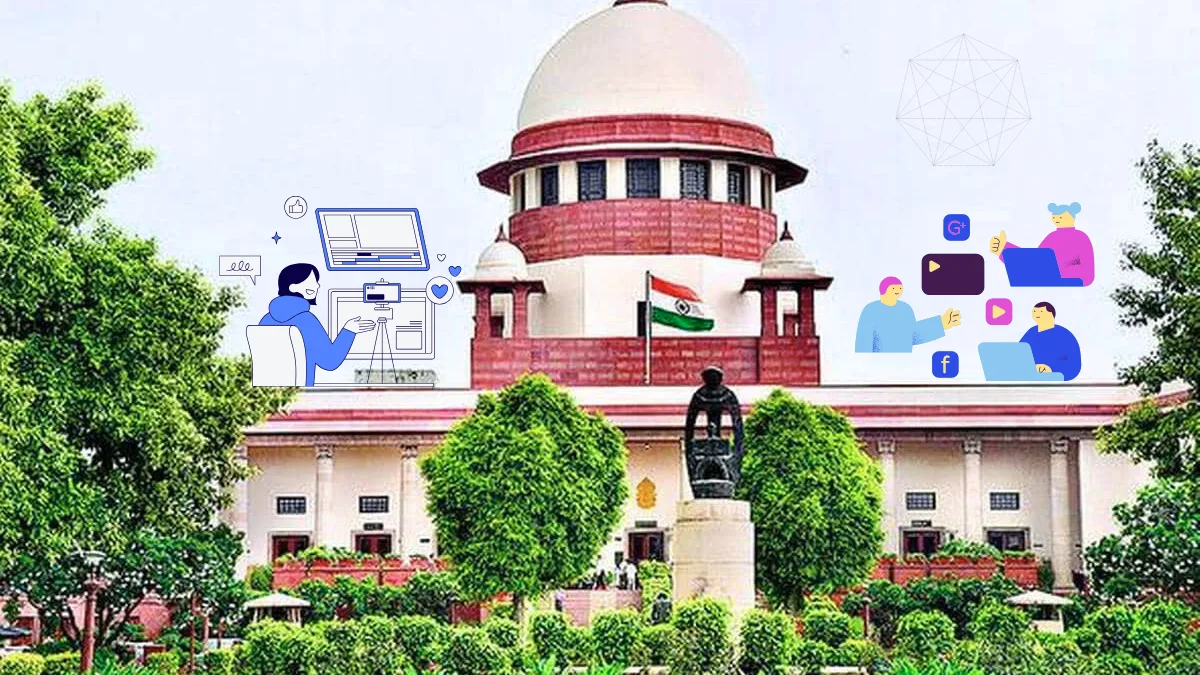
India’s New Online Content Regulation Framework: Supreme Court Sets 4-Week Deadline
The Supreme Court has ordered stronger online content regulation, directing the Centre to draft new rules in four weeks to curb obscenity, discrimination and misuse of digital platforms.
Supreme Court Directs Urgent Overhaul of Online Content Regulation
TheInterviewTimes.com | November 28, 2025: In a landmark directive addressing rising concerns over digital obscenity and discrimination, the Supreme Court of India has ordered the Central government to draft a new online content regulation framework within four weeks. The bench led by Chief Justice Surya Kant and Justice Joymalya Bagchi said current self-regulation mechanisms are inadequate and lack accountability. The ruling came during hearings involving multiple petitions challenging vulgar, offensive and discriminatory online content.
The court said creators cannot “operate personal platforms without responsibility,” and emphasised that unchecked online content has expanded faster than India’s laws. The intervention reflects growing judicial concern over the human impact of unregulated digital spaces that reach millions of users daily.
Aadhaar-Based Age Verification and New Classification System
To prevent minors from accessing harmful content, the Supreme Court recommended Aadhaar-based age verification, dismissing the existing “warning screens” as ineffective. Chief Justice Kant said that a one-line advisory “fails entirely” when videos begin playing instantly, leaving minors exposed to explicit content before understanding the warning.
During the proceedings, the Ministry of Information and Broadcasting presented proposed amendments to the IT (Intermediary Guidelines and Digital Media Ethics Code) Rules, 2021. The new system would classify content into five categories—U, U/A 7+, U/A 13+, U/A 16+ and A. Platforms would be required to implement mandatory age-gates for adult-rated material.
The draft rules also target AI-generated videos, deepfakes, accessibility requirements and stronger prohibitions on obscenity, misinformation and discriminatory content. Violations include material that insults castes, communities, women, children, persons with disabilities or glorifies violence.
Must Read: Digital Dominance: How Big Tech is Creating a New Caste System Online
Safeguards for Persons with Disabilities and Mandatory Social Campaigns
A key issue raised in court was online harassment against persons with disabilities. The petition from the Cure SMA Foundation accused comedians Samay Raina, Vipul Goyal, Balraj Paramjeet Singh Ghai, Sonali Thakkar and Nishant Tanwar of mocking individuals with Spinal Muscular Atrophy (SMA). The foundation said such remarks harm dignity and directly affect crowdfunding efforts for expensive therapies.
Solicitor General Tushar Mehta supported stricter protections and proposed legal provisions similar to the SC/ST (Prevention of Atrocities) Act. “Humour cannot be at the cost of someone’s dignity,” he said. The court also mandated that the accused creators run two monthly awareness programs featuring success stories of persons with disabilities to raise funds for treatment.
Advocate Aparajita Singh, appearing for the foundation, highlighted real-life cases, including an SMA patient employed at Microsoft and another pursuing a PhD in Bioinformatics, to demonstrate the importance of respectful representation.
Must Read: Social Media Addiction in 2025: Global Trends, Key Studies, and Mental Health Impacts
Digital Platforms Face Stricter Oversight, Public Consultation Ahead
The Supreme Court’s decision marks a significant turning point for India’s digital ecosystem, where content creators, podcasts and YouTube channels reach tens of millions without adequate oversight. The upcoming online content regulation framework will be opened for public consultation before final approval. The next Supreme Court hearing is scheduled in four weeks.
Legal experts say these directions could reshape India’s cyber governance and set global precedents for responsible content moderation. A new independent oversight body—if approved—may also impose higher compliance requirements on major platforms, strengthening protections against hate speech, misinformation and harmful digital behaviour.
Must Read: The Double-Edged Scroll: How Social Media Impacts Your Mental Health