
Explore the Bagram Airbase standoff between the U.S. and Taliban in simple terms. Learn its history, strategic importance, and why it matters for global geopolitics—explained for students.
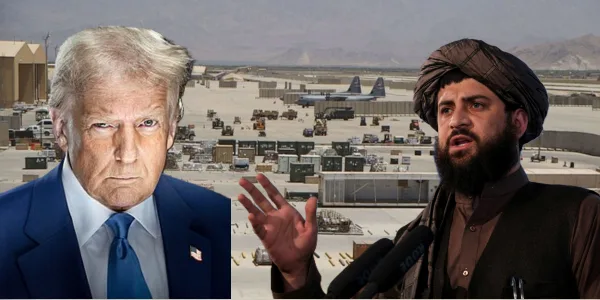
A major geopolitical clash is unfolding in Afghanistan as U.S. President Donald Trump demanded the return of Bagram Airbase from the Taliban. In a fiery post on Truth Social on September 20, Trump warned of “bad things” if the base was not returned, sparking strong resistance from the Taliban, who vowed to defend it at all costs.
This standoff is more than just a clash over a military base—it highlights the ongoing struggle for power in Central Asia, involving the U.S., China, Pakistan, and other regional players.
MUST READ: Why We Forget: Human Brain Secrets Explained
What Happened: Trump’s Ultimatum and Taliban Response
On September 20, Trump criticized the 2021 U.S. withdrawal from Bagram as a “monumental blunder.” Later, he posted:
“If Afghanistan doesn’t give Bagram Airbase back to those that built it, the United States of America, BAD THINGS ARE GOING TO HAPPEN!!!”
The Taliban responded the next day:
- Zabihullah Mujahid, Taliban spokesperson: “The base will not be returned to the Americans.”
- Mohammad Yaqoob, Defense Minister: “We are ready to fight with them for another 20 years.”
Taliban media highlighted Bagram as a symbol of victory over foreign occupation, showing videos of captured U.S. equipment and military exercises.
Why Bagram Airbase is Important
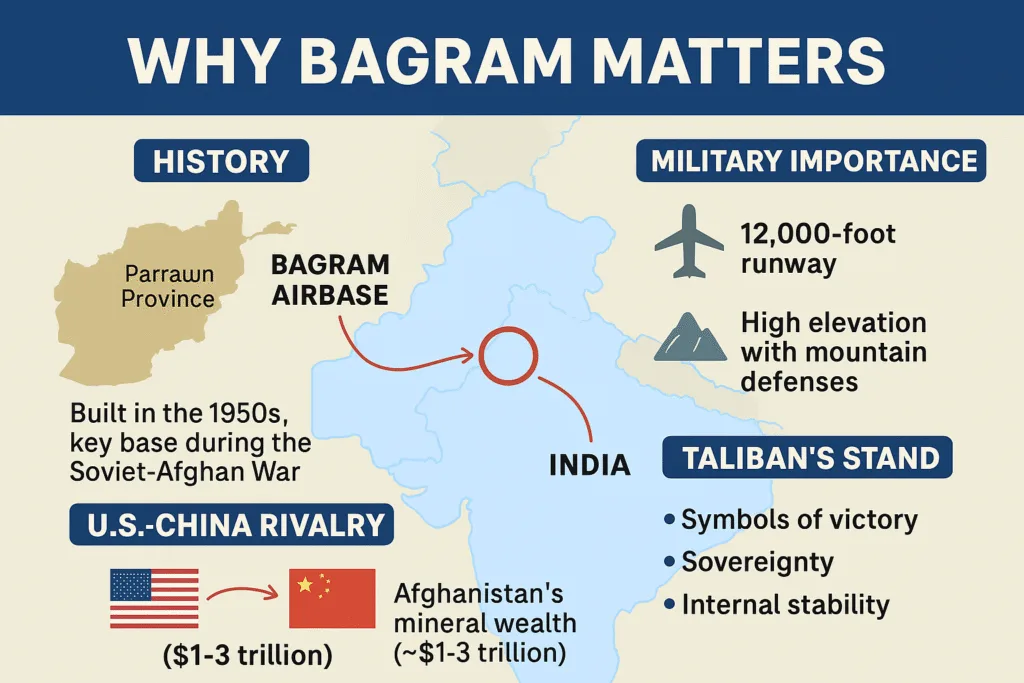
Bagram Airbase, located 40 miles north of Kabul in Parwan Province, has been a key military site for decades:
- Soviet Era: Built in the 1950s, used during the 1979-1989 Soviet-Afghan war.
- U.S. Era (2001-2021): Expanded into a massive 30-square-mile base capable of hosting 40,000 troops, supporting NATO missions, drones, logistics, and counterterrorism.
Key features that make Bagram Airbase strategic:
- 12,000-foot runway for heavy military planes like B-52 bombers and C-5 cargo aircraft.
- High elevation and mountain defenses for surveillance and protection.
- Proximity to China’s Xinjiang nuclear sites, allowing potential intelligence gathering.
During U.S. control, Bagram was also a hub for humanitarian aid and logistics across the region.
Geopolitical Stakes: U.S., China, and Taliban
Bagram is more than a base—it’s a strategic chess piece in U.S.-China rivalry:
- Trump claims China may influence the base, though Beijing denies it.
- Satellite images show infrastructure upgrades, possibly linked to China’s Belt and Road Initiative (BRI).
- Afghanistan’s mineral wealth ($1–3 trillion in lithium, copper, rare earths) makes control of Bagram highly valuable.
For the Taliban, Bagram is also about legitimacy and authority. The base, now showcasing abandoned U.S. equipment, symbolizes victory over foreign powers. Surrendering it could undermine their rule and invite internal revolts.
Regional Implications
The standoff affects several countries:
- Pakistan: Worries about U.S. control threatening its interests.
- India: Monitors closely due to concerns about Chinese influence.
- Central Asia: Countries like Uzbekistan fear instability.
- Russia & Iran: Could diplomatically or militarily support the Taliban.
Experts warn that attempting to reoccupy Bagram could lead to a “re-invasion” scenario, exposing U.S. troops to asymmetric warfare. Diplomatic efforts via intermediaries like Qatar have stalled.
Why Students Should Care
Understanding the Bagram standoff is key for students interested in:
- Current Affairs & UPSC: A live example of geopolitics in action.
- International Relations: Shows how regional conflicts tie into global rivalries.
- Strategy & Security Studies: Highlights the importance of location, infrastructure, and alliances.
The standoff reminds us that history, geography, and strategic decisions are deeply intertwined. Bagram is not just a base—it’s a symbol of power, influence, and the ongoing struggle between global powers.