
TheInterviewTimes.com | March 31, 2026 | 9:17 PM IST | New Delhi
India housing sales drop 13% to 98,761 units in Q1 2026 as supply shrinks 19%. Bengaluru and Delhi-NCR defy slowdown; experts signal market moderation.
Article Summary
India’s housing market saw its first major slowdown in over four years in Q1 2026, with sales dropping below one lakh units due to a sharp fall in new supply.
Key Highlights
- Housing sales declined 13% YoY to 98,761 units in Q1 2026
- First drop below 1 lakh units in 18 quarters
- New launches fell 19% YoY to 92,411 units
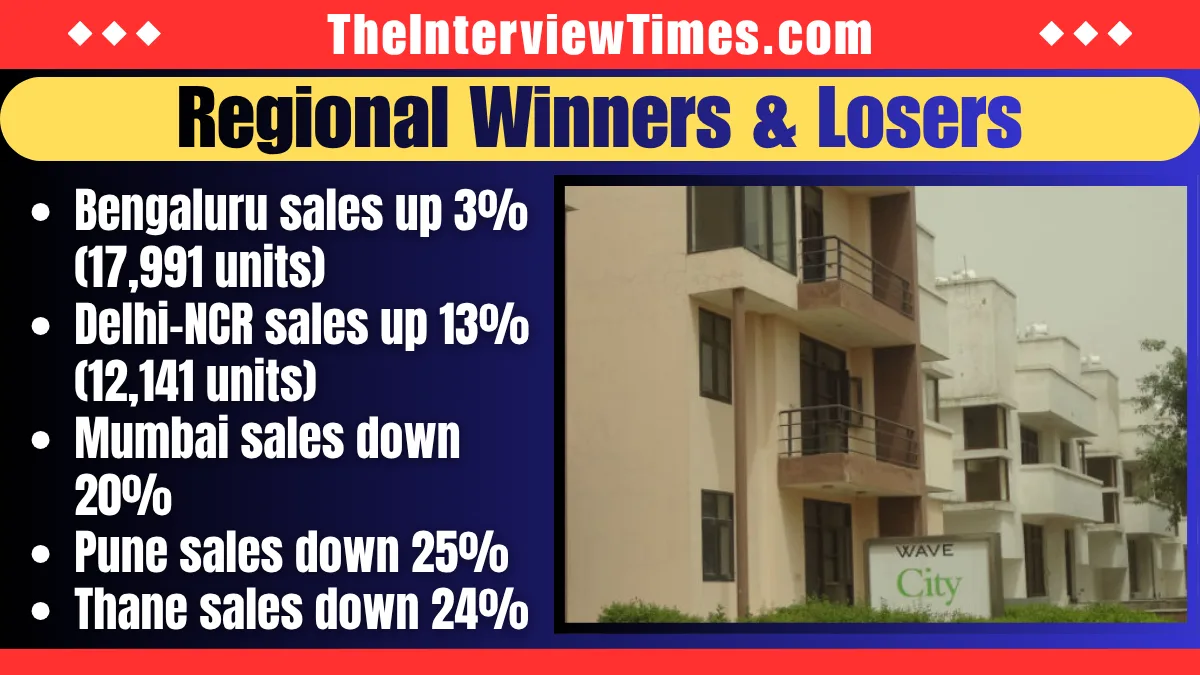
- Bengaluru (+3%) and Delhi-NCR (+13%) bucked the slowdown
- Mumbai (-20%), Pune (-25%), Thane (-24%) saw steep declines
- Experts say market is entering a “moderation phase,” not a crash
Housing Market Slows After Post-Pandemic Boom
India’s residential real estate sector has entered a cooling phase after more than four years of strong growth.
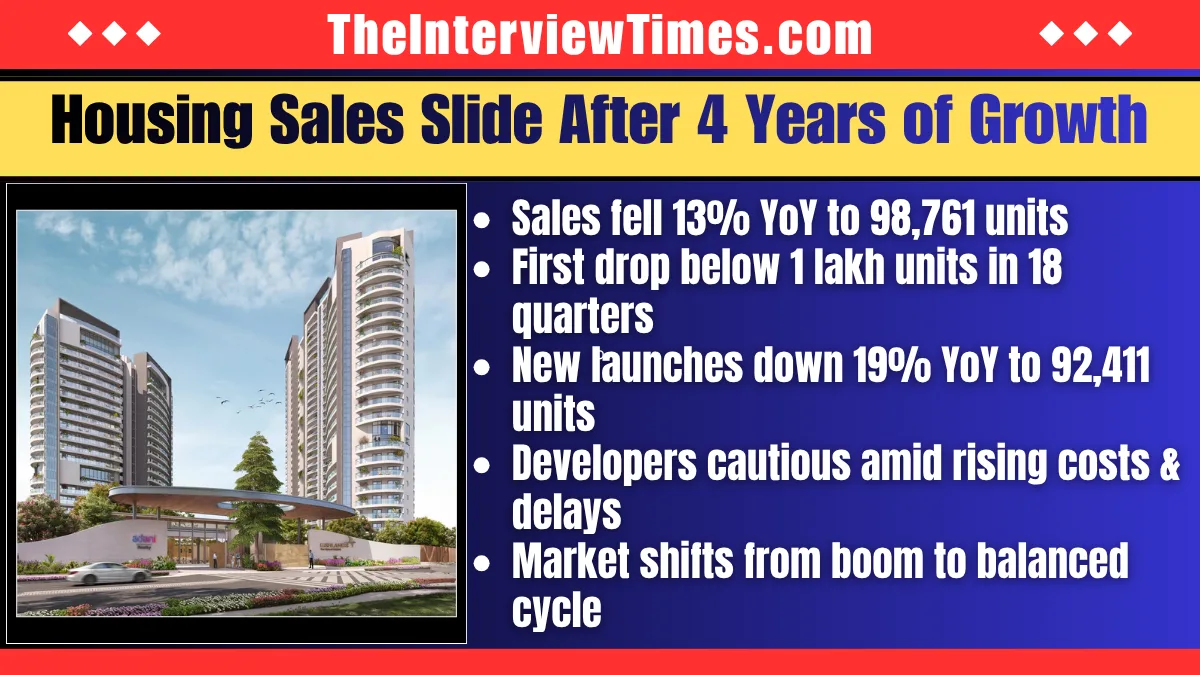
According to PropEquity, housing sales across the top nine cities fell to 98,761 units in January–March 2026, marking a 13% year-on-year decline.
This is the first time in 18 consecutive quarters that quarterly sales have dropped below the one lakh mark. The slowdown signals a shift from the aggressive post-pandemic recovery phase to a more balanced market cycle.
Supply Crunch Emerges as Key Driver
The primary reason behind the slowdown is a sharp fall in supply.
New project launches dropped 19% YoY to 92,411 units, creating a gap between demand and available inventory. Around 22,000 fewer homes were launched compared to the same period last year.
Developers are becoming cautious due to:
- Rising construction costs
- Regulatory delays
- Global economic uncertainty
Samir Jasuja, CEO of PropEquity, said the moderation is largely due to limited supply across major cities, rather than a collapse in demand.
Bengaluru and Delhi-NCR Stand Out
Despite the overall slowdown, two major markets showed resilience:
Bengaluru
- Sales: 17,991 units
- Growth: +3% YoY
- Driven by strong IT sector demand and mid-income buyers
Delhi-NCR
- Sales: 12,141 units
- Growth: +13% YoY
- New launches surged 89% to 17,227 units
Delhi-NCR emerged as a major supply hub, helping offset weakness in other regions.
Top News: Trump Warns Allies: “Go Get Your Own Oil” Amid Iran Conflict Fallout – theinterviewtimes.com
Western Markets Drag Overall Performance
Several key cities recorded sharp declines:
- Mumbai: Sales down 20%
- Pune: Sales down 25%
- Thane: Sales down 24%
- Hyderabad: Down 16%
- Kolkata: Down 8%
These declines highlight regional imbalances, especially in western India, where supply shortages and affordability pressures are more pronounced.
Global Factors Impact Buyer Sentiment
The housing slowdown is also linked to broader global uncertainties.
Ongoing tensions in West Asia have impacted:
- Investor confidence
- Input costs
- Overall economic outlook
Buyers are becoming more cautious, especially in premium and investment-driven segments.
Market Outlook: Stabilization Ahead
Despite the slowdown, experts do not foresee a crash.
Instead, the sector is entering a “moderation phase”, characterized by:
- Controlled price growth
- Balanced demand and supply
- More cautious developer activity
Key factors to watch in the coming months:
- Interest rate decisions by the RBI
- Revival in new project launches
- Monsoon impact on rural demand
- Policy reforms in housing approvals
India’s real estate sector, valued at over ₹12 lakh crore annually, is expected to stabilize if supply improves and financing conditions ease.
Key Takeaways
- India’s housing market has entered a cooling phase after years of strong growth.
- The slowdown is driven mainly by a sharp drop in new supply rather than weak demand.
- Bengaluru and Delhi-NCR remain strong, while western cities face pressure.
- Global uncertainties and high costs are impacting buyer sentiment.
- Experts expect stabilization, not a market crash, in the coming quarters.
