
TheInterviewTimes.com | March 23, 2026 | 12:42 AM IST | New Delhi
India oil crisis intensifies as Moody’s warns of up to 4% GDP loss due to Middle East war, rising crude prices, and supply disruptions.
Article Summary
The India oil crisis is intensifying as the Middle East conflict disrupts global supply chains. Moody’s warns that rising crude prices could cut India’s GDP growth by up to 4%, exposing vulnerabilities in energy dependence and economic stability.
Key Highlights
- India oil crisis may cause up to 4% GDP loss, says Moody’s
- 46% of crude and LNG imports depend on the Middle East
- Brent crude could surge to $119 per barrel in worst-case scenario
- Strait of Hormuz disruption affects 20% of global energy trade
- Government accelerates import diversification and emergency response
India is facing one of its most severe energy challenges in decades as the India oil crisis deepens due to escalating geopolitical tensions in the Middle East. Rising crude oil prices and disrupted supply routes are putting pressure on inflation, economic growth, and currency stability.
Prime Minister Narendra Modi has convened an emergency Cabinet Committee on Security meeting, highlighting the urgency of the situation.
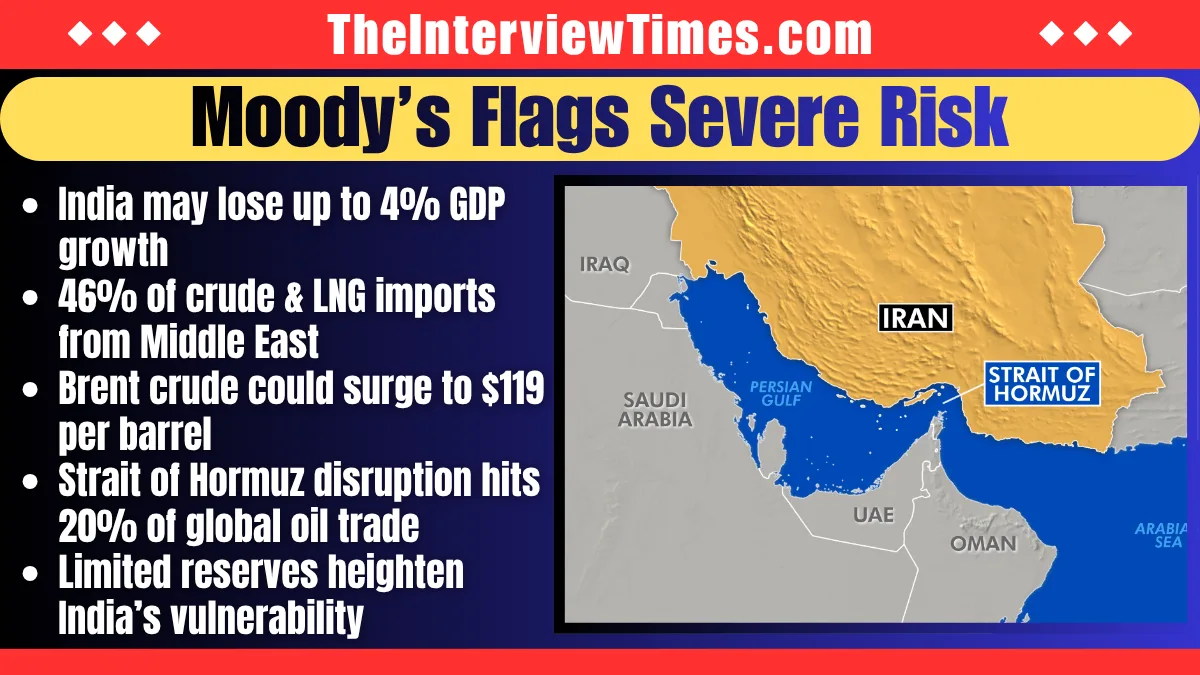
Moody’s Flags Severe Economic Risk
Moody’s has identified India as the most vulnerable major Asian economy in the current crisis.
The country imports nearly 46% of its crude oil and LNG from the Middle East, making it highly exposed to supply disruptions. In a severe scenario, Brent crude prices could rise 64% above baseline levels to $119 per barrel, leading to a GDP growth loss of up to 4%.
The disruption is closely linked to the Strait of Hormuz, a critical route that carries about 20% of global oil shipments.
India’s relatively limited strategic petroleum reserves further increase its vulnerability compared to other major economies.
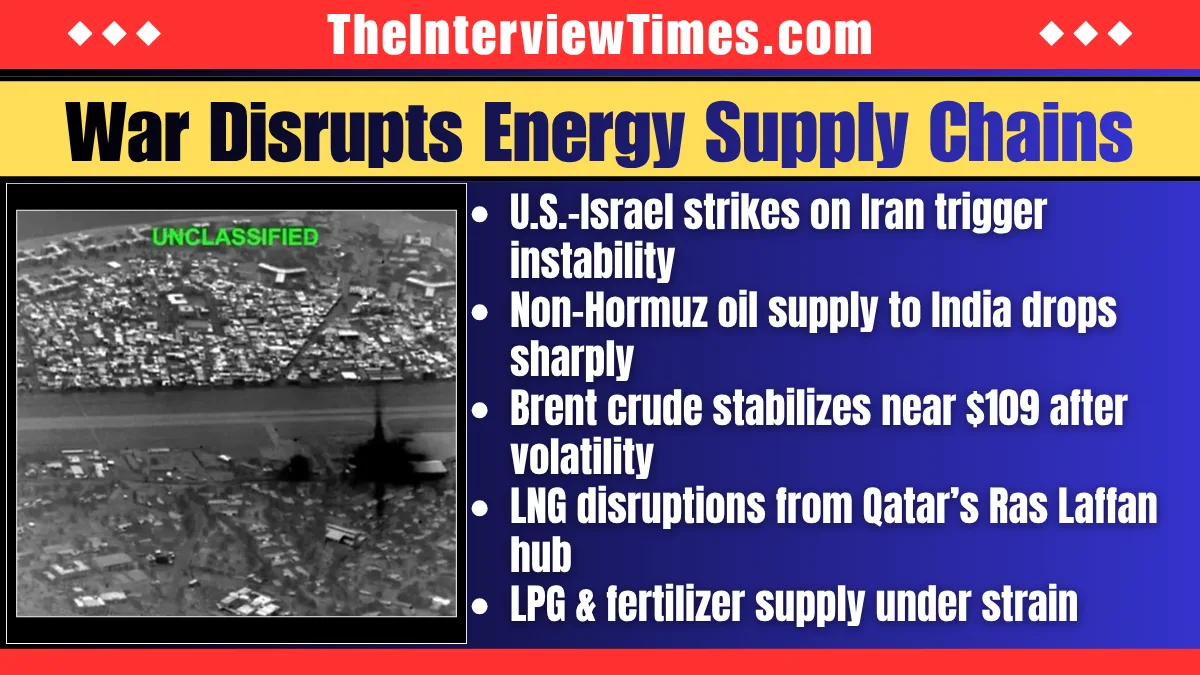
War Disrupts Energy Supply Chains
The India oil crisis intensified after the U.S. and Israeli strikes on Iran (2026) triggered regional instability.
Key impacts include:
- Non-Hormuz oil supply to India falling from 60% to 30%
- Brent crude stabilizing near $109 after volatility
- LNG disruptions from Qatar’s Ras Laffan hub
These disruptions are affecting LPG availability and fertilizer supply, critical for households and agriculture.
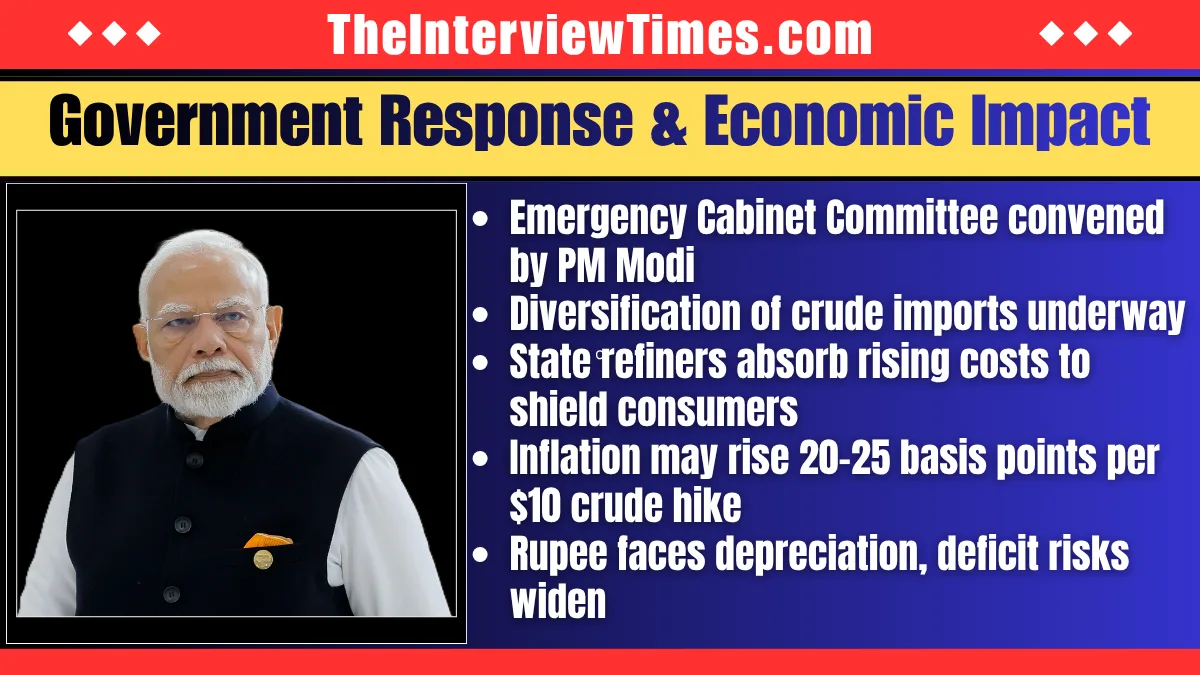
Government Moves to Stabilize Situation
To manage the India oil crisis, the government has initiated a multi-layered response.
Prime Minister Narendra Modi emphasized:
- Ensuring uninterrupted fertilizer supply
- Diversifying crude import sources
- Expanding export markets
India is also engaging with global partners including Saudi Arabia, UAE, Qatar, Iran, and Israel.
State-run refiners such as Indian Oil Corporation, Bharat Petroleum, and Hindustan Petroleum are absorbing rising costs to protect consumers.
However, this may lead to financial stress for oil companies if high prices persist.
Speaking in the Lok Sabha. https://t.co/BIrR385m4O
— Narendra Modi (@narendramodi) March 23, 2026
Diversification Gains but LNG Risk Remains
India has increased diversification efforts amid the India oil crisis.
- 70% of crude imports now sourced from non-Hormuz routes
- Increased imports from the United States, Russia, and Africa
- Continued reliance on discounted Russian oil
However, LNG remains a weak point. Around 45% of India’s LNG imports come from Qatar, exposing the country to further disruptions.
Economic Impact: Inflation and Rupee Under Pressure
The India oil crisis is expected to have wide economic implications.
- A $10 rise in crude prices may increase inflation by 20–25 basis points
- The current account deficit could widen significantly
- The Indian rupee may face further depreciation
With the rupee already near record lows, prolonged oil shocks could trigger broader macroeconomic instability.
Key Takeaways
- The India oil crisis poses a serious threat to economic growth
- Heavy dependence on Middle East energy increases vulnerability
- Government is accelerating diversification efforts
- Rising oil prices may fuel inflation and weaken the rupee
- The crisis could reshape India’s long-term energy strategy
